





Where to Start: The Recommended Reading Path
For the absolute best introduction to the world of 007, you should start exactly where Ian Fleming did: with Casino Royale (1953). Reading the original novels in their publication order is highly recommended. Fleming’s books follow a loose but satisfying character arc, showing a gritty, cynical, and human Bond who changes over time under the physical and mental toll of his missions.
If you prefer a modern, cinematic entry point that still respects the classic canon, you can start with Anthony Horowitz's Forever and a Day (2018). Set immediately before the events of Casino Royale, it details Bond's very first mission as a 00 agent and serves as an official prequel to the entire franchise.
The Ian Fleming Era (1953–1966)
Ian Fleming wrote 14 Bond books in total, consisting of 12 novels and two short story collections. These works are the foundation of the entire espionage genre, blending Cold War tensions with high-stakes action and vivid travelogues. Here is the recommended publication order for Fleming's original run:
- Casino Royale (1953) – The book that started it all, introducing Bond, Vesper Lynd, and the villainous Le Chiffre.
- Live and Let Die (1954) – A thrilling chase that takes Bond from Harlem to Jamaica.
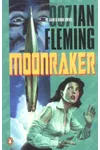
- Moonraker (1955) – A unique, London-centric thriller focusing on rocket technology.
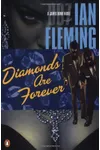
- Diamonds Are Forever (1956) – Bond goes undercover in America to smash a diamond smuggling ring.
- From Russia with Love (1957) – Pits Bond against the Soviet agency SMERSH in Istanbul and aboard the Orient Express.
- Dr. No (1958) – A Caribbean mission to investigate a sinister mad scientist.
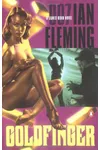
- Goldfinger (1959) – The classic confrontation with Auric Goldfinger over Fort Knox.
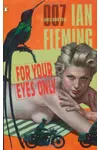
- For Your Eyes Only (1960) – The first short story collection, containing five distinct missions.
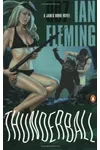
- Thunderball (1961) – Introduces the global terrorist syndicate SPECTRE.
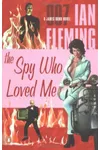
- The Spy Who Loved Me (1962) – Told from a female narrator's perspective, featuring Bond as a late-arriving savior.
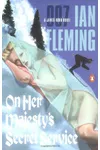
- On Her Majesty's Secret Service (1963) – The emotional centerpiece of the series.
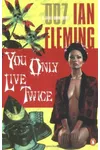
- You Only Live Twice (1964) – A dark, revenge-driven journey set in Japan.
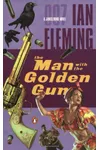
- The Man with the Golden Gun (1965) – Published posthumously, featuring the deadly assassin Francisco Scaramanga.
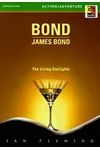
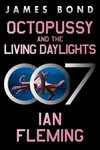
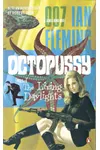
- Octopussy and The Living Daylights (1966) – The final posthumous short story collection.
The Blofeld Trilogy: A Crucial Subseries
While most of Fleming's novels can technically stand alone, three specific books form a direct narrative arc known as the Blofeld Trilogy (or the SPECTRE Trilogy). You should absolutely read these three in sequential order to understand the emotional stakes and character developments:
- Thunderball (1961) – The initial clash with Ernst Stavro Blofeld and SPECTRE.
- On Her Majesty's Secret Service (1963) – A direct continuation of the hunt for Blofeld, culminating in the most tragic event in Bond's life.
- You Only Live Twice (1964) – A grief-stricken Bond seeks closure and vengeance in Japan, wrapping up the Blofeld storyline.
The Continuation Era: Expanding the Universe
Following Fleming's death in 1964, the literary rights holders commissioned various authors to keep the character alive. Rather than reading these mixed in with Fleming's work, it is best to treat each author's tenure as a distinct era, as they each updated Bond's tone and settings to match the decades in which they wrote.
The Transition Era (1968–1973)
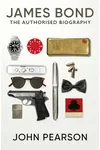
Immediately after Fleming, literary giant Kingsley Amis stepped in under the pseudonym Robert Markham to write Colonel Sun (1968), a traditional Cold War adventure. A few years later, John Pearson—who had been Fleming's assistant—wrote James Bond: The Authorized Biography of 007 (1973), a clever mock-biography treating Bond as a real retired agent reflecting on his life.
The John Gardner Era (1981–1996)
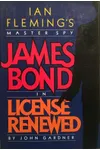
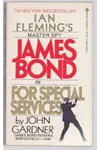
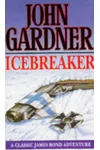
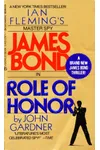
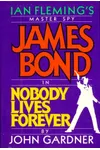
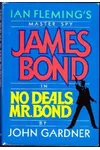
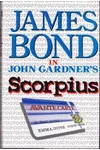
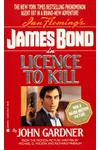
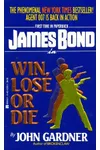
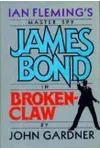
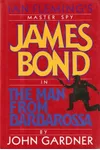
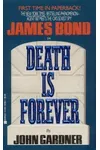
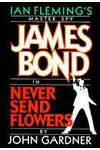
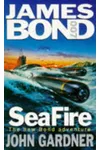
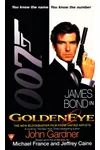
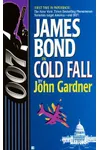
John Gardner took over the mantle in the 1980s, writing 14 novels and two film novelizations (Licence to Kill and GoldenEye). Gardner updated 007's gadgets, gave him a Saab Turbo instead of a Bentley, and sent him against post-Cold War threats. Highlights of this era include License Renewed (1981), Icebreaker (1983), and Nobody Lives Forever (1986).
The Raymond Benson Era (1997–2002)
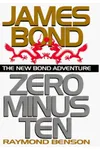
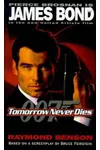
Raymond Benson, a fan-historian who wrote the definitive guide The James Bond Bedside Companion, became the first American author to write official Bond novels. He brought back a more cinematic, action-heavy pace. Benson wrote six original novels, three novelizations (including Tomorrow Never Dies and The World is Not Enough), and three short stories. Essential entries include Zero Minus Ten (1997) and The Man With the Red Tattoo (2002).
The Modern Standalones and Anthony Horowitz
In the 21st century, the estate turned to celebrated modern thriller authors for standalone entries. Sebastian Faulks wrote Devil May Care (2008) in Fleming's style, Jeffery Deaver relocated a younger Bond to the modern post-9/11 world in Carte Blanche (2011), and William Boyd penned Solo (2013), taking Bond back to 1969.
The standout of the modern era is Anthony Horowitz, who wrote a trilogy using unpublished story outlines left behind by Ian Fleming. His books fit directly into the timeline of the original novels:
- Forever and a Day (2018) – Chronologically the first book in the entire series, acting as a prequel to Casino Royale.
- Trigger Mortis (2015) – Chronologically set just two weeks after the events of Goldfinger.
- With a Mind to Kill (2022) – Chronologically set immediately after the conclusion of The Man with the Golden Gun.
What to Know Before You Start
When diving into James Bond, it is important to separate the literary character from the cinematic icon. The literary Bond is darker, more introspective, and heavily scarred by his experiences compared to the often-suave, gadget-reliant movie versions. Additionally, the books reflect the social attitudes of the 1950s and 1960s; readers should prepare for dated language and historical perspectives that differ significantly from modern standards.