
The Recommended Reading Order for Jan Fabel
When diving into the investigations of Kriminalhauptkommissar Jan Fabel, the head of Hamburg’s Murder Squad, the best path forward is straightforward. Craig Russell wrote these books in a linear fashion, meaning the publication order matches the chronological order of Fabel's life and career. Reading them out of order will spoil significant character developments, particularly the psychological trauma and personal arcs of Fabel and his deputy, Maria Klee.
Here is the complete order of the Jan Fabel novels in which they were published and should be read:
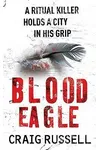
- Blood Eagle (2005)
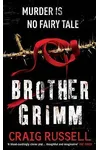
- Brother Grimm (2006)
- Eternal (2007)
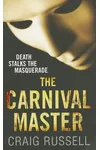
- The Carnival Master (2008)
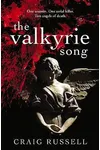
- The Valkyrie Song (2009)
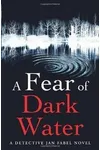
- A Fear of Dark Water (2011)
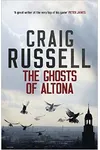
- The Ghosts of Altona (2015)
A Closer Look at the Jan Fabel Books
1. Blood Eagle (2005)
This is where it all begins. In this debut novel, readers are introduced to Jan Fabel, a detective of mixed Scottish and German heritage who runs Hamburg's Mordkommission. Fabel is drawn into a terrifying case where a serial killer is ritualistically murdering victims using the "Blood Eagle"—a legendary Viking execution method. This book establishes the series' signature blend of modern police procedural work and deep historical or mythological lore.
2. Brother Grimm (2006)
In this second entry, the Hamburg police face a killer who leaves clues based on the dark, original fairy tales of the Brothers Grimm. The killer targets victims and leaves messages signed with fairy-tale monikers like "Hansel" and "Gretel." Fabel must delve into the psychological and cultural history of German folklore to predict the murderer's next move. It is a darker, even more atmospheric thriller that highlights Russell's ability to utilize German history as an active element of the plot.
3. Eternal (2007)
Fabel is confronted with a mystery that spans centuries. When a geneticist is found murdered, the investigation leads to ancient bog bodies, reincarnation cults, and sinister genetic experiments tracing back to the Nazi era. This novel explores themes of science, history, and the human obsession with immortality, forcing Fabel to navigate both corporate corridors and fanatical cults.
4. The Carnival Master (2008)
Also published under the title Carneval, this book takes Fabel away from Hamburg to Cologne during the height of its chaotic annual Carnival. He is tracking a cannibalistic serial killer known as "the Carnival Master." This case is especially critical for the series' overarching continuity, as Fabel's deputy, Maria Klee, suffers major physical and psychological trauma that reshapes her character arc for the rest of the series.
5. The Valkyrie Song (2009)
The fifth book returns to Hamburg and weaves in themes of Norse mythology, specifically the Valkyries. Fabel investigates a series of brutal murders involving a shadowy female assassin and right-wing extremist groups. The investigation tests the limits of Fabel's team as they deal with political interference and internal pressures.
6. A Fear of Dark Water (2011)
When body parts are washed up in the River Elbe after a storm, Fabel is pulled into a complex web involving an environmental cult, cyber-conspiracies, and a charismatic leader who believes a catastrophic flood is coming. This book highlights the modern, high-tech challenges of contemporary policing combined with ancient apocalyptic fears.
7. The Ghosts of Altona (2015)
The latest novel in the series won the prestigious McIlvanney Prize. The discovery of a body leads Fabel back to his very first homicide investigation from two decades earlier. To solve the current mystery, Fabel must confront his own past, his long-buried secrets, and the historical ghosts of Hamburg's Altona district. It serves as a highly personal and satisfying culmination of Fabel's journey.
What to Know Before You Start
Craig Russell’s Jan Fabel series stands out in the crowded crime fiction genre due to its deep sense of place. Hamburg is not just a backdrop; the city's geography, the Elbe River, the historic districts, and its multicultural friction act as central characters. Fabel himself is not the typical hard-boiled, self-destructive detective; he is a thoughtful, introspective former historian who brings academic rigor and deep empathy to his cases.
Supporting characters also grow significantly over the course of the seven novels. Fabel's deputy, Maria Klee, and colleagues like Werner Meyer, Paul Lindemann, and Hugo Henke form a tight-knit squad that experiences real, lasting consequences from their cases. Unlike many procedural series where the status quo resets at the end of each book, the psychological toll of these investigations accumulates, making linear reading essential for understanding the character dynamics.
Are There Crossovers or Spin-offs?
Craig Russell has written other successful crime series, most notably the Lennox books, which follow a private investigator in 1950s Glasgow. While Fabel is half-Scottish, there is no shared universe or narrative crossover between the Jan Fabel books and the Lennox series. The author deliberately keeps them separate, using entirely different narrative voices for the gritty, historic Glasgow noir and the contemporary German police procedurals.
German Television Adaptations
If you enjoy the books, you may also want to check out the German television movie adaptations produced by the broadcaster ARD. Five of the novels have been adapted into German-language TV films starring Peter Lohmeyer as Jan Fabel and Lisa Maria Potthoff as Maria Klee. The films cover Brother Grimm (adapted as Wolfsfährte in 2010), Blood Eagle (adapted as Blutadler in 2012), Eternal (adapted as Brandmal in 2015), The Carnival Master (adapted as Carneval in 2018), and The Valkyrie Song (adapted as Todesengel in 2019). They capture the dark, atmospheric tone of the books and are highly regarded by German thriller fans.