

The Recommended Reading Order for Jason Striker
For readers looking to dive into the high-kicking, action-packed world of Jason Striker, the reading path is straightforward. Because the series was written as a continuous, sequential narrative tracking the protagonist's adventures across the globe, the chronological order matches the publication order exactly. The books should be read in the order they were written and released to properly follow Jason's personal journey, his developing rivalries, and the escalating stakes of his martial arts battles.
Here is the recommended reading order for the Jason Striker series:
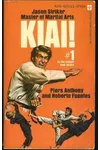
- Kiai! (1974)
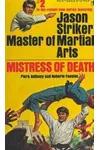
- Mistress of Death (1974)
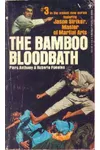
- The Bamboo Bloodbath (1974)
- Ninja's Revenge (1975)
- Amazon Slaughter (1976)
- Curse of the Ninja (2001 - written in 1975)
Understanding the Publication History: The Berkley Medallion Era and the Xlibris Omnibus Editions
The publication history of the Jason Striker series is unique and divides cleanly into two eras: the original mid-1970s pocket paperbacks and the 2001 self-published omnibus volumes. Understanding these two formats is essential for collectors and readers looking to track down physical copies of the books.
The Original 1970s Releases
In the mid-1970s, capitalized by the global martial arts boom sparked by Bruce Lee films and the popular television show Kung Fu, Berkley Medallion published the first five books in the series as standalone mass-market paperbacks. These books featured eye-catching, pulp-style covers illustrating dramatic martial arts action. However, due to sudden editorial changes at Berkley Medallion, the contract was altered, and the planned sixth installment, Curse of the Ninja, was shelved, leaving the series unresolved for decades.
The 2001 Xlibris Omnibus Re-Releases
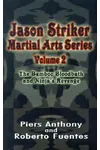
In 2001, Piers Anthony and Roberto Fuentes regained the rights to their work and partnered with the print-on-demand publisher Xlibris to re-release the entire series. Instead of printing six separate volumes, they compiled the novels into three double-novel omnibus editions. These editions are highly sought after because the third volume contains the first publication of the long-lost sixth book, which exists as an unfinished draft accompanied by summaries of how the authors intended to conclude the plot.
- Jason Striker Directory, Vol. 1: Contains Kiai! and Mistress of Death.
- Jason Striker Directory, Vol. 2: Contains The Bamboo Bloodbath and Ninja's Revenge.
- Jason Striker Directory, Vol. 3: Contains Amazon Slaughter and the previously unpublished draft of Curse of the Ninja.
Deep Dive Into the Books
1. Kiai! (1974)
The series kicks off with Kiai!, which introduces readers to Jason Striker, a highly disciplined martial artist who holds a fifth-degree black belt (5th dan) in judo, along with mastery in karate, kung-fu, and aikido. Striker travels to Nicaragua to participate in a brutal, no-holds-barred martial arts tournament. Striker is portrayed not just as an elite fighter, but as a man with a strict moral code who actively searches for non-lethal resolutions. The book is heavily grounded in Roberto Fuentes' real-world judo expertise, offering readers incredibly detailed and authentic descriptions of throws, holds, and sweeps.
2. Mistress of Death (1974)
In the second installment, Striker finds himself entangled in a dangerous international drug smuggling conspiracy. The action shifts as Jason goes head-to-head with Ilunga, a deadly and beautiful karate mistress who leads a lethal criminal syndicate. This novel raises the stakes, testing Striker's commitment to peace as he confronts opponents who show no mercy.
3. The Bamboo Bloodbath (1974)
The third book brings Jason Striker into conflict with organized crime and underground martial arts factions. Set against exotic backdrops, the narrative continues the gritty, fast-paced formula of the earlier books while shifting the focus slightly from tournament-style matches to survival combat in hostile environments. The book further develops the tension between Striker's lethal capabilities and his desire to avoid unnecessary harm.
4. Ninja's Revenge (1975)
With Ninja's Revenge, the series begins to embrace the ninja craze that would dominate pulp action in the late 70s and 80s. Striker must defend himself against a shadowy clan of assassins seeking vengeance. The combat descriptions expand beyond hand-to-hand martial arts to incorporate traditional stealth weapons, espionage, and complex tactical battles, marking a transition in the series tone towards more fantastical and suspenseful scenarios.
5. Amazon Slaughter (1976)
In the fifth book, the setting shifts to the dense jungles of Brazil. Jason Striker is pitted against a corrupt regional official who has allied with a master ninja. Striker must utilize both his survival skills and his martial arts training to navigate the treacherous jungle terrain while combating well-armed forces and deadly assassins.
6. Curse of the Ninja (2001)
The final entry in the series was written in 1975 but remained unpublished for twenty-five years until the 2001 Xlibris omnibus release. The story directly follows the events of Amazon Slaughter and serves as the planned finale to the character's narrative arc. Because the manuscript was never fully completed before the series was canceled, the published version contains the completed chapters written by the authors, supplemented by notes detailing the intended ending.
Behind the Scenes: The Anthony and Fuentes Collaboration
The unique flavor of the Jason Striker series stems directly from the collaboration between its two authors. Piers Anthony was already an established name in science fiction and fantasy, known for his imaginative world-building and narrative pacing. Roberto Fuentes brought essential authenticity to the table as a Yodan (fourth-degree black belt) in judo. During a time when popular culture was obsessed with flashier strikes from kung-fu and karate, Fuentes and Anthony championed judo as a highly effective, lethal, and complex defensive art. Anthony handled the narrative structure and prose, while Fuentes meticulously choreographed the fight scenes, ensuring that every throw, lock, and counter-move conformed to real-world physics and martial arts principles. Later, in 1990, the duo also collaborated on a standalone science fiction novel titled Dead Morn.
What to Know Before You Start
Before diving into the Jason Striker novels, readers should keep a few things in mind to get the most out of the experience:
- A Time Capsule of the 1970s: The series is deeply rooted in the style, terminology, and cultural attitudes of the 1970s. Modern readers will notice dated references and social dynamics typical of the era's pulp fiction.
- Authentic Judo Focus: Unlike many martial arts books that feature generic, stylized fighting, these novels highlight the technical mechanics of judo. The choreography focuses heavily on leverage, balance, and momentum.
- Tone Shift: The series begins as a relatively grounded, tournament-style action adventure but gradually moves towards espionage, stealth, ninjas, and more fantastical elements by the time it reaches the later books.
- The Unfinished Finale: Readers should be prepared for the fact that the sixth book, Curse of the Ninja, is not a fully polished novel but rather a preserved draft that provides closure through author outlines.