
The Recommended Reading Order for Jaywalker
For the best reading experience, it is highly recommended to follow the publication order of the Jaywalker series. While the novels are mostly self-contained legal cases, the character arc of Harrison J. Walker—particularly his ongoing battles with the disciplinary committee, his suspensions, and his search for personal redemption—develops sequentially from one book to the next.
Publication Order
This is the order in which the books were originally released and how the author intended readers to experience Jaywalker’s journey:
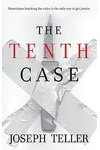
- The Tenth Case (2008)
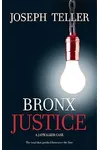
- Bronx Justice (2009)
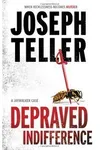
- Depraved Indifference (2009)
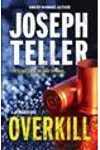
- Overkill (2010)
- Guilty as Sin (2011)
Chronological Reading Order
If you prefer to follow the absolute timeline of Jaywalker’s life and career, you can adjust the order slightly. The second novel, Bronx Justice, acts as a prequel that takes the reader back to 1979 to show a younger, less cynical version of Harrison Walker handling a career-defining case in the Bronx. The chronological order is as follows:
- Bronx Justice (Prequel set in 1979)
- The Tenth Case (Introduces Jaywalker's impending suspension)
- Depraved Indifference (Jaywalker is serving his three-year suspension)
- Overkill (Jaywalker defends a seventeen-year-old accused of murder)
- Guilty as Sin (Jaywalker faces a drug-dealing client and deep moral questions)
The Five Cases: A Closer Look at the Series
1. The Tenth Case (2008)
The book that started it all introduces us to Harrison J. Walker, nicknamed "Jaywalker" for his tendency to take shortcuts and cross boundaries. On the brink of a one-year suspension for his rebellious legal tactics, a judge allows him to finish ten pending cases. The last of these, the "tenth case," involves Samara Tannenbaum, a young woman accused of murdering her wealthy husband. Pitted against massive evidence and a cynical court system, Jaywalker risks everything for a client he believes in. This debut won the prestigious 2009 Nero Wolfe Award for best mystery novel.
2. Bronx Justice (2009)
Rather than moving forward, the second book takes a step back to 1979. We meet a younger Jaywalker before he became the cynical, rule-bending lawyer of later years. In the Bronx, he takes on the case of Darren Kingston, a young Black man accused of a series of brutal rapes. In an environment charged with racial bias and media frenzy, Jaywalker must find a way to navigate a legal system stacked against his client.
3. Depraved Indifference (2009)
Returning to the post-debut timeline, Jaywalker is now serving a three-year suspension and trying to stay out of trouble. However, he is lured back into the legal ring when a seductive woman convinces him to represent her husband. The client is the infamous "Audi Assassin" who forced a van off the road, causing a fiery crash that killed nine people. Jaywalker takes the case to expose legal system hypocrisies, but a shocking revelation threatens to turn his defence into a disaster.
4. Overkill (2010)
In the fourth installment, Jaywalker is court-appointed to defend Jeremy Estrada, a seventeen-year-old who shot another teenager point-blank over a girl. With the prosecution pushing for a heavy conviction and the evidence seemingly undeniable, Jaywalker has to dig deep into the psychological layers of the crime to save the boy from spending the rest of his life behind bars.
5. Guilty as Sin (2011)
The final entry in the series finds Jaywalker representing Alonzo Barnett, a career criminal who is factually guilty of a drug offense. However, Jaywalker is forced to look beyond the letter of the law to decide if Barnett is truly "guilty as sin." As he fights to prevent the man from receiving a life-shattering sentence, Jaywalker faces an intense prosecution team and searches for his own ultimate redemption.
What to Know Before You Start
Before diving in, here are a few things that set the Jaywalker series apart from generic legal thrillers:
- Authentic Legal Detail: Joseph Teller is a pen name for Joseph Teller Klempner, who spent 35 years as a New York criminal defense attorney. The courtroom tactics, filings, and jargon are incredibly accurate because they are drawn from real-world experience.
- Gritty Atmosphere: The series is set firmly in New York City, moving between Manhattan's high-stakes courtrooms and the grit of the Bronx in the late 1970s.
- Flawed Protagonist: Harrison Walker is not a perfect hero. He battles alcohol issues, has a messy personal life, and is frequently in trouble with the bar association, making him a deeply human character.
Beyond Jaywalker: Joseph Teller's Other Works
If you finish the Jaywalker novels and want more of Teller's signature courtroom authenticity, you can look for the books he published under his real name, Joseph T. Klempner. These standalone crime and legal novels include:
- Felony Murder (1995)
- Shoot the Moon (1997)
- Change of Course (1998)
- Flat Lake in Winter (1999)
- Irreparable Damage (2002)
- Fogbound (2003)
- Best Intentions (2016)