
The Recommended Reading Order for Jefferson Tayte
For the best reading experience, it is highly recommended to read the Jefferson Tayte series in publication order. While each novel presents a self-contained historical mystery that is fully resolved by the end of the book, there is a crucial overarching narrative: Tayte's personal quest to discover his own origins. As an adoptee, his search for his birth parents and his own family history slowly unfolds across the books, developing his character and building on relationships with recurring allies like historian Jean Summer. Reading the books chronologically as they were published ensures you follow this emotional character arc without spoilers.
Jefferson Tayte Books in Publication Order
Here is the complete list of Steve Robinson's Jefferson Tayte novels and novellas in the order they were published:
1. In the Blood (2011)
The series opens with Tayte being hired to trace the lineage of a loyalist family that vanished without a trace after fleeing America during the Revolutionary War. His search brings him from the United States to a remote, windy corner of Cornwall, England. As Tayte digs into centuries-old archives, he discovers that the family's secrets are still very much alive—and someone is willing to kill to keep them buried. This debut introduces Tayte’s signature quirks, including his messy hair, fear of flying, and reliance on Hershey's chocolate bars to get him through high-stress situations.
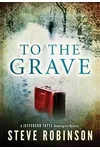
2. To the Grave (2012)
The discovery of a child's suitcase from the WWII era in a Washington, D.C., suburb triggers Tayte's next case. To trace the child's identity, Tayte travels to Leicestershire, England, where he reconstructs the tragic wartime love story between a local young woman and an American serviceman. The dual narrative explores the atmosphere of wartime England filled with foreign soldiers, contrasted against a modern-day threat that stalks Tayte as he gets closer to the truth of a dark family secret.
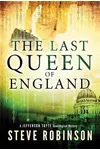
3. The Last Queen of England (2012)
When a close friend and fellow genealogist is brutally murdered in London, Tayte is drawn into his most dangerous investigation yet. Teaming up with historian Professor Jean Summer, Tayte follows a cryptic trail left by the victim. The mystery leads them back to the 18th-century Royal Society of London and a historical royal conspiracy. As they decipher historical clues, they realize the killer is pursuing them to prevent a massive historical secret from coming to light.
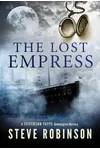
4. The Lost Empress (2014)
This installment centers on the real-life historical tragedy of the sinking of the RMS Empress of Ireland in 1914. Tayte is hired to research a mysterious locket belonging to a woman who supposedly died in the shipwreck, yet evidence suggests she survived and lived a long, hidden life. The investigation leads Tayte into a complex web of British and German intelligence operations on the eve of World War I, revealing how pre-war espionage still impacts descendants in the modern day.
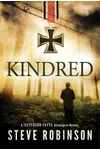
5. Kindred (2016)
Following the death of his beloved mentor, Tayte is left with a set of clues that point directly toward his own mysterious past. The trail takes him to Munich, Germany, where he must dig into family histories deeply scarred by the events of World War II. As Tayte uncovers the terrible secrets of a Nazi-era family, he comes closer than ever to answering the questions surrounding his own adoption and identity, making this one of the most emotionally charged books in the series.
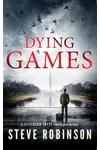
6. Dying Games (2017)
In this high-stakes thriller, the FBI recruits Tayte to help stop a calculated serial killer. The murderer is leaving completed genealogical charts at crime scenes, and all the victims share ancestral links that tie directly back to Tayte himself. Forced into a deadly game of cat and mouse, Tayte must use his research skills to predict the killer's next target and uncover the historical link that connects him to a psychopath before he becomes the final branch on the killer's family tree.
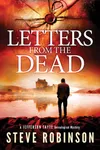
7. Letters from the Dead (2018)
Tayte is hired to establish the true identity of an ancestor nicknamed the "black sheep" of a wealthy family tree. The search begins with a series of old letters and moves from the misty highlands of Scotland to the vibrant landscapes of colonial India. Tayte is tasking with unravelling a centuries-old murder mystery and a legendary ruby heist, only to find that the historical crime has triggered a very real, modern-day murder mystery that threatens his life.
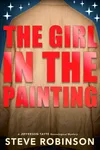
8. The Girl in the Painting (2021)
Published as a standalone novella, this eighth entry follows Tayte as he is hired by a woman named Nat to research the subject of a stolen Victorian portrait. The painting depicts a young girl named Jess who vanished from the slums of Victorian London shortly after the portrait was painted. As Tayte and Nat investigate, they discover that the theft of the painting is linked to a fresh murder, forcing them to solve the historical mystery of the missing girl to identify a modern-day killer.
The Dual-Timeline Structure and Chronological Caveats
Readers often wonder if a chronological reading order based on the historical settings of the books is possible. In the case of the Jefferson Tayte series, a strict historical chronological order is impossible because every single book employs a dual-timeline narrative structure. A typical book in this series alternates between Tayte's present-day research and the historical events of the ancestors he is investigating.
Because the historical timelines hop around—ranging from the American Revolutionary War (1770s) to Victorian London (1880s), the eve of World War I (1910s), and the height of World War II (1940s)—reading the books by their historical settings would ruin the flow of the modern storyline. The present-day narrative of Jefferson Tayte’s life, his career, and his search for his birth parents moves forward chronologically in the exact order the books were published. Therefore, publication order is the only logical path.
What to Know Before You Start
Steve Robinson's series is highly praised for its accurate depiction of genealogical research. Unlike typical action-packed thrillers, Tayte does not solve mysteries through gunfights or high-speed chases. Instead, he spends hours combing through dusty church registries, analyzing census data, reading old letters, and hunting down forgotten gravestones. The thrill of the books comes from the "brick walls" he hits and the brilliant breakthroughs that connect past generations to the present.
However, Robinson balances this slow, methodical research with genuine thriller elements. The historical conspiracies Tayte uncovers often involve powerful people who want the past to stay buried, leading to suspenseful, life-threatening situations. The tone is cozy yet suspenseful, perfect for fans of Dan Brown, Elly Griffiths, or traditional British cozy mysteries with a historical twist.