
The Recommended Reading Order
When it comes to Joe Buff’s high-octane submarine thrillers, the reading order is delightfully straightforward. Because the series tells a continuous, escalating story set during a speculative near-future global conflict, the publication order matches the chronological timeline perfectly. Reading these books out of order will spoil major character developments, tactical outcomes, and the shifting geopolitical landscape of the war.
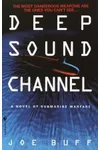
- Deep Sound Channel (2000)
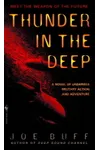
- Thunder in the Deep (2001)
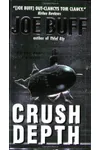
- Crush Depth (2002)
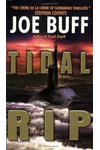
- Tidal Rip (2003)
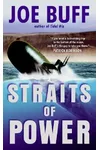
- Straits of Power (2004)
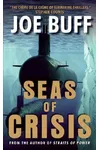
- Seas of Crisis (2006)
To get the full narrative impact of Jeffrey Fuller’s evolution from an aggressive Navy SEAL officer into a deeply calculating, seasoned submarine commander, you should read this six-book saga from start to finish. Below is the detailed breakdown of the series to help you navigate your journey underwater.
Deep Dive into the USS Challenger Saga
1. Deep Sound Channel (2000)
The saga begins in a speculative 2011. A reactionary military coup in South Africa aligns with a newly nationalistic and aggressive Germany to form the menacing "Berlin-Boer Axis." Seeking to dominate global shipping lanes and establish supremacy, the Axis launches devastating attacks. Jeffrey Fuller, a former Navy SEAL serving as the Executive Officer of the USS Challenger—a revolutionary nuclear submarine featuring a stealthy ceramic hull that can dive deeper than any steel submarine—is sent on a perilous covert mission. Alongside Boer freedom fighter and marine biologist Ilse Reebeck, Fuller must infiltrate the enemy-held South African coast. Their target: a secret laboratory engineering a catastrophic biological weapon. This first book establishes Fuller’s fierce rivalry with the brilliant Axis captain Jan ter Horst and introduces the harrowing reality of modern underwater warfare.
2. Thunder in the Deep (2001)
Picking up directly from the aftermath of the first book, the global war intensifies. Having proven his capability, Jeffrey Fuller is promoted to Captain of the USS Challenger. His leadership is immediately tested by a dual-objective crisis. First, the Challenger must undertake a daring rescue operation in hostile waters to save the surviving crew of a severely damaged American submarine. Once that rescue is executed, Fuller is ordered to mount a high-stakes, preemptive surprise strike against vital military targets deep inside Germany itself. This book escalates the technical warfare, showcasing advanced sonar tactics and the terrifying possibility of tactical nuclear deployments under the sea.
3. Crush Depth (2002)
With the oceans turned into a deadly warzone, the damaged USS Challenger is forced back into action prematurely from dry dock, before critical repairs are complete. Allied merchant fleets are being systematically hunted, and the balance of naval power is tipping. Fuller must take his vulnerable boat deep into the Atlantic to hunt down his arch-nemesis, Captain Jan ter Horst, who now commands the formidable German submarine Voortrekker. The title refers to the extreme depths where the ocean pressure will implode normal vessels—a boundary both commanders must push to survive their deadly game of cat-and-mouse.
4. Tidal Rip (2003)
In the fourth installment, the naval war reaches a fever pitch. Fuller is handed a mission where the stakes are absolute, but the operational parameters are cruel. He is presented with two equally vital strategic objectives but is told that achieving one will inevitably require him to sacrifice the other. As commander of the Allies' premier tactical nuclear platform, Fuller has to navigate not just the physical dangers of enemy patrols but also excruciating moral and strategic calculus. The decisions made here heavily impact the remaining books and take a lasting psychological toll on Fuller and his crew.
5. Straits of Power (2004)
Moving away from the open oceans, Straits of Power thrusts Fuller into the shadow world of intelligence and political maneuvering. The Challenger is ordered to slip silently into heavily defended enemy waters to extract a high-value German asset code-named "Zeno." Zeno claims to have intel capable of stopping an imminent, catastrophic Axis offensive. However, Fuller and naval intelligence suspect a trap. As the mission unfolds, Zeno reveals that stopping the attack requires a rogue infiltration near Israel. Fuller is forced to make a choice: trust a potential double agent and risk pulling the entire alliance apart, or ignore the warning and watch a strategic stronghold fall.
6. Seas of Crisis (2006)
Set in June 2012, the final entry of the series sees the war at a bloody deadlock. The United States discovers that a supposedly neutral Russia is secretly funneling cutting-edge weapons technology to the Berlin-Boer Axis. To break the stalemate, the Allies formulate a desperate, high-stakes gamble. Captain Fuller must navigate the Challenger through the mine-strewn, freezing waters between Alaska and Siberia to insert a black-ops commando team. Their mission: infiltrate a Russian nuclear facility, launch a missile disguised as a German attack, and destroy it in the upper atmosphere to scare Russia into joining the Allies. The margin for error is non-existent, as any mistake could trigger a global nuclear holocaust.
What to Know Before You Start
The Geopolitical Setting
Readers should keep in mind that the Jeffrey Fuller series is an alternate history/techno-thriller hybrid. Written in the early 2000s, Joe Buff projected a near-future setting of 2011–2012. In this timeline, the Cold War ended differently, leading to a resurgent, ultranationalist Germany and a South Africa ruled by a military junta. Because the geopolitical landscape diverges significantly from our actual history, it is best to treat this as a parallel universe that allows for unrestricted, high-stakes military engagements without real-world diplomatic constraints.
Submarine Realism and Technical Detail
Joe Buff was a Life Member of the Naval Submarine League and contributed regularly to military journals. This background shows in his prose. The books are packed with technical jargon, mathematical formulas for submarine physics, sonar acoustics, and weapon specifications. If you enjoy the hyper-realistic detail of Tom Clancy's The Hunt for Red October, you will feel right at home. Buff included extensive glossaries at the back of the books to help readers decode the terminology. It is highly recommended to reference these glossaries early on until you get used to the language of the crew.
The Question of Tactical Nukes
A unique aspect of this series that distinguishes it from other techno-thrillers is the frequent use of tactical nuclear weapons. Unlike real-world history, where the threshold for nuclear deployment has remained crossed only once, Buff’s conflict features localized nuclear exchanges as a standard tactical option. Some readers find the frequent detonation of nuclear torpedoes and depth charges stretches believability, while others appreciate the raw, terrifying stakes it introduces to underwater combat.
Are There Spin-offs, Sequel Series, or Co-authored Books?
No. The Jeffrey Fuller series remains a focused, self-contained six-book saga written entirely by Joe Buff. There are no companion short stories, spin-off series, or co-authored novels. The series ended in 2006 with Seas of Crisis, leaving the USS Challenger's journey complete. While some techno-thriller authors frequently collaborate or hand their universes off to ghostwriters, Buff kept the Jeffrey Fuller saga strictly under his own pen, maintaining a consistent tone, prose style, and character arc throughout the entire run.