



Where to Start with Jerry Cornelius?
Stepping into the world of Jerry Cornelius can feel like stepping onto a shifting literary dance floor. Created by Michael Moorcock in the late 1960s, Jerry is an androgynous, amoral, trend-setting physicist, rock star, and assassin who navigates a collapsing, apocalyptic multiverse with a needle-gun in hand. Because the series is experimental, non-linear, and satirical, trying to construct a traditional chronological timeline is impossible. Jerry shifts gender, race, identity, and even dies only to reappear in the next chapter.
For the best reading experience, you should start at the very beginning with the core tetralogy known as The Cornelius Quartet in publication order. This quartet represents the foundation of the character and establishes the themes of entropy, identity, and countercultural rebellion. Once you have finished the main four novels, you can explore the various spin-offs, short story collections, and late-career novellas that expand this unique, open-source universe.
The Core Tetralogy: The Cornelius Quartet
The core of the series is a four-book cycle published between 1968 and 1977. These novels are frequently compiled into omnibus editions under titles like The Cornelius Chronicles or The Cornelius Quartet.
1. The Final Programme (1968)
This is the essential starting point. First published in 1968, the novel introduces Jerry Cornelius as he battles his villainous brother Frank to save their sister Catherine. The story blends classic spy-thriller tropes with surrealist science fiction, culminating in Jerry merging with the devious Miss Brunner to become a hermaphroditic, messianic figure. It sets the tone for the entire series, blending swinging London aesthetics with high-concept weirdness.
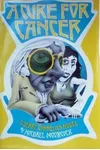
2. A Cure for Cancer (1971)
Serialized in the pages of New Worlds magazine in 1969 before its book release in 1971, this second installment ramps up the experimental style. Jerry operates in a post-apocalyptic London that feels like a collage of war zones and pop-culture advertisements. Wielding a device known as a "vibragun," a black-skinned, white-haired Jerry deals with themes of global militarism, American hegemony, and cultural decay.
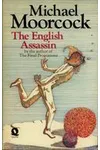
3. The English Assassin (1972)
Subtitled "A Romance of Entropy," this novel presents a fragmented Europe on the brink of collapse. Jerry spends much of the novel in a state of suspended animation or decay, floating in a coffin, while his mother, his sister Catherine, and his companion Una Persson navigate a series of chaotic historical and futuristic scenarios. The book is structured around mock newspaper headlines and disjointed vignettes, reflecting the rising tide of global socio-political chaos.
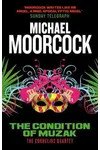
4. The Condition of Muzak (1977)
The crowning achievement of the Quartet, this novel won the prestigious Guardian Fiction Prize in 1977 (though some US editions list a 1978 publication date). It ties the previous books together by presenting Jerry's grand, reality-hopping exploits as the escapist fantasies of a disillusioned, working-class London teenager. It utilizes characters from the Commedia dell'Arte to explore the ultimate collapse of Jerry's universe, providing a profound existential resolution to the cycle.
The Expanded Multiverse & Spin-offs
After completing the core quartet, readers can dive into the supplementary novels and spin-offs that Moorcock wrote to expand the Cornelius mythos.
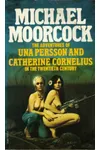
The Adventures of Una Persson & Catherine Cornelius in the 20th Century (1976)
Published in 1976, this novel shifts the focus away from Jerry to his sister Catherine and his frequent collaborator, the time-traveling socialist adventurer Una Persson. The book functions as a companion piece to the quartet, sending the two protagonists through a series of historical eras, exploring themes of feminism, class struggle, and romance across a changing twentieth century.
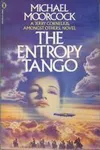
The Entropy Tango (1981)
Subtitled "A Comic Romance," this short, highly illustrated novel functions as an epilogue to the main tetralogy. It features a crumbling, revolutionary landscape where characters perform metaphorical dances against the backdrop of physical and identity-based entropy. It incorporates poetry, prose, and musical elements, reflecting Moorcock's parallel work with his rock band, Michael Moorcock & The Deep Fix.
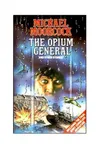
The Opium General and Other Stories (1984)
This 1984 collection is a mix of essays, short stories, and novellas. Crucially for Cornelius fans, it contains the novella The Alchemist's Question, which Moorcock structured as a final, definitive capstone to the original era of the Jerry Cornelius saga, dealing with the character's ultimate fate in a changing geopolitical landscape.
The Short Story Collections & Collaborations
One of the most remarkable aspects of Jerry Cornelius is his status as an "open-source" character. Moorcock actively encouraged other prominent New Wave authors to write their own stories using Jerry, resulting in unique collaborative anthologies.
The Nature of the Catastrophe (1971) & The New Nature of the Catastrophe (1993)
First published in 1971 as The Nature of the Catastrophe, this anthology collected "apocryphal" Jerry Cornelius stories written by Michael Moorcock alongside prominent speculative fiction authors like Brian W. Aldiss, M. John Harrison, and James Sallis. In 1993, Moorcock and Langdon Jones updated and expanded the collection into The New Nature of the Catastrophe, adding newer stories and essays that highlight how different writers interpreted the countercultural icon.
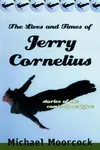
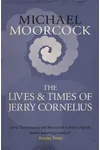
The Lives and Times of Jerry Cornelius (1976) & Jerry Cornelius: His Lives and His Times (2014)
Not to be confused with each other, these collections compile Moorcock's own shorter Jerry Cornelius fiction. The 1976 edition collects early short stories written during the height of the New Wave movement. The 2014 Gollancz edition is a massive, retrospective compilation spanning forty-five years of writing, including classic stories like "The Delhi Division" and "The Entropy Circuit," alongside detailed introductions by Moorcock and critic John Clute.
Later Satirical Novellas
Moorcock occasionally resurrected Jerry Cornelius to comment on modern political crises, resulting in two late-career satirical novellas:
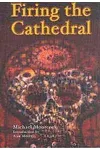
- Firing the Cathedral (2002): Written in the immediate aftermath of the September 11 attacks, this novella acts as a sharp, surreal satire of twenty-first-century global politics, imperialism, and the war on terror.
- Pegging the President (2018): A satirical novella reacting to the Trump presidency. Moorcock has noted his own mixed feelings about the work, feeling the raw political anger of the era slightly overshadowed the character's classic, cool countercultural detachment.
What to Know Before You Start: The Multiverse and the Eternal Champion
Before reading, it is helpful to understand how Jerry Cornelius fits into Michael Moorcock's broader literary cosmology. Jerry is an incarnation of the Eternal Champion, a heroic archetype destined to fight for balance between Order and Chaos across the multiverse. While fantasy readers might be familiar with other incarnations like Elric of Melniboné or Corum, Jerry represents the modern, technological, and anarchic aspect of the Champion. Because of this connection, Jerry frequently crosses paths with characters from other Moorcock series, making guest appearances in the Dancers at the End of Time series and interacting with Oswald Bastable in the Nomad of Time trilogy.