
The Recommended Reading Order for the Jesus Chronicles
The Jesus Chronicles is a four-novel series that reimagines the lives, challenges, and testimonies of the four Gospel writers: John, Mark, Luke, and Matthew. While each book is a self-contained story tracing the life of Christ through a unique perspective, the authors structured the narrative arcs to build upon one another.
For the best reading experience, it is highly recommended to read the Jesus Chronicles in publication order. This sequence is how the authors intended readers to experience the growth of the early church and the progression of the Gospel recordings.
The Jesus Chronicles in Publication Order
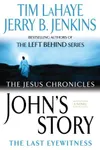
- John's Story: The Last Eyewitness (2006) – Centered on the elderly Apostle John during his exile on the island of Patmos. As the final surviving original disciple of Jesus, John battles Roman persecution under Emperor Domitian to draft his Gospel and record the visions that would become the Book of Revelation.
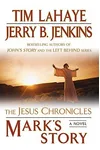
- Mark's Story: The Gospel According to Peter (2007) – Follows John Mark, a companion to the early apostles, as he records the urgent, action-packed memories of the Apostle Peter. The book explores the early church's underground survival in Rome and the translation of oral history into written scripture.
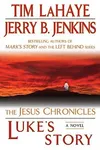
- Luke's Story: By Faith Alone (2009) – Focuses on Luke, a brilliant Greek physician who initially approaches the stories of Jesus's miracles with scientific skepticism. After his life is changed by his travels with the Apostle Paul, Luke interviews eyewitnesses, including Mary, the mother of Jesus, to compose a historically meticulous Gospel.
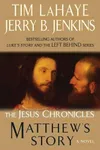
- Matthew's Story: From Sinner to Saint (2010) – Tells the story of Levi (Matthew), who abandoned his priestly training to become a hated tax collector for Rome. After an encounter with Jesus changes his life, Matthew writes his Gospel specifically to convince his fellow Jews that Jesus is the prophesied Messiah.
Chronological Order vs. Canonical Order
Readers often wonder if they should read the series in canonical order (Matthew, Mark, Luke, John), following the sequence of books as they appear in the New Testament. While this order is familiar to Bible readers, reading the series this way can actually weaken the narrative structure established by LaHaye and Jenkins.
The authors chose to start the series with John's Story because John acts as the ultimate eyewitness framing the entire Christian movement. Starting with John establishes the high stakes of the early Church's fight to survive Roman oppression and preserve its history. Moving backward through Mark, Luke, and Matthew allows readers to piece together different details of Jesus's life, moving from the panoramic theological perspective of John to the intimate, Jewish-prophetic lens of Matthew.
Additionally, a true historical timeline of when these Gospels were actually written would put Mark first, followed by Matthew and Luke, with John written last. Attempting to read the novels in this historical chronology is unnecessary and can feel disjointed because the framing devices of the novels are specifically designed around their publication sequence.
What to Know Before You Start
Before diving into the Jesus Chronicles, there are a few important elements to keep in mind regarding the style, authorship, and theological background of the series:
- The Authors' Collaboration: Tim LaHaye and Jerry B. Jenkins are globally famous for their massive apocalyptic thriller series, Left Behind. In the Jesus Chronicles, they pivot from end-times prophecy to the historical roots of their faith. LaHaye provided the theological framework and historical research, while Jenkins handled the prose and narrative execution.
- Biblical Fidelity: The authors sought to maintain strict alignment with biblical scripture. While the dialogues, subplots, and personal backgrounds of secondary characters are fictionalized, the primary teachings, miracles, and historical timeline of Jesus follow the biblical text closely.
- Character-Driven Perspective: Rather than a dry historical retelling, each book is highly character-driven. The narrative highlights the human flaws, doubts, and transformations of the writers—such as Luke's medical skepticism and Matthew's struggle with his past as a collaborator with Rome.
- Standalone Nature: Because each book covers the life and ministry of Jesus from a different point of view, they can technically be read as standalone novels. However, reading them together provides a richer understanding of the early Church's efforts to document its foundation.
Spin-Offs and Companion Works
While the Jesus Chronicles is a complete four-book series with no direct sequels or spin-offs, readers who enjoy this style of fiction have several related avenues to explore:
For those interested in Jerry B. Jenkins's continued work in biblical historical fiction, he has written a series of highly popular novelizations based on the television show The Chosen, which similarly humanizes the disciples and followers of Jesus. If you are interested in the authors' collaborative style but prefer contemporary apocalyptic thrillers, their classic 16-book Left Behind series remains their most famous work.