

How to Read the Jim Stringer Series
Andrew Martin’s atmospheric historical mysteries are best read in their original publication order. Because the books trace Jim Stringer’s life, his marriage, and his career progression from a low-ranking railway porter to a seasoned Detective Inspector, reading them chronologically is identical to reading them in the order they were written. Skipping around will spoil major character developments, shifts in setting, and the overarching personal journey of Jim and his wife, Imogen.
The Jim Stringer Books in Chronological and Publication Order
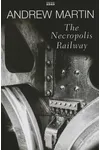
- The Necropolis Railway (2002) — Set in 1903. Jim begins as a naive junior porter in London, working the eerie Necropolis line carrying the dead to Brookwood Cemetery.
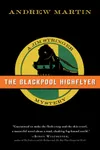
- The Blackpool Highflyer (2004) — Set in 1905. Working as a fireman on a holiday express train, Jim is caught in the aftermath of a suspicious derailment in Lancashire.
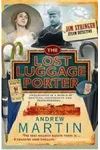
- The Lost Luggage Porter (2006) — Set in winter 1906. Now working as a railway detective in York, Jim goes undercover to infiltrate a dangerous gang of station thieves.
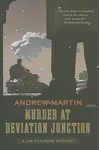
- Murder at Deviation Junction (2007) — Set in winter 1909. Jim, now a Detective Sergeant, investigates a murder near Leeds connected to a past railway disaster.
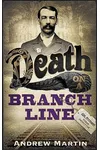
- Death on a Branch Line (2008) — Set in summer 1911. Jim is sent to a remote, idyllic Gloucestershire line to investigate the death of a railway clerk amidst political tensions.
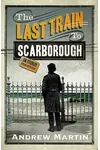
- The Last Train to Scarborough (2009) — Set in March 1914. Sent to the Yorkshire coast to locate a missing engine driver, Jim stays at a boarding house full of suspicious characters.
- The Somme Stations (2011) — Set in 1916. Jim joins the army during World War I, running tactical supply railways on the Western Front while investigating a murder amidst the mud and shelling.
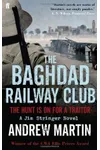
- The Baghdad Railway Club (2012) — Set in 1917. Jim is dispatched to Mesopotamia (modern-day Iraq) to secure British transport interests and solve a murder at a military club.
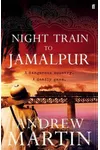
- Night Train to Jamalpur (2013) — Set in 1923. Jim travels to British India to advise the East Indian Railway at the major junction of Jamalpur, uncovering a plot against the railway administration.
- Powder Smoke (2021) — Set in December 1925. Detective Inspector Jim Stringer faces a gunman at York station, an encounter that forces him to untangle a mystery originating from a Wild West sideshow at the York Summer Gala.
Where to Start and What to Expect
Without a doubt, new readers should start with The Necropolis Railway. This debut novel establishes Jim's working-class background, his initial fascination with steam engines, and his relationship with Imogen. It also introduces the class dynamics, corporate politics of the early British railway companies, and the gritty, soot-choked atmosphere that defines the series.
Unlike cozy historical mysteries, Martin’s books carry a slightly darker, more realist edge. The early Edwardian novels highlight the intense physical danger, harsh working conditions, and social inequalities of the railway era. As the series transitions into the late 1910s and 1920s, the backdrop expands to encompass the devastating impact of World War I and the fading influence of the British Empire abroad.
Understanding the Railway Mystery Landscape
Historical mystery enthusiasts should take care not to confuse Andrew Martin's series with Edward Marston’s Railway Detective novels. While both series share a passion for locomotive history, they differ significantly in tone and period:
- Edward Marston: Set in the mid-19th century Victorian era (starting in 1851). It follows Scotland Yard detectives Robert Colbeck and Victor Leeming. The tone is more traditional and procedural.
- Andrew Martin: Set in the early 20th century Edwardian and interwar eras (starting in 1903). It follows a specialized railway policeman. The tone is grittier, deeply focused on railway worker subculture, and written in a distinctive first-person Yorkshire voice.
Adaptations and Beyond the Page
In addition to the ten main novels, the series has crossed over into other media. The sixth book, The Last Train to Scarborough, was adapted into a highly successful stage play by artistic director Chris Monks. The production debuted in June 2014 at the Stephen Joseph Theatre in Scarborough, featuring a small cast of five actors playing eighteen different parts, bringing the suspenseful boarding house mystery to life on the Yorkshire coast.