
The Recommended Reading Order
To experience the emotional depth and thematic evolution of Alma Alexander’s alternate history world, it is best to read the books in their publication order. While the core narrative of the Syai Empire is contained within a fantasy-mystery duology, the author has expanded this shared universe, or "story milieu," with a standalone historical fantasy companion. Here is the recommended path for readers:
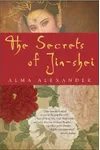
- The Secrets of Jin-Shei (2003) — This is the essential starting point that introduces readers to the mythical empire of Syai and the concept of the jin-shei sisterhood.
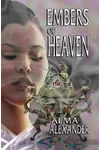
- The Embers of Heaven (2006) — A sequel set 400 years after the events of the first book, showcasing a cultural revolution that threatens to tear the empire and the sisterhood apart.
- Empress (2016) — A standalone companion novel set within the same alternate-history universe but focused on a different empire inspired by Byzantine history.
Understanding the Jin Shei Universe
Alma Alexander’s works in this setting are part of a shared world that she describes as a cohesive "story milieu." Within this world, different regions and cultures exist concurrently, much like they do in real history. The stories are distinct and take place in different eras and regions, but they share a common historical and geographical backbone.
The Core Duology: The Syai Empire
The main duology is set in the land of Syai, a fantastical mirror of medieval China where the social structures and courtly politics are deeply detailed. The central element of these books is jin-shei, a sacred, voluntary oath of lifelong sisterhood sworn between women. This bond transcends class, blood relations, and social expectations, serving as a choosing of one's own family.
In The Secrets of Jin-Shei, the narrative weaves together the lives of eight women from various walks of life—including a seamstress's daughter, a warrior, a rebel, an alchemist, and the Empress herself. Sworn to each other through the jin-shei oath, their individual fates, choices, and secrets intertwine over several decades, directly influencing the stability of the imperial throne.
In The Embers of Heaven, the story shifts forward four centuries. The empire of Syai faces a devastating civil war and a radical ideological revolution that mirrors the mid-20th-century Cultural Revolution in China. The new regime enforces strict equality, re-education, and the systematic destruction of ancient traditions. In this hostile landscape, a young woman named Amais searches for the lost, forgotten customs of the jin-shei sisterhood to preserve the core of her culture and save her family.
The Alt-History Connection: Empress
Published in 2016, Empress is a standalone historical fantasy that expands the geography of Alexander's shared milieu. Instead of the Chinese-inspired Syai, this book transports readers to a setting heavily inspired by the Byzantine Empire. The plot follows Simonis (later renamed Callidora), a bear-keeper's daughter raised in the grit of the Hippodrome arena, who claws her way through society to rule as Empress. While the book does not directly feature the jin-shei oath or the characters of Syai, it shares the thematic focus on female agency, survival, and the ascension of women in highly stratified societies, all taking place on the same alternate-history globe.
What to Know Before You Start
The Real-Life Inspiration: Nüshu
The cornerstone of the series—the secret language used to seal the jin-shei oath—is directly inspired by the real-world historical script known as Nüshu (literally meaning "women's writing"). Developed by peasant women in the Jiangyong County of Hunan Province, China, Nüshu was a private, phonetic script passed down from mothers to daughters. It allowed women to communicate freely, write letters, and embroider messages on fans and sashes away from the patriarchal society that excluded them from formal education. Alexander took this real historical phenomenon and adapted it into the magical, binding system of jin-shei in Syai.
Chronological Caveats and Standalone Status
Because The Secrets of Jin-Shei and The Embers of Heaven are separated by a 400-year gap, they feature entirely different casts of characters. This means that The Embers of Heaven can technically be read as a standalone novel. However, doing so is not recommended for first-time readers. The second book assumes a familiarity with the historical weight, spiritual significance, and cultural impact of the jin-shei oath that was established in the first book. Reading them in order provides a starker, more tragic contrast when the revolutionary forces in the sequel attempt to stamp out the sisterhood.
Similarly, Empress is completely self-contained and can be read at any point. It serves as an excellent companion piece for readers who want to see how the author applies similar themes of female power and political maneuvering to a Byzantine-inspired setting within the same shared universe.
Practical Reader Guidance
- Best Starting Point: Always start with The Secrets of Jin-Shei. It introduces the lore, the world of Syai, and the emotional resonance of the central sisterhood oath.
- Tone and Style: The series features lush, character-driven world-building with an emphasis on court intrigue, interpersonal dynamics, and historical elegance. The fantasy elements are soft and mythical rather than action-oriented.
- Availability: The books have seen various editions, with The Secrets of Jin-Shei originally published in 2003 (with major US paperbacks arriving in 2004) and Embers of Heaven in 2006. Standalone audiobooks and ebook editions are widely available for all three novels.