
The Recommended Reading Path
Dennis Lehane’s historical crime saga, often referred to as the Coughlin Trilogy, spans several decades of American history. While the series follows a single family, there are two distinct ways readers can approach the books depending on their personal reading preferences.
Option 1: The Chronological/Publication Order (Recommended)
For the most complete experience, you should read the trilogy in its original publication order, which also matches the chronological timeline of the narrative. This path allows you to see the full evolution of the Coughlin family, beginning with the political and social unrest of post-WWI Boston and transitioning into the organized crime networks of the mid-20th century. By starting at the beginning, you gain critical context regarding the family patriarch, Thomas Coughlin, and the sibling dynamics that shape the choices of his sons.
Option 2: The Gangster-Focused Order (Starting with Live by Night)
If you are primarily interested in a fast-paced, traditional gangster story focusing on Joe Coughlin's rise as a rum-running kingpin, you can skip the first book and start directly with Live by Night. The second and third books focus exclusively on Joe Coughlin and read like classic, self-contained noir thrillers. Starting here allows you to dive straight into the Prohibition-era action in Tampa and Cuba without having to navigate the massive historical weight and multi-perspective structure of the first volume.
The Coughlin Books in Order
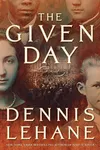
- The Given Day (2008)
Set between 1918 and 1919 in Boston, this massive historical epic establishes the trilogy. The story centers on Danny Coughlin, a beat cop and the oldest son of a powerful, corrupt police captain. As Danny becomes involved in the burgeoning labor movement and the historic Boston Police Strike, he crosses paths with Luther Laurence, an African-American man fleeing violence in Ohio. Joe Coughlin, the protagonist of the subsequent novels, appears here only as a young child. The book is rich with historical details, featuring real-life figures like Babe Ruth, Calvin Coolidge, and J. Edgar Hoover.
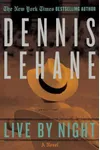
- Live by Night (2012)
Shifting focus to the 1920s and 1930s during the height of Prohibition, this installment moves the series into classic gangster territory. The story follows Danny's younger brother, Joe Coughlin, who rebels against his police father to become a self-proclaimed "outlaw." Joe rises through the ranks of the Italian mob and is sent from Boston to Ybor City in Tampa, Florida, to oversee the syndicate's lucrative illegal rum-running and speakeasy operations. The novel won the Edgar Award for Best Novel in 2013 and showcases Joe's struggles with rival gangs, the Ku Klux Klan, and his own moral code.
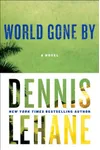
- World Gone By (2015)
Set in 1943 during the height of World War II, the final book in the trilogy finds Joe Coughlin living as a wealthy, semi-retired consigliere to the Tampa mafia. Despite his efforts to maintain a stable, respectable life for his young son, Tomas, Joe is haunted by his past sins and the ghosts of those he has lost. When he learns of a contract out on his life, Joe must navigate a web of betrayal among mob bosses, federal agents, and international conspirators to survive. The novel wraps up Joe's story with a dark, elegiac look at the cost of criminal ambition.
Danny vs. Joe: A Dynamic Shift in Tone
Readers should note that there is a significant stylistic shift between the first book and the later two volumes. The Given Day is a sprawling, omnisciently narrated social novel that seeks to capture the soul of a city in transition. It is dense, deeply atmospheric, and deals with complex historical themes such as race relations, unionization, anarchist bombings, and the Spanish Flu pandemic.
In contrast, Live by Night and World Gone By are tighter, more focused crime novels written in a brisk, cinematic style. While still historically grounded, they focus heavily on Joe’s personal psychology, the mechanics of organized crime, and the classic noir theme of a criminal trying to maintain his humanity in a violent world. Knowing this shift beforehand helps set expectations, as some readers who love the historical density of the first book are surprised by the genre-fiction pace of the sequels, while crime fans who find the first book slow find themselves flying through the Tampa-based novels.
What to Know Before You Start
- Standalone Reading: Each book has a definitive ending and can be read independently. Lehane writes the sequels with enough contextual exposition that you will not feel lost if you skip The Given Day.
- The Boston Connection: Like much of Dennis Lehane's famous work (such as Mystic River and the Kenzie & Gennaro series), the trilogy begins in Boston, drawing heavily on the city's distinct neighborhood dynamics and historical tensions.
- Adaptations: In 2016, Ben Affleck directed, wrote, and starred in a film adaptation of Live by Night. While the film captured the aesthetic beauty of Ybor City, it compressed much of the novel's complex plotting, receiving mixed reviews from critics and fans of the book.