
How to Read the Joe Golem Series
Set in an alternate-history mid-20th century where a cataclysmic disaster submerged Lower Manhattan in 1925, Joe Golem: Occult Detective follows an amnesiac investigator who solves supernatural cases in the flooded streets of the 'Drowning City.' The series, co-created by Mike Mignola and Christopher Golden, spans a short story, an illustrated prose novel, and a series of collected comic books.
Because the comic books serve as both a prequel and a direct adaptation of the prose novel, readers can choose between two main paths to experience Joe's story: the Chronological Order or the Publication Order.
Path 1: The Chronological Reading Order
If you want to experience the story's timeline in the order that events occur for Joe Golem, start with the prequel comics before moving into the core storyline. This order allows you to follow Joe's early detective work in 1965 and 1966 before building up to the dramatic events of the drowning city crisis in 1974.
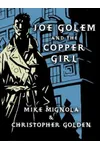
- "Joe Golem and the Copper Girl" (2012): A promotional digital short story that serves as an excellent introduction to Joe's detective cases and his relationship with his mentor, Mr. Church.
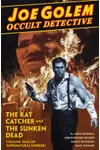
- Joe Golem: Occult Detective, Vol. 1: The Rat Catcher and the Sunken Dead (2016): This comic collection is set in 1965 (nearly a decade before the novel) and follows Joe as he investigates child-snatching monsters and supernatural threats.
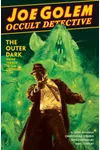
- Joe Golem: Occult Detective, Vol. 2: The Outer Dark (2018): Set in 1966, this volume sees Joe investigating paranormal madness and cosmic horrors while beginning to experience more intense flashbacks to his past.
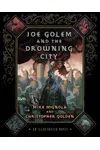
- Joe Golem and the Drowning City (2012 novel): The original prose novel, set in 1974, which serves as the centerpiece of the series. Here, Joe faces a rescue mission to find an old friend, leading to a confrontation with his own origins.
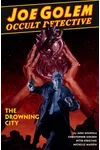
- Joe Golem: Occult Detective, Vol. 3: The Drowning City (2019): The comic adaptation of the first half of the novel. Reading this alongside or instead of the novel gives you a visual depiction of the same events.
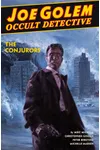
- Joe Golem: Occult Detective, Vol. 4: The Conjurors (2020): The concluding comic volume that adapts the climax of the novel and provides the resolution to the story arc.
Path 2: The Publication Reading Order
Reading the series in publication order is the way original fans experienced the story. This path starts with the core mystery established in the prose novel, and then flashes back to fill in the gaps of Joe's detective career before showing the final showdown in comic format.
- "Joe Golem and the Copper Girl" (2012): Released right before the novel to set the mood.
- Joe Golem and the Drowning City (2012 novel): The original illustrated novel that introduces the flooded setting and Joe's hidden nature.
- Joe Golem: Occult Detective, Vol. 1: The Rat Catcher and the Sunken Dead (2016): Flashback prequel stories in comic form.
- Joe Golem: Occult Detective, Vol. 2: The Outer Dark (2018): Further prequel stories detailing the cosmic horror of the universe.
- Joe Golem: Occult Detective, Vol. 3: The Drowning City (2019): The beginning of the comic book retelling of the 2012 novel.
- Joe Golem: Occult Detective, Vol. 4: The Conjurors (2020): The conclusion of the comic book adaptation.
Understanding the Comic Adaptations vs. the Novel
One of the most common questions new readers have is whether they need to read both the 2012 illustrated novel and the later comic books. The short answer is that they cover the same primary story arc, but they offer different experiences.
The first two comic collections (The Rat Catcher and the Sunken Dead and The Outer Dark) contain original prequel stories that do not appear in the prose novel. These are highly recommended because they build up Joe's character and establish the growing dread surrounding his amnesia and identity. The final two comic volumes (The Drowning City and The Conjurors) are direct comic book adaptations of the prose novel itself. While the comic version is visually spectacular and captures Mignola's signature dark aesthetic, the prose novel offers more internal monologue, world-building detail, and atmospheric depth.
Connections to the Broader "Outerverse"
For readers who want to dive deeper, the Joe Golem series is part of a larger alternate history universe created by Mike Mignola and Christopher Golden known as the Outerverse. This universe is entirely separate from the Hellboy/B.P.R.D. universe, meaning you do not need any prior knowledge of Hellboy to enjoy Joe Golem.
Within the Outerverse, Joe Golem's true identity is linked to Josef the Golem, a character who appears in the Baltimore series. In the 15th century, Josef was a clay construct built to hunt witches. During the late 1930s (the World War II era of the Outerverse), his exploits are explored in the two-issue comic series The Golem Walks Among Us! (which is collected in the anthology hardcover Tales from the Outerverse). Decades later, Josef is restored and takes on the human persona of 'Joe,' working as a private investigator in the waterlogged ruins of New York, completely unaware of his past as a witch-hunting monster.
Practical Reader Advice
If you are a fan of atmospheric noir, detective stories, and monster-hunting lore, the best place to start is the prose novel Joe Golem and the Drowning City. It establishes the rules of the world and the core mystery of Joe's identity. If you prefer a visual medium, you can jump straight into the comics starting with Volume 1, then proceed chronologically through the four volumes. If you choose this comic-only path, you can skip the prose novel entirely, as Volumes 3 and 4 cover the same events.
For the complete Outerverse experience, read the Baltimore series first to understand the origin of the supernatural curse that plagues this alternate earth, read The Golem Walks Among Us! to see Joe's early monster-hunting days, and then read the Joe Golem: Occult Detective series to see his final mid-20th-century cases.