



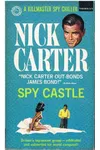




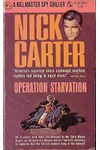


How to Read the Killmaster Series: The Recommended Path
Navigating a massive, 261-book espionage series published over nearly three decades might seem like a daunting mission, but the good news is that Nick Carter’s AXE files are surprisingly accessible. Because the books were written as fast-paced, episodic paperbacks for the Cold War men's adventure market, you do not need to read them in strict chronological or publication order to follow a complex story arc. However, a strategic reading path will help you get the absolute best out of your time with the Killmaster.
Here is our recommended path to tackle the series:
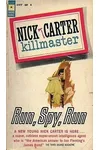
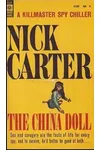
- The Essential Foundation: Start at the very beginning with Run, Spy, Run (1964) and The China Doll (1964). Written by Valerie Moolman (with Michael Avallone contributing to the first), these novels establish the AXE agency, Nick Carter's status as Agent N3, his relationship with boss David Hawk, and his iconic arsenal (including his Luger "Wilhelmina," his stiletto "Hugo," and his poison gas bomb "Pierre").
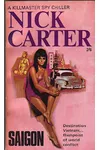
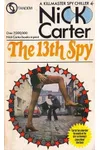
- The Golden Age Highlights (Late 1960s & 1970s): Once you have the setup, sample the best entries from the series’ peak. Try The 13th Spy (1965) for classic Moscow-based espionage, Saigon (1964) for high-stakes action set against the backdrop of the Vietnam War, and Code Name: Werewolf (1973) or The Devil's Dozen (1974)—both penned by acclaimed author Martin Cruz Smith before he wrote Gorky Park.
- The Modern Tactical Era (1980s): To see how the series transitioned into high-tech, tactical military thrillers, read the entries written by David Hagberg, who brought a more realistic and gritty geopolitical tone to the franchise.
- The Final Missions: Conclude your journey by seeing how the Cold War era wrapped up in the final books of the run, ending with Arctic Abduction (1990) and Dragon Slay (1990) as the global political landscape shifted forever.
What to Know Before You Start: Cold War Espionage and AXE
Before you dive headfirst into Nick Carter's world, it is helpful to understand the context of how this series was created. The name "Nick Carter" actually dates back to a dime-novel detective from 1886. In the 1960s, publisher Lyle Kenyon Engel decided to cash in on the James Bond spy craze by completely rebooting the character as a modern, globe-trotting secret agent. This is how the "Killmaster" moniker was born.
Nick Carter is codenamed N3, an elite agent for AXE, a U.S. intelligence agency so secret that even the President barely knows of its operations. Carter's missions are highly dangerous, and he uses a blend of physical mastery, daily yoga, deep linguistic skills, and lethal gadgets to survive. His trademark weapons are almost characters in their own right: Wilhelmina, a 9mm Luger pistol; Hugo, a pearl-handled stiletto strapped to his arm; and Pierre, a tiny gas bomb concealed in his clothing.
Because the novels were written by a rotating stable of freelance writers under a single house pseudonym, the tone can shift slightly from book to book. Some entries are gritty and realistic, while others lean heavily into pulpy excess, racy romance, and over-the-top Cold War paranoia. Expect vintage 1960s, 70s, and 80s attitudes, breakneck pacing, and plenty of retro action.
The Publication Order: Navigating the 260+ Juggernaut
If you are a completionist who wants to read the books in order of release, you will be tracing a history that spans from 1964 to 1990. During its peak, the publisher was churning out these pocket-sized adventures on a monthly basis. The publication order is straightforward, starting with Run, Spy, Run in 1964 and running consistently through to the early 1990s.
Reading in publication order allows you to experience the evolution of the Cold War itself. The early 1960s books are dominated by tensions in Southeast Asia and direct Soviet conflicts, while the 1970s introduce more complex international terror syndicates, and the 1980s entries adopt the high-tech, hardware-heavy style of modern thriller novelists. However, because the continuity is loose, reading from book 1 to book 261 consecutively is not necessary to understand the character or his world.
Standalone Nature and Chronological Caveats
One of the most frequent questions readers ask is whether there is a chronological order to the Killmaster books. The short answer is: no. Because of the quick-turnaround production methods used by Lyle Kenyon Engel's syndicate, authors rarely consulted other books in the series beyond a basic style guide. Carter does not age in real-time, his love interests rarely carry over past a single book, and major geopolitical changes are often reset or ignored to keep him on the move.
This means you can read the books in almost any order. If you find a vintage copy of Book #112 (Triple Cross) or Book #184 (The Algarve Affair) at a garage sale or used bookstore, you can jump straight in without having read the hundred-plus books that came before it. The only real chronological caveat is that Nick's gear and AXE headquarters are established in the first couple of books, so reading Run, Spy, Run first is highly recommended.
The Publishing Syndicate Behind the Pseudonym
The massive scale of the Killmaster series was made possible by Lyle Kenyon Engel and his packaging company, Book Creations, Inc. Engel recognized that no single author could keep up with the monthly demand for new Nick Carter thrillers. He set up a syndicate where he would outline plots, assign them to freelance writers, and edit the final manuscripts to ensure a consistent tone. Authors were paid flat fees and worked under incredibly tight deadlines, sometimes finishing a novel in just two or three weeks. This high-volume production method meant that writers like Dennis Lynds, Robert J. Randisi, and Bill Pronzini could contribute to the series without disrupting their own independent careers. While this system kept the books on shelves, it also led to occasional inconsistencies in Nick Carter's backstory and the capabilities of his weapons, which fans of the series view as part of its retro, pulpy charm.
Key Highlights and Standout Authors
With 261 books in the library, the quality of the Killmaster novels inevitably varies. However, several entries stand out because of the talented writers hired to write them. Since the covers only list "Nick Carter," readers have compiled lists of the real authors behind the pages over the decades:
- Valerie Moolman: Moolman was crucial in defining the early voice of the modern Nick Carter. She wrote the landmark debut Run, Spy, Run (collaborating with Michael Avallone) and went on to write highly regarded early books like The China Doll (1964) and Saigon (1964).
- Manning Lee Stokes: A prolific pulp veteran, Stokes wrote many of the early entries in the mid-to-late 1960s, helping cement the series' signature mix of fast-paced action and international locales.
- Martin Cruz Smith: Before he became a household name with his bestselling Soviet detective novel Gorky Park, Smith honed his craft on the Killmaster series, writing acclaimed entries like Code Name: Werewolf (1973) and The Devil's Dozen (1974).
- Gayle Lynds: Later in the series' run, Lynds (who would go on to write bestselling espionage thrillers of her own) contributed to the franchise, bringing a sophisticated touch and a fresh perspective to the aging series.
- David Hagberg: Hagberg was one of the most prolific contributors in the later years of the series, penning numerous books under the pseudonym. His entries are highly praised by espionage enthusiasts for their detailed military tactics and complex political plots.
Where to Find and Collect the Books Today
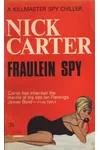
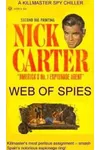
Because the series has been out of print for decades, tracking down physical copies of the Killmaster books is part of the fun for modern fans. The original paperbacks, with their vibrant Cold War cover art showing Nick Carter dodging explosions or posing with glamorous companions, are highly collectible. Most collectors search through local used bookstores, thrift shops, estate sales, and online marketplaces like eBay or specialist pulp fiction dealers. While some of the early, rare titles can command higher prices, many of the mid-series paperbacks remain highly affordable, making it easy to build a substantial retro spy shelf on a budget.