
The Recommended Reading Order
The Kingdom Trilogy (sometimes referred to as the Bruce series) is a tightly plotted, chronological historical fiction series. Because the story follows a single continuous timeline and a central protagonist, there is only one recommended path for readers. You should read the books in their original publication order, which matches the chronological progression of the historical events.
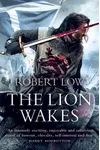
- The Lion Wakes (Published: 2011) — Covers the spark of the rebellion starting in 1296.
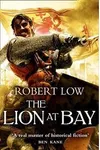
- The Lion at Bay (Published: 2012) — Follows the aftermath of Falkirk and the rising power of Robert the Bruce.
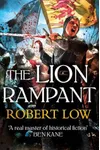
- The Lion Rampant (Published: 2013) — Leads up to the climactic Battle of Bannockburn in 1314.
Additionally, HarperCollins released a omnibus edition titled The Complete Kingdom Trilogy in late 2013, which gathers all three novels into a single volume for readers who prefer to tackle the saga in one go.
The Books of the Kingdom Trilogy
1. The Lion Wakes (2011)
The trilogy opens in the late 13th century, beginning around 1296. Following the sudden death of King Alexander III, Scotland is left without a clear heir, allowing King Edward I of England (the Hammer of the Scots) to claim sovereignty. The narrative introduces us to Hal of Herdmanston (Sir Henry Sientcler), a young, ambitious knight who is thrust into a kingdom fracturing under civil unrest and foreign occupation. As rebellion begins to simmer under William Wallace, Hal must navigate the brutal realities of war and family alliances while guarding a dangerous secret that could alter the fate of the Scottish crown.
2. The Lion at Bay (2012)
The second volume takes place in the dark aftermath of the Battle of Falkirk. William Wallace has been defeated and forced into hiding, leaving the resistance fractured. The focus shifts to the intense rivalry and political maneuvering between the Bruce and Comyn families. Hal of Herdmanston finds himself serving Robert the Bruce, whose path to the throne is paved with blood, betrayal, and shifting allegiances. This book captures the grueling nature of guerilla warfare and the immense personal cost paid by those who chose to stand against the English occupation.
3. The Lion Rampant (2013)
The final chapter of the trilogy culminates in the year 1314. Robert the Bruce has crowned himself King of Scots, but his hold on the nation remains incredibly fragile. English forces are marching north in massive numbers, culminating in the historic Battle of Bannockburn. Hal of Herdmanston, now a battle-hardened knight, must risk everything to secure his family's survival and Scotland's freedom. Low wraps up the trilogy with visceral battle scenes that showcase the tactical grit and human cost of Scotland’s struggle for independence.
Understanding the Chronology and Historical Context
Unlike some sprawling historical fiction sagas that feature spin-offs, prequels, or companion short stories, the Kingdom Trilogy is a self-contained narrative. The internal timeline spans from 1296 to 1314, tracking the Scottish Wars of Independence step-by-step. There are no alternate reading paths or chronological deviations to worry about. The publication order perfectly mirrors the flow of history, making it straightforward for new readers to jump in.
A key appeal of Low’s work is his refusal to rely on the clean, romanticized myths popularized by modern media. Instead, he paints a raw, muddy, and politically complex portrait of medieval Scotland. Major historical figures like William Wallace, Robert the Bruce, and Edward I are present, but they are viewed through the critical eyes of lesser-known knights, foot soldiers, and lords who actually fought on the front lines.
Meet Hal of Herdmanston: The Fictional Lens
The anchor of the trilogy is Sir Henry "Hal" Sientcler, the Lord of Herdmanston. Robert Low created Hal to serve as a relatable, ground-level perspective on the wars. Rather than focusing solely on the legendary figures whose fates are already recorded in history books, the narrative centers on Hal’s struggle to survive the crossfire of shifting loyalties. As a minor noble from Lothian, Hal is frequently forced to make compromises, dealing with the violent realities of feudal duties, sibling rivalries, and the dangerous whims of kings.
What to Know Before You Start
- Authentic Dialogue and Dialect: Robert Low makes frequent use of period-appropriate terminology, historical slang, and Scottish dialects. While this provides immersive world-building, it can take a few chapters for modern readers to adapt to the prose style.
- A Journalist’s Eye for Violence: Before writing historical fiction, Low worked as a journalist covering warzones in Vietnam, Kosovo, and Sarajevo. This experience, combined with his background in historical live-action re-enactments, translates into exceptionally graphic, realistic, and unglamorized descriptions of medieval combat.
- Feudal Politics: The trilogy highlights that the Wars of Independence were not just Scotland versus England, but also a brutal civil war between rival Scottish factions (such as the Bruces and the Comyns). Paying close attention to the family trees and alliances in the opening chapters of each book is highly recommended.
Where to Go Next: Robert Low’s Other Series
If you finish the Kingdom Trilogy and want to read more of Robert Low's visceral historical fiction, he has penned several other highly regarded series:
- The Oathsworn Series: Starting with The Whale Road (2007), this five-book series follows a band of Viking mercenaries navigating the brutal northern seas during the 10th century. It is perfect for fans of Norse history and maritime adventure.
- The Brothers of the Sands Series: Beginning with Beasts Beyond the Wall (2019), this series shifts the focus to the Roman Empire's borders, following a group of auxiliary soldiers.
- The Border Reivers Series: Starting with A Dish of Spurs (2020), this trilogy explores the lawless borderlands between England and Scotland during the Elizabethan era.