
The Recommended Reading Order
For the best experience in Patrick Rothfuss’s fantasy universe, we highly recommend reading the books in publication order. While some stories take place at different times chronologically, the world-building, magical mechanics, and character motivations are introduced in a way that assumes you have read the core novels first. Here is the recommended path:
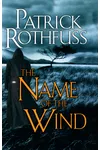
- The Name of the Wind (2007) – The main series Book 1. This is the absolute starting point where we meet Kvothe and begin his story.
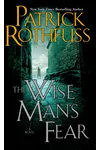
- The Wise Man’s Fear (2011) – The main series Book 2. Kvothe’s adventures expand dramatically beyond the University.
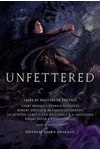
- How Old Holly Came to Be (2013) – An experimental, standalone short story set in the same world, originally published in the Unfettered anthology.
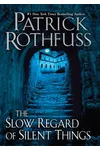
- The Slow Regard of Silent Things (2014) – A lyrical companion novella focusing on Auri, set concurrently with a brief section of the second novel.
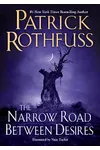
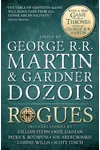
- The Narrow Road Between Desires (2023) – A standalone novella focusing on Bast, which expands and reimagines the 2014 short story "The Lightning Tree" from the Rogues anthology.
The Core Novels: Kvothe’s Three-Day Tale
The main narrative of the Kingkiller Chronicle is built around a unique concept: Kvothe, a legendary and notorious figure living under an alias as a quiet innkeeper, agrees to tell the true story of his life to a scribe named Chronicler. The story is meant to take exactly three days, with each day corresponding to a single massive novel.
The Name of the Wind (Book 1)
Published in 2007, this debut novel introduces us to Kvothe at the Waystone Inn before diving into Day One of his story. We follow his childhood in a troupe of traveling performers (the Edema Ruh), the tragedy that leaves him orphaned, his years surviving on the streets of Tarbean, and his eventual admission to the University, where he studies the logical magic system of Sympathy and searches for the mythical Chandrian.
The Wise Man’s Fear (Book 2)
Published in 2011, Day Two continues Kvothe’s education and sends him on a series of journeys away from the University. He travels to the court of the Maer Alveron in Severen, hunts bandits in the Eld, encounters the mercenary Adem people, and is lured into the twilight realm of the Fae by the temptress Felurian. This book significantly expands the lore of Temerant.
The Doors of Stone (Book 3 - Forthcoming)
This will conclude the three-day autobiographical framing story. Though eagerly awaited by fans, Patrick Rothfuss has not yet announced a definitive publication date. It is intended to detail the events that led to Kvothe’s fall, the start of the war plaguing the present-day frame story, and how he ended up running the Waystone Inn.
The Novellas and Companion Stories
Beyond the main novels, Rothfuss has written shorter works that explore secondary characters and side aspects of the lore. You don’t need to read these to follow the main plot, but they offer gorgeous prose and deep world-building.
The Slow Regard of Silent Things
This 2014 novella is a quiet, non-traditional character study of Auri, a former University student who now lives in the Underthing—the forgotten labyrinth beneath the school. The story takes place over seven days while Kvothe is away from the University. Chronologically, these events occur between chapters 7 and 11 of The Wise Man’s Fear. Because of its lack of dialogue and unusual structure, Rothfuss himself advises that new readers should not start here.
The Narrow Road Between Desires vs. The Lightning Tree
In 2014, Rothfuss published a short story called "The Lightning Tree" in the multi-author anthology Rogues, edited by George R.R. Martin and Gardner Dozois. It follows Bast, Kvothe’s Fae assistant and student, as he runs errands, strikes bargains with local children, and keeps up his human disguise in the town of Newarre.
In 2023, Rothfuss published The Narrow Road Between Desires. This is a significantly expanded, revised, and illustrated standalone novella version of "The Lightning Tree." It features much more detail, expanded scenes, and beautiful artwork by Nate Taylor. Because it is the definitive and expanded version of the same narrative, you only need to read The Narrow Road Between Desires.
How Old Holly Came to Be
This short story was published in the 2013 anthology Unfettered, curated by Shawn Speakman to raise funds for medical bills. It is one of the most unusual stories in the series, written in a rhythmic, chant-like prose style from the perspective of an ancient holly tree. While it contains hints and lore regarding the magic of naming and history, it does not feature any of the main characters from the novels and can be read at any point after you are familiar with the setting.
Chronological Order vs. Publication Order
If you wanted to read the events strictly in the order they occur in the timeline of Temerant, the path changes slightly, though we strongly recommend staying with publication order for your first read:
- How Old Holly Came to Be – Set in the ancient, mythic past of Temerant.
- The Name of the Wind – Covers Kvothe's early life and the first day of his story.
- The Wise Man’s Fear – Covers the second day of Kvothe's story.
- The Slow Regard of Silent Things – Takes place concurrently with chapters 7-11 of The Wise Man’s Fear.
- The Narrow Road Between Desires – Set during the summer in Newarre, taking place shortly before the arrival of Chronicler at the Waystone Inn.
What to Know Before You Start
First-time readers should keep in mind that the Kingkiller Chronicle relies heavily on a frame narrative. The story is told in the first person by Kvothe, who is looking back on his life. This means Kvothe is an unreliable narrator, frequently hyping up his own legend or warning the listener of his mistakes. Pay attention to the quiet "interludes" set in the present day at the Waystone Inn, as they highlight the contrast between the young hero and the tired man he became.
Additionally, because the third book remains unpublished, entering this fandom means accepting a cliffhanger. Enjoy the journey for its poetic prose, brilliant logic-based magic systems like Sympathy, and deep mythological mysteries.