

How to Read the MacLeod Series: The Recommended Reading Path
Lynn Kurland’s MacLeod series is a beloved cornerstone of paranormal romance, weaving together time travel, ancestral castles, and family legacies that stretch from the 14th-century Scottish Highlands to modern-day Manhattan. However, navigating the series can be a bit like traveling through time itself: the books jump back and forth across different eras, and their characters are deeply intertwined with Kurland’s parallel de Piaget family saga.
So, where should you start, and what is the best path to take? Readers generally choose between two primary paths: Publication Order (which allows you to experience the world exactly as Kurland built it) and Chronological Order (which follows the historical timeline of the characters' lives). Because the overarching narrative is loose and each book focuses on a standalone romance, both paths are perfectly valid, but they offer distinct reading experiences.
Option 1: Publication Order (Recommended)
If you want the most seamless experience without worrying about retrofitted timeline details, reading in publication order is highly recommended. This allows you to meet the characters as the author introduced them, letting the magic of the portals and family connections reveal themselves naturally. It also matches the release flow of the main novels and novellas provided in the local database:
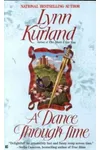
- A Dance Through Time (1996) – Novel: The book that started it all, following writer Elizabeth Smith as she falls asleep in Central Park and awakens in 1311 Scotland to meet James MacLeod.
- The Three Wise Ghosts (1996) – Novella: A cozy holiday tale featuring matchmaking spirits and a modern executive meeting a free-spirited American at an English estate.
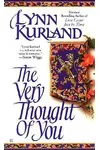
- The Very Thought of You (1998) – Novel: Follows corporate executive Alexander Smith, who finds a medieval map that transports him back to 14th-century Scotland, where he falls for noblewoman Amy de Piaget.
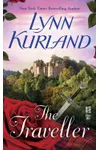
- The Traveller (2001) – Novella: Originally published in the A Knight's Vow anthology, this short story follows modern Manhattanite Julianna Nelson as she is swept back to medieval Scotland and encounters Sir William de Piaget.
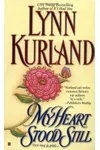
- My Heart Stood Still (2001) – Novel: Introduces Thomas McKinnon, a modern businessman restoring a medieval castle, and Iolanthe MacLeod, a spirited 12th-century medieval lass whose spirit lingers.
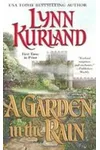
- A Garden in the Rain (2003) – Novel: Focuses on Patrick MacLeod, a Highlander burdened by his family's time-travel secrets, and Madelyn Phillips, a modern woman whose Scottish vacation leads her to her destiny.
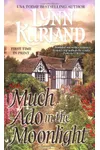
- Much Ado in the Moonlight (2006) – Novel: Features Victoria McKinnon producing a play at her brother’s castle, only to find it haunted by the grumpy 800-year-old ghost Connor MacDougal.
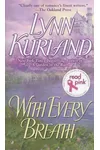
- With Every Breath (2008) – Novel: Follows medieval laird Robert Cameron as he searches for a rumored healer, only to find modern-day Sunshine Phillips pulled into his harsh medieval reality.
- Roses in Moonlight (2013) – Novel: Follows antiquities dealer Derrick Cameron and textile historian Samantha Drummond as they are pulled back to Elizabethan England over a piece of missing lace.
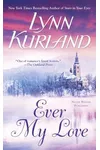
- Ever My Love (2017) – Novel: The story of Nathaniel MacLeod, a reluctant time-traveler who moves between the present and the 14th century, and Emma Baxter, the jewelry designer who follows him.
Option 2: Chronological Reading Order & Chronological Caveats
For readers who prefer to watch the centuries unfold in linear order, a chronological sequence is an appealing alternative. However, attempting a strict chronological read comes with major caveats. Because Lynn Kurland frequently jumps between the 12th, 13th, 14th, and 20th centuries—often within the same book due to time travel—a perfect chronological line is impossible. Additionally, the MacLeod and de Piaget lineages are so closely related that separating them entirely is difficult.
A general chronological flow for the main MacLeod-centric entries (focusing on the medieval eras they take place in) usually begins with the medieval settings of the 13th and 14th centuries before moving forward to the modern eras. The author's official reading list places the books in chronological groupings by family to help readers manage the timeline. However, readers should be prepared for the fact that reading chronologically will cause them to jump back and forth in publishing style, as later-written books are set in earlier historical periods.
The MacLeod & de Piaget Connection: What to Know Before You Start
You cannot talk about the MacLeods without mentioning the de Piagets. The two families are connected by blood, marriage, and shared magical occurrences. While the MacLeod series can technically be read on its own, key characters from the de Piaget family frequently make guest appearances, drop hints about time travel portals, or act as ancestors and descendants. For the ultimate deep-dive experience, many fans recommend a combined reading order that merges both series by publication date.
Before you begin, keep these details in mind:
- Standalone Viability: Each novel is structured around a central romance that reaches a complete resolution by the final page. You do not need to read all previous books to understand the plot of any individual title.
- The Tone: Lynn Kurland is famous for writing clean, heartwarming, and humorous paranormal romances. The focus is always on emotional depth, historical atmosphere, and playful character interactions rather than high-stakes action or explicit content.
- Time Travel Logic: Time travel in Kurland's universe is often triggered by family heritage, mystical maps, ancient castles, or magical portals in the Scottish Highlands. The mechanics are soft and whimsical, serving as a romantic catalyst rather than a science-fiction plot device.
Common Order Disagreements and Novella Placements
Among the fandom, the biggest disagreements center on where to place the holiday novellas like The Three Wise Ghosts and anthology contributions like The Traveller. Because these stories are shorter and often serve as bridges or character check-ins, some lists omit them entirely to focus on the full-length novels. However, for a complete experience, readers recommend inserting them between the novels as they were published. For instance, The Three Wise Ghosts is best read early in the series to set the whimsical, ghostly tone that recurs in later books like My Heart Stood Still and Much Ado in the Moonlight.