
The Recommended Reading Order for Mage Errant
For the best experience, the Mage Errant series should be read in publication order. Because the narrative follows a continuous arc of magical growth, found family bonds, and escalating stakes, skipping books or reading them out of sequence is not recommended. The main story begins with Hugh of Emblin entering Skyhold Academy and concludes with an epic multi-world conflict.
Here is the recommended reading path for the main series:
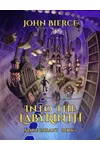
- Into the Labyrinth (2018)
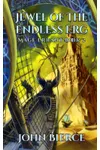
- Jewel of the Endless Erg (2019)
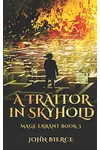
- A Traitor in Skyhold (2019)
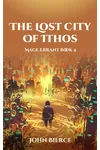
- The Lost City of Ithos (2020)
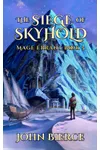
- The Siege of Skyhold (2021)
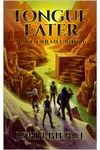
- Tongue Eater (2022)
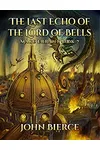
- The Last Echo of the Lord of Bells (2023)
When to Read the Short Stories
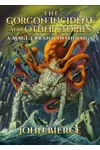
In addition to the seven main novels, John Bierce published a companion collection, The Gorgon Incident and Other Stories (2024). This anthology contains twenty-four short stories spanning roughly five centuries of history on the world of Anastis. Although the author designed these stories to be accessible to newcomers, they contain deep lore, historical background (such as the fall of the Ithonian Empire), and character insights that are far more rewarding if you read them after completing the main seven-book series.
The Aetheriad Multiverse: Connections and Spin-Offs
The world of Anastis is only one part of a larger cosmic setting known as the Aetheriad (formerly referred to as the Aetherverse). All of John Bierce’s books are set within this shared multiverse and operate under the same fundamental natural laws of magic and aether flow.
The Wrack
Published in 2020, The Wrack is a standalone epidemiological fantasy novel set on Iopis, a world plagued by a devastating disease. While it has an entirely separate cast of characters and a different narrative tone, it shares subtle links to the main series, such as the appearance of the interdimensional merchant guild known as the Radhan. You can read The Wrack at any point, though reading it before or alongside the later Mage Errant books adds neat context to the multiversal travel elements.
More Gods Than Stars
This is John Bierce's newer series set within the same multiverse, beginning with The City That Would Eat the World. It features its own self-contained plot and magic systems, making it suitable to read after you finish the main adventures of Hugh and his friends.
What to Know Before You Start
- Progression Fantasy and Hard Magic: The series belongs to the "progression fantasy" subgenre. Characters systematically train, research, and design new spells to grow their personal reserves. Magic is built around affinities (like fire, wind, dreams, or steel), operating under ecological and geological rules.
- Character Focus and Found Family: At its heart, the series is a coming-of-age story centered on a close-knit group of misfit apprentices. It has been highly praised for its natural representation of diverse identities, including neurodivergent characters and varying sexual orientations.
- No Ordering Disagreements: Unlike series with complicated prequels or timeline jumps, the community and the author are in complete agreement: start with Book 1, Into the Labyrinth, and read straight through to Book 7.