













The Best Way to Read the Maisie Dobbs Series
For the most rewarding experience, the Maisie Dobbs series should be read strictly in publication order. While each novel presents a self-contained mystery, the core of the series is Maisie’s personal, professional, and psychological development. As she heals from her experiences in the Great War and progresses through the turbulent interwar years into the Blitz, her relationships, personal growth, and financial standing evolve in ways that will be spoiled if read out of order.
Publication Order of Maisie Dobbs Books
Jacqueline Winspear’s award-winning series spans eighteen novels published between 2003 and 2024, taking readers on an emotional journey from 1929 through 1945.
- Maisie Dobbs (2003): Introduces Maisie as she establishes her own private investigation practice in 1929 London. This origin story contains extensive flashbacks to her working-class childhood, her education under Maurice Blanche, and her traumatizing service as a nurse during World War I.
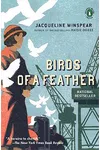
- Birds of a Feather (2004): Set in 1930, Maisie is hired to find a runaway heiress, but the case turns deadly as she discovers a killer targeting a group of women who served during the war.
- Pardonable Lies (2005): Maisie travels back to France to investigate a pilot's death, forcing her to confront her own unresolved battlefield trauma.
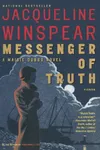
- Messenger of Truth (2006): Set in 1931 London, Maisie investigates the suspicious death of a controversial artist on the eve of his gallery exhibition.
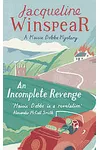
- An Incomplete Revenge (2008): Maisie travels to Kent during the annual hop-picking season to investigate a series of mysterious fires and thefts for a family friend.
- Among the Mad (2009): Set in late 1931, Maisie is dragged into a political conspiracy after witnessing a street suicide, leading to a race against a potential chemical attacker.
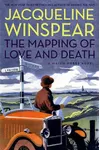
- The Mapping of Love and Death (2010): Maisie is hired to find the American woman who loved a cartographer whose body is recovered on a former French battlefield.
- A Lesson in Secrets (2011): Undercover at a college in Cambridge, Maisie is tasked by the government with monitoring potential political extremists, only for the college founder to be murdered.
- Elegy for Eddie (2012): Set in 1933, Maisie investigates the accidental death of a costermonger’s son, exposing high-level corruption and political maneuvering.
- Leaving Everything Most Loved (2013): Dealing with deep personal grief and restlessness, Maisie investigates the murder of an Indian immigrant in London before deciding to leave England.
- A Dangerous Place (2015): Set in 1937, Maisie returns from years in India and stops in Gibraltar, where she stumbles upon a murder connected to the Spanish Civil War.
- Journey to Munich (2016): Working for the British Secret Service in 1938, Maisie travels under an alias to Nazi Germany to rescue a prominent British engineer from Dachau.
- In This Grave Hour (2017): Set in September 1939 as Britain declares war, Maisie investigates the murders of Belgian refugees who originally fled to England during WWI.
- To Die but Once (2018): During the evacuation of Dunkirk in 1940, Maisie searches for a missing young apprentice working on a government aerodrome project.
- The American Agent (2019): In the midst of the London Blitz, Maisie works alongside an American war correspondent to investigate the murder of a female American photojournalist.
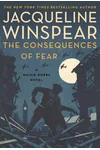
- The Consequences of Fear (2021): Set in 1941, a young boy working as a government messenger witnesses a murder, but only Maisie believes his account of the event.
- A Sunlit Weapon (2022): In 1942, Maisie investigates a series of mysterious incidents involving British ferry pilots, culminating in a threat to a high-ranking American visitor.
- The Comfort of Ghosts (2024): In the final novel of the series, set in 1945, Maisie treats displaced young people suffering from the trauma of World War II while reflecting on the ghosts of her own past.
Chronological Timeline vs. Publication Order
The primary narrative timeline of the series runs in chronological lockstep with its publication dates, moving from 1929 in the debut novel to the end of the Second World War in 1945. However, readers should be aware of a major chronological caveat in the first book, Maisie Dobbs. Large portions of the debut novel function as a prequel, detailing Maisie’s life from 1910 through 1929, including her service in France. Reading the books in chronological order of their main plots is identical to publication order, making it incredibly easy for readers to follow.
The Three Phases of Maisie’s Journey
To help organize your reading, the series can be divided into three thematic eras:
Phase 1: Post-WWI Reconstruction (Books 1–10)
These books focus on Maisie establishing herself as an independent businesswoman in London. The stories deal heavily with the direct physical and psychological aftermath of the Great War, focusing on shell-shocked veterans, class mobility, and the reconstruction of British society.
Phase 2: The Interwar Wandering & Espionage (Books 11–12)
Following a massive personal loss at the end of the first phase, Maisie spends years abroad. These books follow her return journey from India through Gibraltar and her recruitment by the British Secret Service for a tense mission in Nazi Germany.
Phase 3: The Second World War (Books 13–18)
Starting with the declaration of war in 1939, this final phase details Maisie’s experiences during the Blitz and the hardships of the home front, culminating in the 1945 resolution of both the war and Maisie’s career.
Companion Works and Spin-Offs
While the 18 novels form the complete Maisie Dobbs canon, there are two key companion works by Jacqueline Winspear that enrich the reading experience:
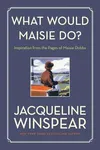
- What Would Maisie Do? (2019): A non-fiction companion journal containing thirty of Maisie’s most memorable pieces of wisdom and quotes, paired with personal reflections from Winspear and prompts for readers. It is best read after finishing The American Agent.
- This Time Next Year We’ll Be Laughing (2020): Winspear’s personal memoir. While not a Maisie Dobbs book, it details her grandfather’s WWI trauma and her family’s working-class life in Kent, which directly inspired the historical details and themes of the novels.
What to Know Before You Start
Before diving in, readers should know that the series is much more than a collection of cozy whodunits. Winspear places a strong emphasis on detective psychology. Under the guidance of her mentor, Dr. Maurice Blanche, Maisie is trained to study the minds of both suspects and victims, treating investigation as a path toward healing. The series also highlights class divides, as Maisie must constantly navigate the social boundaries of interwar Britain as a self-made woman of working-class origins.