




The Best Starting Point: Steven Erikson's Core Decology
For anyone dipping their toes into the Malazan universe for the first time, the absolute consensus among fans and the authors themselves is to begin with the core ten-book series written by Steven Erikson, known as the Malazan Book of the Fallen. This series represents the spine of the entire franchise, delivering a complete, self-contained story arc that runs from the initial imperial expansions to the climactic cosmic confrontations.
Here is the recommended order for the core ten books, which corresponds exactly to their publication order:
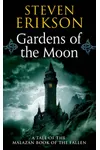
- Gardens of the Moon (1999) – Introduces the Malazan Empire's campaign on the continent of Genabackis and the legendary Bridgeburners military unit.
- Deadhouse Gates (2000) – Shifts the focus to the continent of Seven Cities and the brutal, tragic rebellion known as the Whirlwind.
- Memories of Ice (2001) – Returns to Genabackis, picking up directly after the events of the first book as former enemies unite against a terrifying ancient threat.
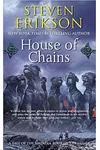
- House of Chains (2002) – Picks up the Seven Cities thread from the second book, introducing the iconic warrior Karsa Orlong and following the aftermath of the rebellion.
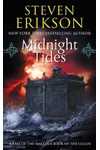
- Midnight Tides (2004) – Moves to a completely new continent, Lether, to explore a clash between the economically ruthless Letherii Empire and the tribal Edur.
- The Bonehunters (2006) – Merges the various storylines as the newly formed 14th Army deals with plague, rebellion, and the wrath of gods.
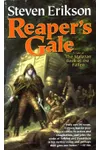
- Reaper's Gale (2007) – Brings the Malazan forces to Lether to confront the tyrannical rule established at the end of the fifth book.
- Toll the Hounds (2008) – A moody, atmospheric entry set in the city of Darujhistan, focusing on the convergence of gods and the fate of Anomander Rake.
- Dust of Dreams (2009) – Part one of the massive final novel, setting the stage for the final convergence. It ends on a dramatic cliffhanger.
- The Crippled God (2011) – The epic, emotional conclusion that ties together threads running across multiple continents and millennia.
The Combined Reading Order: Integrating Ian C. Esslemont
The Malazan world was co-created by Steven Erikson and Ian C. Esslemont in the 1980s as a setting for their tabletop role-playing games. While Erikson wrote the core ten books, Esslemont wrote his own parallel six-book series called the Novels of the Malazan Empire. Esslemont's books are not minor spin-offs; they cover major events, resolve lingering plot lines from the main series (such as the fate of the Crimson Guard and the Seguleh), and feature crucial character developments.
For readers who want to experience the complete collaborative story as the authors published it, a combined hybrid order is highly popular. However, be warned: switching back and forth between two authors with different writing styles can disrupt the flow of the main narrative. Fans generally recommend this order for a second read-through, though ambitious first-timers can also enjoy it:
- Gardens of the Moon (Erikson)
- Deadhouse Gates (Erikson)
- Memories of Ice (Erikson)
- House of Chains (Erikson)
- Midnight Tides (Erikson)
- Night of Knives (Esslemont) – A short novel set before the main series, but placed here to introduce key characters and locations before they reappear.
- The Bonehunters (Erikson)
- Return of the Crimson Guard (Esslemont) – Introduces major political changes in the Empire that are referenced in later Erikson books.
- Reaper's Gale (Erikson)
- Stonewielder (Esslemont)
- Toll the Hounds (Erikson)
- Orb Sceptre Throne (Esslemont) – Resolves several Darujhistan and Genabackis plotlines left open after Toll the Hounds.
- Dust of Dreams (Erikson)
- The Crippled God (Erikson)
- Blood and Bone (Esslemont)
- Assail (Esslemont) – Serves as a final epilogue to both authors' main sequences.
Kharkanas, Witness, and Prequels: Where Do They Fit?
Beyond the core books and the Novels of the Malazan Empire, both authors have written several prequel, sequel, and spin-off series that flesh out the history and future of the world. These should almost always be read after finishing the core series, as they assume a deep familiarity with the setting's mechanics, terminology, and history.
Path to Ascendancy by Ian C. Esslemont
This prequel series explores the early days of the Malazan Empire, charting the rise of Kellanved and Dancer from simple mercenaries to the conquerors of a continent. It is faster-paced and more focused than the main series, making it highly accessible.
- Dancer's Lament (2016)
- Deadhouse Landing (2017)
- Kellanved's Reach (2019)
- Forge of the High Mage (2023)
- The Last Champion (2027)
The Kharkanas Trilogy by Steven Erikson
A deep prequel set hundreds of thousands of years before the main series. Written in a highly Shakespearean, philosophical, and tragic style, it tells the origin story of the Tiste races, the creation of the Warrens, and the beginning of the civil wars that shaped the cosmos.
- Forge of Darkness (2012)
- Fall of Light (2016)
- Walk in Shadow (Forthcoming)
The Witness Series by Steven Erikson
This sequel series picks up roughly a decade after the events of The Crippled God, focusing on the legacy of Karsa Orlong and the clash between a new Malazan army and a rising cult in the north.
- The God is Not Willing (2021)
- No Life Forsaken (2025)
- Legacies of Betrayal (2026)
The Tales of Bauchelain and Korbal Broach by Steven Erikson
If you need a break from the world-ending stakes, these dark, satirical novellas follow two sinister necromancers and their long-suffering manservant. They can be read at almost any point after finishing Memories of Ice, where the characters are first introduced.
Chronological Order Caveats: Why to Avoid It
It can be tempting to read the Malazan books in strict chronological order—starting with the ancient history in the Kharkanas Trilogy, moving on to the rise of the Empire in Path to Ascendancy, and then reading the main series. However, doing so is highly discouraged for a first-time reader. Prequels like Kharkanas are dense and heavily philosophical, assuming you already understand the magic systems (Warrens and Holds) and the significance of the historical figures. Furthermore, reading the prequels first ruins many of the mysteries, surprises, and slow-burn reveals that make the main ten books so compelling.
What to Know Before You Start
The Malazan series does not hold your hand. You are dropped directly into the middle of an active conflict in Gardens of the Moon with very little exposition. Erikson's background as an archaeologist and anthropologist heavily influences the writing; the setting feels like a real world built on layers of forgotten history, with cultures that have distinct biases, traditions, and developmental histories. Do not worry if you feel confused or overwhelmed during the first few books—this is a normal part of the Malazan experience. The narrative style trusts you to pay attention, piece clues together, and allow the broader picture to assemble gradually in your mind.