

The Recommended Reading Order: Start at the Beginning
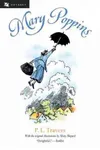
For the best experience, readers should begin their journey into Cherry Tree Lane with the very first book: Mary Poppins (1934). Unlike many modern fantasy series, the Mary Poppins books do not follow a strict sequential narrative. However, the first book introduces the Banks family, the cold but comforting presence of Mary Poppins, and the whimsical rules of her magical universe. Starting here establishes the necessary foundation for the relationships and setting.
The Core Trilogy: The Three Visites
Only the first three books in the series depict chronological progression, marked by Mary Poppins' distinct arrivals and departures. If you want to follow the core timeline of her visits to the Banks family, prioritize these three titles in order:
- Mary Poppins (1934): Mary arrives on the East Wind, introduces the children to her magical associates, and abruptly leaves when the wind changes.
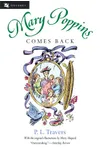
- Mary Poppins Comes Back (1935): Mary returns on a kite string, bringing new adventures, and eventually departs by climbing a magical ladder into the sky.
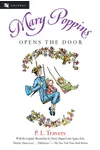
- Mary Poppins Opens the Door (1943): Mary arrives via a firework spark on Guy Fawkes Night. At the end of this book, she departs permanently, stepping through a magical doorway in the sky, implying she will not return.
The 'Insert' Novels: Unrecorded Adventures
Following the publication of the third book, P.L. Travers did not want to write a traditional sequel because Mary Poppins had officially departed. Instead, the remaining five books in the series are designed as companion collections. They contain 'previously unrecorded' adventures that take place during the time Mary was already staying with Jane, Michael, and the other Banks children in the first three books. Therefore, you do not need to worry about chronological progression when reading these later works; they can be enjoyed in any order as standalone stories.
Complete Mary Poppins Books in Publication Order
Reading the series in publication order is highly recommended. It allows you to watch P.L. Travers’ style and themes mature over a span of more than fifty years. Here is the complete list of Mary Poppins publications:
- Mary Poppins (1934): The debut novel that introduces Jane, Michael, John, and Barbara Banks, along with iconic characters like Bert the Matchman and the Uncle Albert/Mr. Wigg laughing gas sequence.
- Mary Poppins Comes Back (1935): Introduces the baby sister Annabel Banks and features magical encounters like the balloon-lady and the carousel ride.
- Mary Poppins Opens the Door (1943): Dives deeper into myth, featuring underwater kingdoms, talking animals, and Mary's final departure.
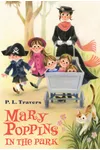
- Mary Poppins in the Park (1952): A collection of six adventures occurring during the events of the previous three books, featuring picnics, cats, and shadows coming to life.
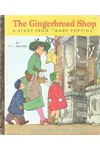
- The Gingerbread Shop (1952): A standalone Little Golden Book adaptation of the Mrs. Corry chapter from the 1934 debut, specifically edited for younger readers.
- Mary Poppins from A to Z (1962): A companion book featuring 26 short, alliterative episodes for each letter of the alphabet, showing Mary and the characters in everyday scenarios.
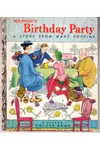
- Mr. Wigg's Birthday Party (1962): Another Little Golden Book adaptation, reprinting and illustrating the 'Laughing Gas' chapter from the original novel.
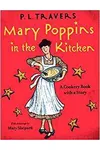
- Mary Poppins in the Kitchen (1975): A unique hybrid book that begins with a story where the Banks children must cook for themselves under Mary's supervision, followed by an alphabetical list of child-friendly recipes.
- Mary Poppins in Cherry Tree Lane (1982): A shorter novel focusing on a magical adventure that occurs on Midsummer's Eve, featuring characters from the constellations descending to Earth.
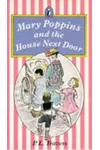
- Mary Poppins and the House Next Door (1988): The final book written by Travers. Mary rescues Luti, a boy from the South Seas who is being kept as a servant by Mr. Banks's tyrannical childhood governess, Miss Andrew.
What to Know Before You Start
1. Character Differences: The Book vs. The Disney Movie
Readers coming to the books from the 1964 Walt Disney film or its sequels should prepare for a very different protagonist. P.L. Travers' Mary Poppins is not sweet, gentle, or cheerful. In the books, she is vain, strict, sharp-tongued, and frequently snaps at the children. She also completely denies that any magic has occurred, leaving the children to wonder if they imagined their adventures. This contrast gives the books a more mysterious, slightly eerie, and comedic tone.
2. The Revision of 'Bad Tuesday'
If you are purchasing vintage or secondhand copies of the first book, you may encounter different versions of the chapter 'Bad Tuesday'. The original 1934 version included offensive racial stereotypes during a compass trip around the world. In response to criticism, Travers revised the dialogue in 1967. She later rewrote the chapter entirely in 1981, replacing the human encounters with animals: a polar bear in the north, a macaw in the south, a panda in the east, and a dolphin in the west. Modern paperback editions feature this updated 1981 text.
Summary of Reading Advice
For the ideal reading experience, read the core trilogy (Mary Poppins, Mary Poppins Comes Back, and Mary Poppins Opens the Door) first. Once you have established the timeline, you can dip into the remaining story collections, cooking guides, and alphabet stories in any order you choose.