


The Recommended Reading Order for Master Mercurius
For the best experience, readers should follow the series in its publication order. Graham Brack has written the novels as a linear progression, with each book building upon the protagonist's personal history, his complex relationship with the Stadhouder William of Orange, and the evolving political landscape of late 17th-century Europe. Reading them in sequence allows you to watch Mercurius grow from a quiet academic into a seasoned, albeit still reluctant, diplomat and investigator.
Here is the recommended reading path for the Master Mercurius Mystery series:
- Death in Delft (2020)
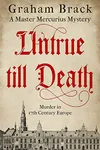
- Untrue till Death (2020)
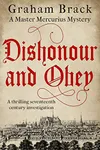
- Dishonour and Obey (2020)
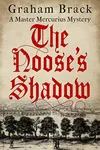
- The Noose's Shadow (2020)
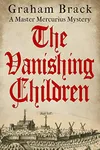
- The Vanishing Children (2021)
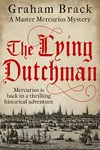
- The Lying Dutchman (2022)
- Murder in Maastricht (2023)
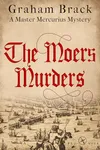
- The Moers Murders (2024)
- Nun Shall Sleep (2026)
Publication Order vs. Chronological Order
Unlike many long-running mystery series where prequels disrupt the timeline, the Master Mercurius series is straightforward. The publication order perfectly mirrors the chronological setting of the novels. Mercurius ages in real-time as the years progress from 1671 in the first book to 1689 in the ninth.
To help you track the timeline, here is a breakdown of when each book was published and the historical year in which it is set:
- Death in Delft: Published in 2020 | Set in 1671
- Untrue till Death: Published in 2020 | Set in 1674
- Dishonour and Obey: Published in 2020 | Set in 1676
- The Noose's Shadow: Published in 2020 | Set in 1680
- The Vanishing Children: Published in 2021 | Set in 1680
- The Lying Dutchman: Published in 2022 | Set in 1685
- Murder in Maastricht: Published in 2023 | Set in 1686
- The Moers Murders: Published in 2024 | Set in 1688
- Nun Shall Sleep: Published in 2026 | Set in 1689
What to Know Before You Start
Set during the Dutch Golden Age, the series introduces us to Master Mercurius, an assistant professor of moral philosophy at the University of Leiden. Mercurius is an ordained minister, but he harbors a dangerous secret: he remains a devout Catholic in a strictly Protestant country. This dual identity makes him uniquely empathetic but also highly vulnerable to exposure.
Mercurius is far from a traditional action hero. He is academic, bookish, slightly bumbling, and deeply dislikes physical danger. However, his sharp intellect and moral clarity repeatedly draw the attention of Stadhouder William of Orange, who frequently coerces Mercurius into solving sensitive crimes or undertaking espionage missions that require an educated, inconspicuous agent.
The tone of the series blends meticulous historical research with a dry, self-deprecating humor. While the books deal with serious themes such as religious conflict, political instability, and murder, Mercurius's witty commentary and practical outlook keep the stories engaging and lighthearted, drawing frequent comparisons to C.J. Sansom's Shardlake series but with a sunnier disposition.
Detailed Guide to the Novels
1. Death in Delft
The series begins in 1671. Three young girls have disappeared from Delft, and one is eventually found dead. The local magistrates are baffled, prompting the University of Leiden to dispatch Mercurius to aid the investigation. In Delft, Mercurius must navigate local tensions and enlist the help of the famous painter Johannes Vermeer, who assists by sketching the crime scenes, to catch a predator before another child vanishes. (Note: This book was originally published under the title The Allegory of Art and Science before being reissued by Sapere Books).
2. Untrue till Death
Set in 1674, Mercurius is settling back into his academic routine when he is summoned by William of Orange. A series of suspicious deaths and political conspiracies are threatening the stability of Leiden University. Mercurius is tasked with rooting out the conspirators, but he soon realizes that someone is willing to kill to keep the university's secrets hidden.
3. Dishonour and Obey
By 1676, William of Orange is negotiating a critical political marriage to Princess Mary, the niece of King Charles II of England. Because of his discretion, Mercurius is sent to England as a diplomatic envoy and cleric to help smooth over the arrangements. However, court life in London is a hotbed of intrigue, and Mercurius is quickly pulled into a web of blackmail and murder at the English court.
4. The Noose's Shadow
Returning to Leiden in 1680, Mercurius hopes for peace but is confronted with a local tragedy. An unpopular farmer named Wolf is found stabbed to death, and his neighbor Jaco is arrested for the crime. Convinced that Jaco is a scapegoat, Mercurius launches his own investigation to identify the real killer before Jaco is sent to the gallows.
5. The Vanishing Children
Also set in 1680, this novel sees Mercurius dispatched by William of Orange to monitor English political exiles. Before he can complete his assignment, he is sidetracked by the disappearance of three Jewish boys. With the local magistrates showing little interest in finding the children, Mercurius takes it upon himself to investigate, exposing a dark underbelly of prejudice and human trafficking.
6. The Lying Dutchman
In 1685, the death of King Charles II throws England into chaos, and the Duke of Monmouth launches a rebellion to seize the crown. William of Orange, anxious to protect his own future claim to the English throne, sends Mercurius on a highly perilous espionage mission. Mercurius must travel to England and plant false intelligence at court to manipulate the crown's military response, knowing that discovery means execution as a spy.
7. Murder in Maastricht
In 1686, Mercurius travels to Maastricht to participate in a high-profile academic debate on witchcraft between the universities of Leiden and Leuven. While researching past witch trials, he finds evidence of systemic corruption. When a prominent, fanatical witch-finder is found murdered inside a locked library room, Mercurius must use his deductive skills to solve a seemingly impossible locked-room mystery.
8. The Moers Murders
Set in 1688, William of Orange is preparing to invade England (the Glorious Revolution) and needs to secure his military routes through Germany. He inherits the German stronghold of Moers and appoints Mercurius as its temporary Governor to keep the peace. Under pressure to keep the military preparations secret, Mercurius must govern a hostile town and solve a series of murders that threaten to expose the Stadhouder's plans.
9. Nun Shall Sleep
In 1689, Mercurius looks forward to a peaceful summer touring German cathedrals, but his holiday is cut short by a request from Abbess Mathilde. He is asked to visit a convent to oversee a large financial legacy dedicated to acquiring new library books. The academic retreat turns dark when a priceless holy relic and a critical key disappear, drawing Mercurius into a claustrophobic mystery within the convent walls.
Practical Reader Advice
Can the books be read as standalones? Yes. Each book features a self-contained mystery that is resolved by the final chapter. However, the overarching character development, Mercurius's aging, and the shifting political fortunes of William of Orange make reading them in order highly rewarding.
Where is the best place to start? You should absolutely start with the first book, Death in Delft. It establishes Mercurius's character, his unique double life, and his initial contact with William of Orange, which sets the template for the rest of the series.
Are there spin-offs or crossovers? Graham Brack has not written any direct spin-offs or crossovers for the Master Mercurius series. However, fans of his witty writing style and historical mysteries may also enjoy his other series, including the Josef Slonsky mysteries (set in modern Prague) and the Capitolinus mysteries (set in ancient Rome).