
Recommended Reading Path: Master William Falconer in Order
For the best reading experience, it is highly recommended to read the Master William Falconer series in its standard publication order. Following this path allows you to experience the natural progression of Falconer's academic career at Oxford, the evolution of his deductive methods, and the slow-burning development of his complex personal relationships—especially his bond with the married Ann Segrim.
Here is the complete order of the primary novels:
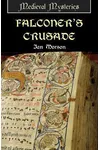
- Falconer's Crusade (1994) – Set in the winter of 1264, this opening novel introduces William Falconer, a Regent Master at Aristotle College, Oxford. Against the backdrop of the Baronial Uprising led by Simon de Montfort against King Henry III, Falconer must use Aristotelian logic to solve the murder of a servant girl and defuse dangerous town-versus-gown tensions.
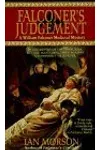
- Falconer's Judgement (1995) – Set in 1265, Falconer travels to a secluded Benedictine abbey where the mysterious death of a papal legate's brother threatens to spark a massive political and ecclesiastical scandal.
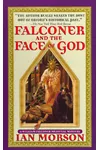
- Falconer and the Face of God (1996) – During a snowy Christmas season, the arrival of a troupe of jongleurs at Oxford brings festive drama—and a bizarre murder that forces Falconer to investigate the dark underbelly of medieval theater and religious heresy.
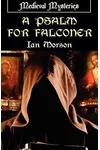
- A Psalm for Falconer (1997) – Falconer is summoned to investigate a death at a remote abbey, where the traditional, monastic way of life clashes directly with the new intellectual movements sweeping through Oxford.
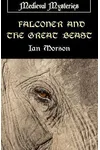
- Falconer and the Great Beast (1998) – Falconer's analytical skills are put to the test when an exotic beast, sent as a gift to the King, becomes the center of a complex conspiracy involving foreign ambassadors, theft, and murder.
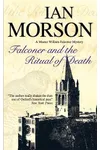
- Falconer and the Ritual of Death (2008) – The discovery of a skeleton buried twenty years prior links a historical tragedy to a series of fresh, ritualistic murders in the university town, forcing Falconer to dig into Oxford's buried secrets.
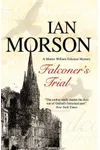
- Falconer's Trial (2009) – Falconer finds himself on the defensive when he is accused of heresy and murder. To clear his name, he must navigate a hostile university court and track down the real conspirators.
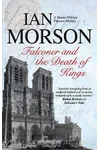
- Falconer and the Death of Kings (2010) – With the kingdom in political turmoil, Falconer is drawn into royal intrigues where a suspicious death threatens to destabilize the crown itself.
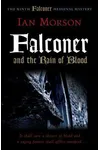
- Falconer and the Rain of Blood (2012) – The final novel in the main series sees Falconer solving a grisly murder that takes place during a bizarre weather event, bringing his long career of Aristotelian deduction to a dramatic conclusion.
Chronological vs. Publication Order
Unlike some historical mystery series that jump around in time, the Master William Falconer novels follow a strict linear timeline. The stories begin in 1264 during the Second Barons' War and proceed chronologically through the late 13th century. Because the political landscape of England and Falconer's personal status evolve continuously from book to book, reading the series out of order can lead to minor spoilers regarding characters' fates and regional politics. Stick to the publication order for the smoothest experience.
The Medieval Murderers Collaborative Anthologies
In addition to his standalone novels, author Ian Morson joined forces with a collaborative group of prominent historical fiction writers known as The Medieval Murderers. This group included notable authors such as Michael Jecks, Bernard Knight, Susanna Gregory, Philip Gooden, Karen Maitland, and C.J. Sansom.
Together, they published a series of interlinked novels where a single cursed object or location is tracked across different centuries. Each author contributed a chronological novella to the volume. Because Morson's section typically represents the 13th century, he frequently utilized Master William Falconer to solve the historical segment of the mystery. If you want more Falconer stories, check out these collaborative works:
- The Tainted Relic (2005)
- Sword of Shame (2006)
- House of Shadows (2007)
- The Lost Prophecies (2008)
- King Arthur's Conspiracy (2009)
- The Sacred Stone (2010)
- Hill of Bones (2011)
- The First Murder (2012)
- The False Virgin (2013)
- The Deadliest Sin (2014)
What to Know Before You Start
Before diving into Morson's medieval Oxford, it helps to understand the unique atmosphere of the series. The setting is not the grand, stone-built university town of today, but a filthy, crowded, wooden medieval city. Tensions are constantly high between the wealthy, educated scholars (referred to as the 'gown') and the local working-class merchants and laborers (the 'town').
Falconer himself is a fascinating protagonist. Rather than relying on divine intervention or torture to extract confessions, he is an early proponent of what he calls deduction, heavily inspired by the works of Aristotle and his contemporary Roger Bacon. This focus on rationality makes the series a perfect fit for fans of classic detective fiction who enjoy intellectual puzzle-solving set against a gritty, realistic historical backdrop.