
The Recommended Reading Order for Masters of Rome
Because Colleen McCullough designed this series as a contiguous, chronological chronicle of the fall of the Roman Republic, the recommended reading order is simple: read the books in the order they were published. Since publication order and chronological order are identical, following this sequence ensures you experience the rise and fall of Rome's greatest figures exactly as history—and the author—intended.
Here is the recommended reading path for the series:
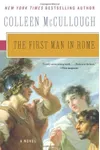
- The First Man in Rome (1990) – Covers 110 BC to 100 BC
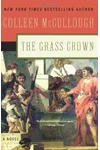
- The Grass Crown (1991) – Covers 97 BC to 86 BC
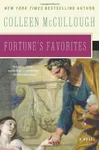
- Fortune's Favorites (1993) – Covers 83 BC to 69 BC
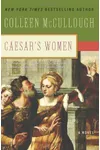
- Caesar's Women (1996) – Covers 68 BC to 59 BC
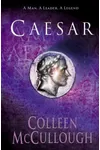
- Caesar (1997) – Covers 54 BC to 48 BC
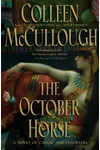
- The October Horse (2002) – Covers 48 BC to 41 BC
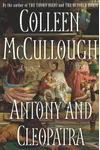
- Antony and Cleopatra (2007) – Covers 41 BC to 27 BC
Diving Into the Novels: Book-by-Book Overview
To help you prepare for the scale of this epic, here is a detailed breakdown of what each book covers and the historical giants you will meet along the way.
1. The First Man in Rome (1990)
The saga begins in 110 BC, introducing Gaius Marius, a brilliant but lowborn general seeking political glory, and Lucius Cornelius Sulla, a clever but impoverished aristocrat. As Rome faces external threats from King Jugurtha of Numidia and the migrating Germanic tribes, Marius and Sulla form an alliance that will change the Republic forever. This book sets the stage by showing the deep-seated tensions between the traditional ruling class and the rising power of military generals.
2. The Grass Crown (1991)
Spanning 97 BC to 86 BC, the second novel explores the disintegrating relationship between Marius and Sulla as their early alliance devolves into bitter rivalry. The story centers on the devastating Social War (91–88 BC), where Rome’s Italian allies rebel for citizenship, followed by the Mithridatic War and a brutal civil war. The title refers to the Grass Crown, Rome's highest military honor, awarded to a commander who saves an entire legion.
3. Fortune's Favorites (1993)
Covering 83 BC to 69 BC, this book begins with Sulla's march on Rome and his subsequent dictatorship. As the older generation begins to fade, the narrative introduces the next wave of ambitious Roman leaders, most notably Pompey the Great, Marcus Licinius Crassus, and a young, rising Gaius Julius Caesar. It also depicts the famous slave rebellion led by Spartacus and Caesar's early political maneuvers.
4. Caesar's Women (1996)
Covering 68 BC to 59 BC, this novel focuses on Caesar’s rise through the Roman political ranks (the cursus honorum). Instead of battlefields, the conflict here takes place in the Forum, the Senate, and the private homes of Rome's ruling class. The story highlights Caesar’s relationships with the influential women in his life, including his mother Aurelia, his daughter Julia, and his mistress Servilia (mother of Brutus), culminating in the formation of the First Triumvirate.
5. Caesar (1997)
Covering 54 BC to 48 BC, the fifth book features Caesar’s legendary campaigns in Gaul and Britain, the collapse of his political alliance with Pompey, and the historic decision to cross the Rubicon. This triggers a civil war that culminates in the Battle of Pharsalus, detailing Caesar's military genius and his eventual dominance over the Roman state.
6. The October Horse (2002)
Covering 48 BC to 41 BC, this novel details Caesar's campaigns in Egypt, his famous affair with Cleopatra, and his return to Rome as Dictator in perpetuity. It explores the conspiracy that led to his assassination on the Ides of March in 44 BC and the aftermath, introducing Caesar’s young heir, Octavian (later Augustus), as he struggles against Mark Antony for control of Rome.
7. Antony and Cleopatra (2007)
The final volume spans 41 BC to 27 BC, focusing on the volatile relationship between Mark Antony and Cleopatra, and their climatic struggle against the cold, calculating Octavian. Ending with the Battle of Actium and the deaths of Antony and Cleopatra, the novel concludes as Octavian is declared Augustus, marking the final death of the Roman Republic and the birth of the Roman Empire.
What to Know Before You Start
Colleen McCullough’s Masters of Rome is not a light summer read. McCullough spent over a decade researching the late Roman Republic before publishing the first book. Her scientific background as a neuropathologist fueled her obsession with accuracy, resulting in a series that is as educational as it is narrative-driven. To fully appreciate the series, readers should keep a few unique details in mind:
- Roman Naming Conventions: Roman names can be incredibly confusing (e.g., multiple characters named Quintus Caecilius Metellus). McCullough does not simplify these names to protect the historical accuracy, so pay close attention to family trees and titles.
- Glossaries and Appendices: The books include massive, detailed glossaries explaining Roman political offices, military terms, and social customs. Many readers recommend keeping a bookmark in the glossary for quick reference.
- Illustrations and Maps: Each book features hand-drawn illustrations of historical figures and maps of key battles and territories drawn by McCullough herself. These elements are highly useful for keeping track of the geography and large cast.
Practical Reader Advice
Can these books be read standalone? While each book has a distinct central theme or figure, they are deeply interconnected. Reading them out of order is highly discouraged because the political crises and character arcs build directly upon the events of previous books. Start with The First Man in Rome to establish the foundational knowledge of how the Roman Senate operates.
Are there spin-offs or companion novels? Colleen McCullough did not write direct spin-offs set in this specific universe. However, she did write Song of Troy (1995), a standalone historical fiction novel retelling the events of the Trojan War. If you enjoy McCullough’s meticulous research and epic storytelling style, it is a natural next step.
Common Reading Caveats: The scale of the series is immense. Some readers find the political debates in the Senate during Caesar's Women to be slower paced than the military action of The Grass Crown or Caesar. However, understanding these political struggles is crucial to appreciating the tragic collapse of the Republic's democratic institutions.