



















The Recommended Reading Order
When it comes to reading Donald Hamilton's Matt Helm series, the advice is simple: stick strictly to the publication order. Unlike many other long-running thriller franchises, there are no prequels, side-novels, or co-authored spin-offs that disrupt the flow. The publication order is identical to the chronological order, meaning you can follow Matt’s career exactly as Hamilton wrote it from 1960 through 1993.
Because Hamilton maintained a surprisingly tight between-book continuity—referencing past wounds, retired covers, and ongoing relationship developments—reading the books out of order will spoil earlier plotlines. Below is the complete 27-novel checklist in its proper sequence:
- Death of a Citizen (1960) – The series debut. Matt Helm, a former WWII assassin living a quiet life as a photographer in Santa Fe, is forced back into action when his family is threatened.
- The Wrecking Crew (1960) – Helm is sent to Sweden to eliminate a rogue Soviet agent, establishing his codename and role within the agency.
- The Removers (1961) – Helm must protect his ex-wife and family from a mob-connected threat, blending domestic tension with professional violence.
- The Silencers (1962) – Entangled with a murdered agent's sister and a web of secret microfilm in the American Southwest and Mexico.
- Murderers' Row (1962) – Helm goes undercover to investigate a criminal syndicate, adopting the identity of a ruthless killer.
- The Ambushers (1963) – A mission that takes Helm to Costa Rica, involving Nazi war criminals and a missing nuclear warhead.
- The Shadowers (1964) – Helm enters a mock marriage to protect a female target under surveillance by enemy operatives.
- The Ravagers (1964) – Hunting a sabotage ring along the Canadian border, showing Helm's survivalist skills.
- The Devastators (1965) – Helm travels to Scotland to stop a biological weapon from being unleashed.
- The Betrayers (1966) – Set in Hawaii, Helm must investigate his own boss, Mac, to find out who has compromised the agency.
- The Menacers (1968) – A UFO sighting in Mexico serves as cover for a dangerous Soviet intelligence operation.
- The Interlopers (1969) – Helm poses as a tourist in the Pacific Northwest to track down a courier smuggling documents.
- The Poisoners (1971) – A grittier, darker story set in Los Angeles involving drug smuggling and police corruption.
- The Intriguers (1972) – Helm is targeted by assassins in the wild terrains of Northern Europe and must turn the tables.
- The Intimidators (1974) – A mission involving blackmail and kidnapping that takes Helm to the Caribbean.
- The Terminators (1975) – Helm deals with a series of murders targeting other agents in the field.
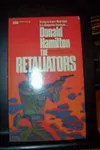
- The Retaliators (1976) – Investigating a conspiracy involving international oil cartels and political assassination.
- The Terrorizers (1977) – Suffering from amnesia after an explosion, Helm must reconstruct his identity before enemies find him.
- The Revengers (1982) – Following a five-year hiatus, Helm returns to investigate the suspicious deaths of former colleagues.
- The Annihilators (1983) – Helm is sent to Central America to disrupt a private military group planning a coup.
- The Infiltrators (1984) – A deep-cover assignment inside a hostile spy organization operating in Canada.
- The Detonators (1985) – Tracking a bomb-maker through the Caribbean, highlighting the series' later-era action focus.
- The Vanishers (1986) – A search for a missing scientist that escalates into an international chase.
- The Demolishers (1987) – Helm is targeted on his own boat, leading to a high-stakes maritime pursuit.
- The Frighteners (1989) – Set in Mexico, Helm investigates a political assassination plot disguised as a terrorist action.
- The Threateners (1992) – Helm faces off against a drug cartel leader who has targeted the agency's leadership.
- The Damagers (1993) – The final published novel. Helm protects a couple on a yacht trip that turns into an espionage nightmare.
Understanding the Continuity and the Aging Conundrum
One of the most fascinating aspects of the Matt Helm series is how Donald Hamilton managed the timeline. Unlike characters like James Bond, who exist in a floating timeline where the surrounding world changes but they do not, Helm's timeline has a distinct, albeit stretched, linear progression. In Death of a Citizen, Helm is established as a middle-aged veteran of World War II, having spent fifteen years in civilian life as a photographer and family man. This places his age in the mid-to-late 40s when the series starts in 1960.
As the series moves through the 1970s and 1980s, the Cold War remains the dominant backdrop, and technology evolves. However, if Helm aged in real-time, he would have been in his late 70s by the time of 1993's The Damagers. To resolve this, Hamilton subtly slowed Helm's physical aging. While Helm continues to accumulate scars, injuries, and a weary cynicism, he remains physically active and capable of demanding field missions. Fans refer to this as a soft-continuity shift where the years pass, but Helm is kept in a perpetual, seasoned prime.
The "Wrecking Crew" and "Mac"
Throughout the series, Helm works for a highly secretive, unnamed U.S. government agency. During World War II, this unit was known informally by its German enemies as the Mordgruppe (Death Group) and by its operatives as the "Wrecking Crew." The agency's primary mandate is not intelligence gathering, but counter-espionage and execution—specifically, neutralizing enemy agents before they can damage American interests.
The agency is run by a director known simply as Mac. Unlike the desk-bound "M" of the Bond franchise, Mac is a veteran field operator who maintains a complex, paternalistic, yet cold relationship with Helm. Mac is demanding, calculating, and fully willing to sacrifice his operatives if a mission requires it. This office dynamic adds a layer of professional isolation to Helm's character, as he knows that his survival depends entirely on his own skills rather than backup from his superiors.
The Complete Departure of the Adaptations
Readers discovering the Matt Helm books for the first time should be prepared for a massive tonal shock if they are familiar with the 1960s film adaptations starring Dean Martin. The four movies—The Silencers, Murderers' Row, The Ambushers, and The Wrecking Crew—were designed as lighthearted, campy spy-spoofs capitalizing on the Bond craze. They featured colorful gadgets, comedic gags, and a relaxed, martini-sipping playboy version of Helm.
Hamilton's novels are the absolute opposite. The literary Matt Helm is a cold, calculated assassin who prefers a simple, silenced .22 pistol or a reliable lockback pocketknife over fanciful gadgets. He does not wear flashy suits, using his cover as an outdoor writer and freelance photographer to blend into rural and wilderness environments. The 1975 television series starring Tony Franciosa similarly reimagined Helm as a conventional private investigator, stripping away the gritty Cold War espionage that makes the novels so distinctive.
The Lost 28th Novel: The Dominators
For decades, fans have discussed the existence of a 28th novel titled The Dominators. Donald Hamilton completed the manuscript in 2002 and spent his final years revising it before his death in 2006. The novel was intended to wrap up the series and resolve Helm's story. However, due to publishing changes and the author's passing, the manuscript was never officially released. It remains a legendary "lost" piece of spy fiction history, leaving The Damagers as the official, albeit open-ended, conclusion to Matt Helm's career.
Practical Advice for New Readers
If you are ready to dive into the series, here is how to get the most out of your reading experience:
- Start at the Beginning: Do not skip Death of a Citizen. It establishes Helm's origin, his motivation for returning to the agency, and the moral gray zone he occupies.
- Appreciate the Details: Hamilton was an avid outdoorsman, and this heavily influences the books. Pay attention to the realistic descriptions of firearms, wilderness survival, sailing, and navigation, which give the series its authentic edge.
- Expect 20th-Century Attitudes: Written between 1960 and 1993, the books reflect the political, social, and cultural attitudes of their respective decades. Helm's internal monologue is direct, cynical, and typical of mid-century hard-boiled fiction.