
How to Read the Medicus Investigation Series
The Medicus Investigation series (also known as the Gaius Petreius Ruso series) by British author Ruth Downie is best read in publication order. Because the books follow a continuous character arc, a developing relationship between the two main protagonists, and Ruso's evolving career and family fortunes, reading them out of sequence will spoil major plot points and relationship milestones.
The series features Gaius Petreius Ruso, a debt-ridden, weary Roman military doctor (medicus) of the Twentieth Legion, who has a knack for stumbling into murder mysteries, and Tilla, a fierce and observant native Briton whom Ruso initially rescues from slavery. Together, they navigate the complexities of life on the edges of the Roman Empire, dealing with cultural clashes, military bureaucracy, and local crimes.
Medicus Investigation Books in Publication and Chronological Order
For the first four novels in the series, the publisher used different titles in the United States and the United Kingdom. In the US, the novels were given short Latin titles, whereas the UK editions opted for longer titles starting with "Ruso and the...". Starting with the fifth book, Semper Fidelis, the titles were unified globally. Below is the complete listing in order, including both title variants where applicable:
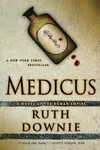
- Medicus (US) / Ruso and the Disappearing Dancing Girls (UK) (2006) — Set in Deva (modern Chester, England). Ruso arrives in the damp, northern frontier of Britannia to escape family debts and his ex-wife. Looking for a quiet life, he instead buys an injured British slave girl named Tilla out of pity and is quickly dragged into investigating the murders of local barmaids.
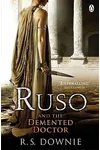
- Terra Incognita (US) / Ruso and the Demented Doctor (UK) (2008) — Ruso and Tilla travel north to Tilla's home territory near the frontier. Ruso finds himself caught between the suspicious Roman military forces and native Celtic tribes when a local doctor is found dead.
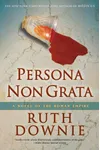
- Persona Non Grata (US) / Ruso and the Root of All Evils (UK) (2009) — The setting shifts to Ruso's childhood home in Nemausus (modern Nîmes, Gaul). Ruso returns home to deal with his late father's massive debts and sibling rivalries, only to find himself accused of murdering a missing tax collector.
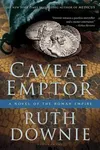
- Caveat Emptor (US) / Ruso and the River of Darkness (UK) (2010) — Ruso is summoned to Londinium (London) to step in as a temporary administrator and find a missing tax gatherer, uncovering financial conspiracies and religious friction.
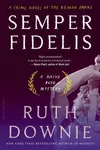
- Semper Fidelis (2013) — Back in the north of Britannia, Ruso is stationed at a Roman outpost during the planning phases of Hadrian's Wall. He must investigate the death of a soldier and ease tensions with the local tribes.
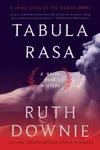
- Tabula Rasa (2014) — Set directly at the muddy construction site of Hadrian's Wall. When a native worker's body is discovered, Ruso is tasked with keeping the peace between the building crew and the local Britons, while dealing with Tilla's divided loyalties.
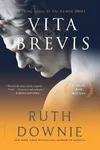
- Vita Brevis (2016) — Ruso and Tilla relocate to Rome. Hoping to establish a lucrative private medical practice, Ruso instead takes a job investigating a suspicious death in a crowded, dangerous insula (apartment building).
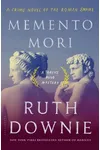
- Memento Mori (2018) — Ruso and Tilla travel to Aquae Sulis (modern Bath, England) to help Ruso's medical colleague and friend, Valens. Valens's wife is found dead in the sacred hot springs, and Ruso must clear his friend's name of murder while navigating the corrupt temple politics.
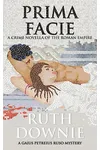
- Prima Facie (Novella, 2019) — Set in Roman Gaul. On their journey back to Britannia after the events of Memento Mori, Ruso and Tilla stop at his family's farm. Ruso's hopes for a peaceful visit are dashed when his sister Flora's boyfriend is accused of murdering a wealthy guest.
Where Should You Start?
You should absolutely start with the first novel, Medicus (also known as Ruso and the Disappearing Dancing Girls). This debut novel sets up the core dynamics of the entire series. It explains Ruso's financial desperation, his medical background, and his first encounter with Tilla. The gradual shift in Tilla and Ruso's relationship—from owner and slave to housekeepers, medical assistants, romantic partners, and eventually husband and wife—is the emotional anchor of the series. Skipping ahead makes this relationship progression confusing and robs the narrative of its depth.
Chronological Context and Setting Continuity
Chronologically, the series progresses in a straight line that mirrors the publication dates. The books cover the early 120s AD during the reign of Emperor Hadrian. The settings provide a fascinating travelogue of the Roman Empire:
- Chester (Deva): The series begins in this major military fortress town, establishing the damp, muddy reality of a Roman garrison.
- Hadrian's Wall: Multiple books (Semper Fidelis and Tabula Rasa) capture the monumental effort, local resistance, and daily grime of building the famous defensive wall.
- Southern Gaul (Nîmes): Persona Non Grata and the novella Prima Facie shift the focus to Ruso’s homeland, showing a more civilized, yet equally corrupt, Roman province.
- Rome: Vita Brevis takes readers to the heart of the empire, highlighting the housing crises, sanitation issues, and medical rivalries of the capital.
- Bath (Aquae Sulis): Memento Mori explores the religious tourism, thermal baths, and local superstitions of the famous Roman spa town.
Co-authored Works and Companion Stories
Readers looking for more historical fiction by Ruth Downie should note that she has contributed to projects outside of the core Ruso series:
- A Year of Ravens (2015): A collaborative historical novel telling the story of Boudica's Rebellion. Downie co-authored this book alongside S.J.A. Turney, Stephanie Dray, Kate Quinn, and others. It does not feature Ruso but covers Roman Britain.
- The Bear and the Wolf (2017): A standalone Roman-era short story co-authored by Ruth Downie and S.J.A. Turney. It follows a native Briton named Senna and her husband Brigius on the northern frontier. It does not feature Ruso.