

The Recommended Reading Order for Men at War
For the best reading experience, we highly recommend reading the Men at War series in publication order. W.E.B. Griffin constructed this espionage saga to introduce readers to the complex web of wartime bureaucracy, technological breakthroughs, and spy craft step-by-step. Reading in this order allows you to watch characters like Dick Canidy, Eric Fulmar, and Jimmy Whittaker grow from amateur recruits into hardened, cynical intelligence operatives working under the legendary William "Wild Bill" Donovan.
Why Starting at the Beginning is Crucial
Unlike some military fiction series where books are standalone episodes, the Men at War series features a deeply interconnected narrative web. The early novels build the operational infrastructure of the Office of Strategic Services (OSS). Characters who are minor contacts in one book become central agents in the next. The race for technological supremacy—from the atomic bomb's raw materials to rocket science and nerve gas—unfolds sequentially. Skipping around will spoil character fates and weaken the impact of their personal and professional evolutions.
Men at War Books in Publication Order
Below is the complete list of the nine novels in the series, following their original release dates. Note that the first four books were initially published under Griffin’s early pen name, Alex Baldwin, and some have been reissued under alternate titles.
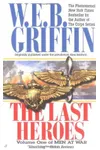
- The Last Heroes (1985) – Introduces pilot Richard "Dick" Canidy and his friend Eric Fulmar as they are recruited into the embryonic OSS to secure Belgian Congo uranium ore for the Manhattan Project.
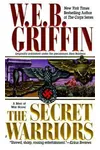
- The Secret Warriors (1985) – Follows Canidy and Fulmar as they work to extract mining experts from the clutches of Vichy French and Nazi forces in North Africa.
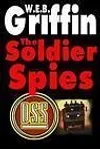
- The Soldier Spies (also published as Give Me Liberty) (1986) – Centers on the buildup to the invasion of North Africa, featuring high-stakes infiltration missions and political intrigue.
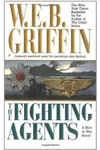
- The Fighting Agents (also published as Into Enemy Hands) (1987) – Shifts the focus to the Pacific Theater, tracking Captain James Whittaker as he smuggles vital communications equipment to guerrilla fighters in the Japanese-occupied Philippines.
- The Saboteurs (2006) – The series returns after a nineteen-year hiatus, co-authored with William E. Butterworth IV. The plot follows the OSS dealing with German saboteurs landing on American shores.
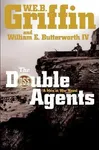
- The Double Agents (2007) – Co-authored with William E. Butterworth IV. Focuses on the grand deception campaigns designed to mislead Adolf Hitler and the German high command about the location of the D-Day landings.
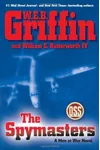
- The Spymasters (2012) – Co-authored with William E. Butterworth IV. A tense thriller dealing with the dual threat of Nazi nerve gas developments and security leaks in the atomic bomb program.
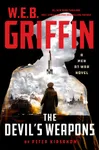
- The Devil's Weapons (2022) – Written by Peter Kirsanow. A rescue mission set in occupied Poland to retrieve rocket scientist Dr. Sebastian Kapsky before Nazi or Soviet forces can capture his research.
- Zero Option (2024) – Written by Peter Kirsanow. Set during the high-stakes Tehran Conference, where Canidy and his team must stop assassination plots targeting Franklin D. Roosevelt, Winston Churchill, and Joseph Stalin.
Chronological Order and Timeline Caveats
While publication order generally mirrors the chronological flow of World War II, there is a notable timeline anomaly regarding the later books, particularly the entries written by legacy continuation author Peter Kirsanow.
The original seven books by Griffin (and his son) move forward chronologically from the summer of 1941 through the latter half of the war. However, The Devil's Weapons (Book 8) acts as a temporal bridge and partial prequel. The novel begins in April 1940 in the wake of the partition of Poland, then catches up to the mid-1941 period where the OSS is being officially organized. It explores early missions that occurred prior to or alongside the events of the very first book, The Last Heroes. Meanwhile, Zero Option (Book 9) leaps forward to November 1943 to align with the real-world timeline of the Tehran Conference.
Despite these minor overlaps, we still advise sticking to publication order. The newer books are written with the benefit of hindsight, referencing relationships and operational structures established in the earlier volumes. Reading them out of order can disrupt the narrative flow and character development.
What to Know Before You Start
The Pseudonym Puzzle
When the first four books of the series were published in the mid-1980s, W.E.B. Griffin wrote them under the pen name Alex Baldwin. The publisher originally marketed these books with titles like Give Me Liberty and Into Enemy Hands. When Griffin's popularity soared through his other military series, such as The Brotherhood of War and The Corps, the publisher re-released the books under his primary pen name (W.E.B. Griffin) with the updated titles we know today. Make sure you do not accidentally purchase the same book twice under its alternate names!
The Co-Author Era and Legacy Continuations
The writing credits of the Men at War series are divided into three distinct eras, which explain the changes in tone and style over the decades:
- The Solo Era (Books 1–4): Written entirely by W.E.B. Griffin (as Alex Baldwin). These books are characterized by fast-paced espionage, intense technical details, and a heavy focus on the logistics of early intelligence gathering.
- The Co-Authored Era (Books 5–7): After a long break, Griffin returned to the series alongside his son, William E. Butterworth IV. These books place a greater emphasis on military bureaucracy, political scheming in Washington, and broader cast dynamics.
- The Legacy Era (Books 8–9): Following Griffin’s passing in 2019, the estate and publisher recruited thriller novelist Peter Kirsanow to carry on the series. Kirsanow brought back the gritty, boots-on-the-ground focus, delivering highly active tactical sequences and direct espionage operations.
Practical Reader Advice
Here are a few quick tips to help you navigate your journey into the OSS universe:
- Are the books standalone? No. While each book has a self-contained mission, the overarching character arcs, romance subplots, and the evolution of the OSS carry over directly from book to book. Reading them out of sequence is not recommended.
- Which spin-offs or companion series matter? The Men at War series stands alone, but fans of Griffin's style will find thematic crossovers in The Corps (which focuses on the US Marine Corps) and Honor Bound (which deals with espionage in neutral Argentina during WWII).
- Where is the best place to start? Without a doubt, start with The Last Heroes. It lays the groundwork for the characters, the historical context, and the tone of the entire series.