
The Recommended Reading Order
While the Moe Prager series features a retro-prequel that goes back to the protagonist's youth, the best way to experience Reed Farrel Coleman’s acclaimed mystery series is in publication order. Reading the books as they were written allows you to witness the natural development of Moe's character, the evolution of Coleman's poetic noir prose, and the gradual unraveling of complex family dynamics and long-term narrative arcs that make the later books so emotionally devastating.
Publication Order vs. Chronological Order
The series is relatively straightforward, but there is one major exception to the timeline: Onion Street (2013). Although it is the eighth book published, it is chronologically a prequel set in 1967 when Moe is still a young student. If you read the series chronologically, you start with Onion Street, whereas publication order starts with Moe as an adult in 1978 in Walking the Perfect Square.
1. The Publication Order (Recommended)
Following the publication order introduces you to Moe at his PI debut, letting you look back at his origin story with the benefit of knowing the man he eventually becomes.
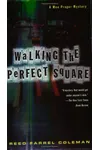
- Walking the Perfect Square (2001) — Set in 1978. Moe's transition from retired NYPD officer to private investigator.
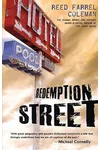
- Redemption Street (2004) — Set in 1981. Moe investigates a 1966 Catskills hotel fire.
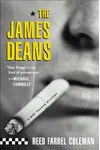
- The James Deans (2005) — Set in 1983. A breakout mystery involving a missing intern.
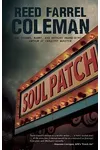
- Soul Patch (2007) — Set in 1989. Moe's opening of a wine store is interrupted by a case reaching back to 1972.
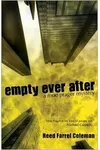
- Empty Ever After (2007) — Set in the late 1990s. Moe deals with personal loss at the turn of the century.
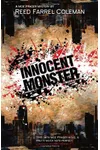
- Innocent Monster (2010) — Set in the mid-2000s. A case that starts six years after Moe last used his PI license.
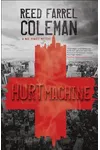
- Hurt Machine (2011) — Set in the late 2000s/early 2010s. Moe faces a personal cancer diagnosis.
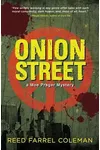
- Onion Street (2013) — Retro-prequel set in 1967. Explores Moe's college years and his first brush with violence.
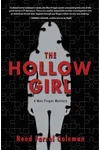
- The Hollow Girl (2014) — The final novel of the series. The ultimate conclusion to Moe’s story.
2. The Chronological Order
If you prefer to watch Moe age in real-time from his aimless college days through his career and into his twilight years, use this sequence:
- Onion Street (Set in 1967)
- Walking the Perfect Square (Set in 1978)
- Redemption Street (Set in 1981)
- The James Deans (Set in 1983)
- Soul Patch (Set in 1989)
- Empty Ever After (Set in the late 1990s)
- Innocent Monster (Set in the mid-2000s)
- Hurt Machine (Set in the early 2010s)
- The Hollow Girl (Set in the 2010s)
Short Stories and Crossovers
Moe Prager also appears in a few short stories published in crime anthologies. In 2019, Reed Farrel Coleman compiled his shorter pieces into the collection Short Stack: Stories and Poems. This collection includes two notable Moe Prager short stories:
- "Breakage" (2017) — A short story that originally appeared in Down & Out: The Magazine and won the Shamus Award for Best P.I. Short Story.
- "The Devil Always Knows" (2018) — A short story originally featured in Mystery Tribune.
- "Magic Bullet" — A bonus crossover short story co-authored by Reed Farrel Coleman and Peter Spiegelman, featured in the same collection.
Note that while Reed Farrel Coleman has written other crime series, such as the Gulliver Dowd novellas, there are no official crossovers or character meetings between Moe Prager and Coleman's other series leads.
What to Know Before You Start
The Moe Prager series is highly regarded for its deep melancholy, themes of guilt, and its representation of Jewish identity in the detective genre. Unlike typical hard-boiled heroes who remain frozen in time, Moe ages, suffers physical ailments, gets married, raises a daughter, and changes careers. The books are heavily serialized in terms of Moe’s personal life, meaning major life events carry over from book to book. For this reason, reading them out of order (especially skipping to the later books) will spoil major plot points and life transitions.