
How to Read the Moonsinger Series
The Moonsinger series (also known as the Moon Magic or Free Traders series) is one of science fiction Grand Master Andre Norton's most imaginative creations. Set in a universe where interstellar travel coexists with ancient, mystical telepathy, the series is best read in order of publication. Because the narrative focus shifts significantly halfway through the saga, following the publication timeline ensures that you understand the world-building, the evolution of its species, and the recurring background lore.
Here is the recommended reading path for the Moonsinger series:
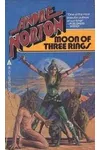
- Moon of Three Rings (1966)
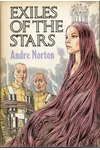
- Exiles of the Stars (1971)
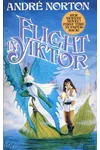
- Flight in Yiktor (1986)
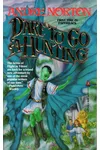
- Dare to Go A-Hunting (1989)
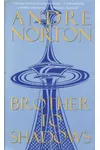
- Brother to Shadows (1993)
Breaking Down the Moonsinger Subseries
While the five books share a single universe and thematic foundation, they are naturally divided into distinct eras and story arcs. Knowing these transitions helps set expectations as you move from one novel to the next.
The Krip and Maelen Duology
The series begins with the core partnership that defines the early novels. Moon of Three Rings (1966) and Exiles of the Stars (1971) focus on Krip Vorlund, a junior Free Trader aboard the space merchant ship Lydis, and Maelen, a Moon Singer (or Thassa) of the planet Yiktor. The Thassa are a mysterious, ancient race possessing deep telepathic abilities, particularly the power of body-swapping and mental transference. These two books form a tightly connected narrative arc, exploring Krip and Maelen's initial meeting, Krip's forced transformation into a wolf-like beast called a Barsk, and their subsequent fight to survive cosmic conspiracies and ancient planetary threats.
Farree’s Quest (The Moonsinger’s Quest)
After a fifteen-year publication hiatus, Norton returned to the universe with Flight in Yiktor (1986) and its sequel Dare to Go A-Hunting (1989). These books shift focus to a new protagonist, Farree, a hunchbacked and abandoned stable boy rescued by Maelen and Krip. As Farree travels Yiktor and beyond, he discovers that his supposed deformity is actually a pair of wings, revealing his heritage as a member of a forgotten, winged humanoid race. While Krip and Maelen appear as vital secondary characters who guide and support Farree, the primary narrative belongs to Farree as he seeks to rescue his companions and find his true home among the clouds.
The Standalone Epilogue
The final book, Brother to Shadows (1993), is set in the same universe but is a highly standalone story. It follows Jofre, an outcast from the Order of Shadows—a group of elite bodyguards and spies. When Jofre is cast out, he is forced to navigate the wider galaxy alongside a smart, alien companion creature. Krip and Maelen do not feature in this novel, but the book shares the same rich background lore, themes of telepathic animal partnership, and remnants of the mysterious Forerunner race, making it a satisfying thematic capstone to the series.
Plot Summary and Core Themes of the Saga
The series is celebrated for how it masterfully weaves together traditional space opera elements with soft fantasy and ecological themes. Understanding the individual books highlights how this progression unfolds:
- Moon of Three Rings: When Krip Vorlund visits a beast show on the medieval-like world of Yiktor, he encounters Maelen and her performing creatures. Drawn into a local feudal conflict, Krip is targeted by Maelen's enemies. To save his life, Maelen performs a forbidden Thassa ritual, transferring Krip's consciousness into the body of a four-footed Barsk. The novel is a gripping tale of survival, identity, and the deep mental connection forged between humans and animals.
- Exiles of the Stars: Following the events on Yiktor, Krip is now trapped in a humanoid Thassa body, while Maelen has transferred her mind into a glassia creature. When their ship is forced to land on the ruined planet Sekhmet, they stumble upon active Forerunner artifacts and must prevent a dark power from seizing control of the galaxy's ancient technology.
- Flight in Yiktor: Krip and Maelen rescue an abused, hunchbacked orphan named Dung from a cruel beast master at a spaceport. Renaming him Farree, they bring him to Yiktor. There, Farree's physical transformation begins, revealing his winged heritage. The book focuses heavily on healing, the nature of freedom, and the search for origins.
- Dare to Go A-Hunting: Farree's journey continues as he searches for others of his winged kind. When his beloved spider-like companion, a smux named Toggor, is kidnapped by factions seeking to exploit Farree's people, he must travel to a remote planet to fight for the survival and freedom of his entire race.
- Brother to Shadows: Jofre, dedicated to the Order of Shadows, is betrayed and cast out after his master's death. Armed with ancient scout training and accompanied by a telepathic reptilian companion, Jofre searches for his purpose while evading assassins, eventually discovering secrets linked to the legendary Forerunners.
The Forerunner Connection
For readers diving deep into Andre Norton’s bibliography, the Moonsinger series occupies a special place within the broader Forerunner Universe. While Norton did not design a rigid, chronological timeline for her sci-fi works, the mysterious, extinct Forerunner race—and the powerful, dangerous relics they left behind—frequently serves as a crucial background element. If you enjoy the ancient ruins and alien mysteries of the Moonsinger books, you may want to read Norton's official Forerunner series, which includes classics like Storm Over Warlock (1960) and Forerunner Foray (1973).
Practical Reader Guidance
If you are planning to read the Moonsinger series, keep these practical tips in mind:
- Best Starting Point: You should always start with Moon of Three Rings. The first two books are essential for establishing the rules of mind-transference, the nature of the Thassa, and the interstellar Free Trader culture. Starting anywhere else will leave you confused by the lore.
- Omnibus Editions: The series has been collected in various formats. The first two books are frequently compiled in an omnibus titled Moonsinger. The third and fourth books, focusing on Farree, are collected in the omnibus Moonsinger's Quest. Acquiring these omnibuses is often the easiest and most cost-effective way to read the core series.
- Moonsinger's Friends: During your research, you may encounter the title Moonsinger's Friends (1985). This is not a novel in the series, but a tribute anthology edited by Susan M. Shwartz, featuring stories written by prominent sci-fi and fantasy authors in honor of Andre Norton.