
Where to Start Reading R.L. Stine's Mostly Ghostly
Unlike R.L. Stine's famous Goosebumps franchise, which consists of standalone anthology tales, the Mostly Ghostly series features a continuous, serialized narrative. For this reason, you should start at the very beginning with Who Let the Ghosts Out?. Skipping around the series will cause you to lose track of the evolving plot, character growth, and the ongoing struggle against the primary antagonists.
Mostly Ghostly Books in Publication and Chronological Order
The series was published between 2004 and 2006. Because the story follows a strict, sequential timeline, the publication order and chronological reading order are identical. Here is the complete list of Mostly Ghostly books in the order they should be read:
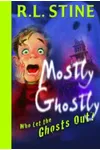
- Who Let the Ghosts Out? (2004) – Eleven-year-old Max Doyle discovers he has the unique ability to see ghosts. He meets Nicky and Tara Roland, two ghostly siblings residing in his basement who are searching for their missing parents. They make a deal: Max will help them search, and they will help him navigate the struggles of middle school.
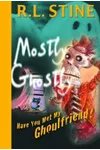
- Have You Met My Ghoulfriend? (2004) – Max navigates a crush on his classmate Traci while dealing with his bully brother, Colin. Meanwhile, the malevolent spirit Phears plots to capture Nicky and Tara, forcing Max to intervene.
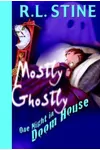
- One Night in Doom House (2005) – Max and his spectral friends face a dangerous new adversary, Mr. Morgo, a ghost with the power to control fire. They must work together to protect the town from destruction.
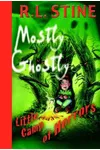
- Little Camp of Horrors (2005) – Max is sent to a creepy summer camp. The adventure takes a major turn when Nicky and Tara are temporarily reunited with their ghost-hunting parents.
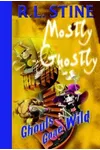
- Ghouls Gone Wild! (2005) – Max continues his attempts to balance a normal school life with supernatural interference. In this volume, his family contemplates moving, which threatens to separate him from the basement where his ghostly companions live.
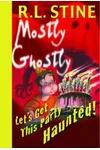
- Let's Get This Party Haunted! (2005) – Social pressures and ghostly antics clash once again. Max tries to host a normal party, but the supernatural elements refuse to stay hidden, leading to comedic chaos.
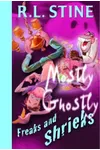
- Freaks and Shrieks (2005) – The spooky adventures intensify as Max, Nicky, and Tara run into bizarre entities, raising the stakes for their secret alliance.
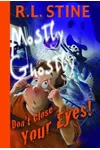
- Don't Close Your Eyes! (2006) – In the eighth and final installment, Max is targeted by Inkweed, a ghost known as the "Ghost of the Black Sleep." Inkweed attempts to possess Max's body by forcing him to stay awake, leaving Nicky and Tara in a race against time to save him.
The Unresolved Ending and Continuity Caveats
Before starting the series, readers should be prepared for a major continuity caveat: the overarching mystery of the series is never resolved. The central narrative goal—Nicky and Tara finding their parents, uncovering the truth about their deaths, and either returning to life or resting in peace—remains open-ended. The final book, Don't Close Your Eyes!, resolves its immediate plot involving the ghost Inkweed, but the series was discontinued without a definitive conclusion to the Rolands' family search.
Page to Screen: The Movie Adaptations
The Mostly Ghostly series inspired three feature-length film adaptations released by Universal. While they capture the fun, spooky tone of the books, they make significant changes to the source material:
- Mostly Ghostly: Who Let the Ghosts Out? (2008) – Starring Sterling Beaumon as Max, Madison Pettis as Tara, and Luke Benward as Nicky. This film introduces the characters and expands the short plot of the first book to fill a feature runtime.
- Mostly Ghostly: Have You Met My Ghoulfriend? (2014) – Featuring Ryan Ochoa as Max and Roshon Fegan taking over the role of Nicky, alongside Bella Thorne as Cammy.
- Mostly Ghostly: One Night in Doom House (2016) – Starring Corey Fogelmanis as Max and Blake Michael as Nicky. This film borrows the setup of the third book but blends in elements from other books, such as the moving storyline from Ghouls Gone Wild!.
A frequent point of confusion for viewers is the changing cast. Due to the gap in production years, the main roles of Max and Nicky were recast for every film as the original actors aged out. Additionally, the films introduce Nicky and Tara's parents much earlier in the timeline than the books do, and they omit key book characters like Max's friend Aaron.