
The Recommended Reading Path
The Moth Saga is a six-book epic fantasy series written by Daniel Arenson. Unlike complex fantasy universes with sprawling spin-offs, prequels, and co-authored projects, the Moth Saga follows a single, linear chronological path. To fully appreciate the character arcs, evolving political intrigue, and gradual resolution of the world's deep-seated conflicts, you should read the books in their exact publication order.
Here is the recommended reading order for the series:
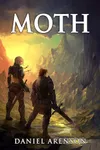
- Moth (Published in 2013) – The book that introduces the divided world of Moth, the conflict between light and dark, and the primary protagonists Torin and Koyee as they are thrust into a brewing war.
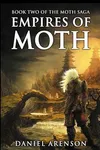
- Empires of Moth (Published in 2013) – The second installment, which escalates the conflict, bringing dragons, deeper alliances, and larger-scale battles to the forefront.
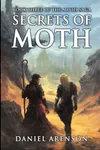
- Secrets of Moth (Published in 2014) – The conclusion to the first main story arc, focusing on a dangerous quest to restore the rotation of the world.
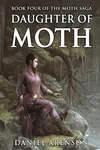
- Daughter of Moth (Published in 2014) – The start of the second trilogy, shifting focus to a new generation, specifically the protagonist Madori, a child of dusk.
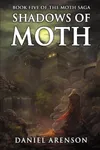
- Shadows of Moth (Published in 2014) – The fifth book, where the war between light and shadow intensifies, and Madori struggles to reconcile the halves of her own heritage.
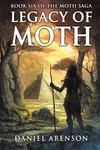
- Legacy of Moth (Published in 2014) – The final book of the saga, which brings the destructive war to its ultimate conclusion and decides the fate of the divided planet.
The Two Eras of the Moth Saga
Although the series is numbered consecutively from one to six, it is divided into two distinct trilogies that represent different eras and focus on different generations of characters.
The Torin and Koyee Era (Books 1–3)
The first half of the saga consists of Moth, Empires of Moth, and Secrets of Moth. This trilogy establishes the unique setting of a planet frozen in time. The narrative follows Torin, a Timandran hailing from the sunlit lands of the west, and Koyee, an Elorian fighting to protect her nocturnal home in the east. Their paths cross when Ferius, a fanatical monk, begins inciting a holy war between the two halves of the planet. Over the course of these three books, Torin and Koyee must overcome their mutual prejudices, forge an alliance, and ultimately seek a way to restart the world's rotation to save it from physical and political destruction.
The Madori Era (Books 4–6)
The second half of the saga, comprising Daughter of Moth, Shadows of Moth, and Legacy of Moth, takes place years later. The focus shifts to Madori, the daughter of a sunlit father and a shadow mother. As a "child of dusk," Madori belongs to neither side of the world and is viewed as an outsider by both. When war erupts once more between the sunlit dwellers and the creatures of the night, Madori is caught in the crossfire. This trilogy focuses on her journey to heal her fractured identity and find a path toward lasting reconciliation for her war-torn world.
The Still World of Moth: Timandra vs. Eloria
The primary appeal of the Moth Saga lies in its unique premise: a planet that has stopped spinning. This physical state has divided the globe into two distinct ecological and cultural zones, creating a literal representation of duality.
Timandra is the sunlit hemisphere. It is a land of perpetual day, characterized by golden fields, bright skies, and citizens who have never seen the stars. The Timandrans are culturally defined by their relationship to the light, which sometimes manifests as self-righteousness and prejudice toward those who live in the dark.
Eloria, on the other hand, is the nocturnal hemisphere. Shrouded in endless night, it is a landscape of luminescent cities, moonlit forests, and nocturnal creatures. The Elorians are resilient and adapted to the shadows, but they are equally suspicious of the sunlit dwellers. The tension between these two cultures forms the backbone of the series, serving as a metaphor for real-world issues like prejudice, xenophobia, and the manipulation of belief systems to fuel conflict.
Practical Reader Advice
For readers planning to embark on this fantasy journey, here are a few practical tips to keep in mind:
- Start at the Beginning: Do not attempt to skip ahead to Daughter of Moth. While the second trilogy features a new main character, Madori's story is deeply rooted in the events and lore established in the first three books. Starting with the first book, Moth, is essential.
- Standalone Feasibility: The books in the Moth Saga are not standalones. Each novel ends with unresolved plot threads that lead directly into the next, meaning they must be read in sequential order to make sense.
- Look for Bundles: Because the series is split into two clear arcs, you can often find the books packaged in official bundles (such as a Books 1–3 collection and a Books 4–6 collection). These omnibus editions are often the most cost-effective way to read the series.
- No Spin-offs or Tie-ins: Daniel Arenson has written other highly successful fantasy and science fiction series (such as Requiem and Earthrise), but those are completely separate universes. The Moth Saga is fully contained within these six books.
What to Know Before You Start
The Moth Saga is classified as epic fantasy, but it features strong Young Adult crossover appeal due to its coming-of-age themes and fast-paced storytelling. Daniel Arenson's writing is highly accessible, focusing on emotional resonance, vivid world-building, and high-stakes action rather than dense, slow-moving exposition. While the first book, Moth, spends time establishing the unique physics and cultures of the world, the pacing accelerates significantly in the subsequent sequels, delivering a continuous stream of battles, magical discoveries, and dramatic twists.