
The Recommended Reading Order: Where to Begin
For almost eighty years, families have fallen in love with Mrs. Piggle-Wiggle, the friendly widow who lives in an upside-down house, smells like fresh-baked cookies, and possesses a magical trunk of cures inherited from her late pirate husband. If you are preparing to read these stories for the first time, the best path forward is simple and direct: follow the original publication order.
Because the series is highly episodic rather than serialized, children will not find themselves lost if they read the books out of sequence. However, beginning with the very first book is strongly recommended. It establishes Mrs. Piggle-Wiggle's backstory, explains why her house is upside down, and introduces the neighborhood parents who frequently rely on her magical remedies to correct their children's bad habits.
The Original Mrs. Piggle-Wiggle Series
Written by Betty MacDonald (and later completed by her daughter), the original series consists of five primary books, plus a notable standalone picture book adaptation:
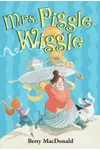
- Mrs. Piggle-Wiggle (1947): The book that started it all. It introduces Mrs. Piggle-Wiggle, her pirate husband's buried treasure, and classic chapters such as the Won't-Pick-Up-Toys Cure, the Radish Cure (for kids who refuse to bathe), and the Slow-Eater Tiny-Bite Cure.
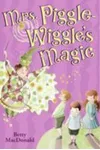
- Mrs. Piggle-Wiggle's Magic (1949): MacDonald leans further into the fantastical here. Cures in this volume involve magical items and powders, such as Thought-Broadening Powder for children who show off, and a powder that temporarily silences constant interrupters.
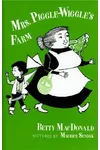
- Mrs. Piggle-Wiggle's Farm (1954): A change of scenery for our protagonist. Mrs. Piggle-Wiggle sells her upside-down house and moves to a farm, where she uses animal care, physical chores, and rural responsibilities to help reform kids who have issues like bragging or lying.
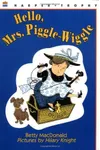
- Hello, Mrs. Piggle-Wiggle (1957): Mrs. Piggle-Wiggle returns to her neighborhood upside-down house to help a new batch of parents. This book features remedies like the Crybaby Cure and the Show-Off Cure. Note that while some records incorrectly catalog this book as a 1955 release, official copyright records confirm it was published in 1957.
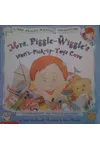
- Mrs. Piggle-Wiggle's Won't-Pick-Up-Toys Cure (1997/1998): A standalone picture-book adaptation of the iconic chapter from the first book, featuring illustrations by Bruce Whatley. It was released in hardcover in 1997 by HarperCollins and in softcover in 1998 by Scholastic. It is ideal for introducing toddlers to the series.
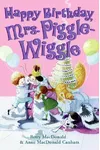
- Happy Birthday, Mrs. Piggle-Wiggle (2007): Released fifty years after the fourth book, this collection was completed posthumously by Betty MacDonald's daughter, Anne MacDonald Canham, utilizing her mother's unpublished manuscripts and personal notes. It brings back Mrs. Piggle-Wiggle for a final series of whimsical behavior cures.
The Missy Piggle-Wiggle Spin-Offs
Decades after the final original stories were written, the world of the upside-down house was revived. Co-authored by Ann M. Martin (creator of The Baby-Sitters Club) and Annie Parnell (Betty MacDonald's great-granddaughter), this contemporary spin-off series centers on Mrs. Piggle-Wiggle's great-niece, Missy Piggle-Wiggle. Missy takes charge of the home and cures a brand-new generation of neighborhood kids while her great-aunt is away looking for her missing husband.
These spin-offs should be read after the original books to fully appreciate the world-building, though they are written in a fresh, modern voice:
- Missy Piggle-Wiggle and the Whatever Cure (2016): Missy arrives at the upside-down house and tackles problems like the "Whatever" attitude and excessive screen time.
- Missy Piggle-Wiggle and the Won't-Walk-the-Dog Cure (2017): Missy deals with children who neglect their chores, ignore pet responsibilities, or refuse to share.
- Missy Piggle-Wiggle and the Sticky-Fingers Cure (2018): Missy manages kids who struggle with truthfulness, taking things that don't belong to them, and bad manners.
Reading Advice: Standalones and Caveats
Can they be read as standalones? Yes. Because each chapter functions as a self-contained story focusing on a single child's specific behavioral problem (such as "The Whispering-Cure" or "The Slow-Eater-Tiny-Bite-Cure"), you can pick up almost any book in the series and read the chapters in whatever order you prefer. The books are excellent for bedtime reading because of this episodic structure.
Chronological vs. Publication Order: There is no significant difference between the chronological order and the publication order. The characters do not age significantly, and the neighborhood remains a stable, nostalgic backdrop. Stick to the publication order to watch how the style of the magical remedies evolved from simple household tricks to outright fantasy elements.
What to Know Before You Start
Historical Context: Because the original books were written in the late 1940s and 1950s, parents and educators should be prepared for some elements that reflect the era. The neighborhood moms are almost exclusively homemakers, and there are occasional passing references to spanking as a traditional discipline method. Reading these books aloud offers a great opportunity to talk with kids about how family life, technology, and parenting styles have changed over the decades.
Visual Style and Illustrators: The visual identity of Mrs. Piggle-Wiggle has evolved through several legendary illustrators. The very first edition of Mrs. Piggle-Wiggle was illustrated by Richard Bennett in 1947, followed by Kurt Wiese for the 1949 edition of Mrs. Piggle-Wiggle's Magic. Maurice Sendak, who would later write Where the Wild Things Are, illustrated Mrs. Piggle-Wiggle's Farm in 1954. Hilary Knight (of Eloise fame) provided the art for Hello, Mrs. Piggle-Wiggle in 1957 and re-illustrated the earlier books for later editions, cementing the iconic look most readers remember. For modern editions, Alexandra Boiger took over the artistic reins, including the Missy Piggle-Wiggle spin-offs.
Adaptations: Beyond the books, the franchise has stepped onto the stage and screen. In 1990, Chad Henry adapted the books into a popular children's stage musical titled The Magic Mrs. Piggle-Wiggle (also performed as Hello, Mrs. Piggle-Wiggle!). In 1994, Showtime broadcasted a live-action television series adaptation created and produced by Shelley Duvall, starring Jean Stapleton as Mrs. Piggle-Wiggle.