









Where to Start Your Mrs. Bradley Journey
Spanning over five decades and 66 novels, Gladys Mitchell's Mrs. Bradley series is one of the most prolific and unique runs in the history of Golden Age detective fiction. Because the vast majority of the books are self-contained whodunits, you can technically read them in almost any order. However, to truly appreciate the evolution of Mrs. Bradley's character, her professional career, and her relationships with her recurring assistants, reading in publication order is highly recommended.
For the absolute best starting point, look no further than the very beginning:
- Speedy Death (1929): Gladys Mitchell's debut novel introduces readers to Mrs. Bradley during a country house gathering. It immediately establishes her unconventional style, Freudian psychoanalytic insights, and her distinctively sharp, crocodilian physical appearance.
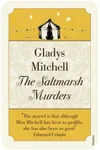
- The Saltmarsh Murders (1932): Widely considered a classic, this early entry showcases Mitchell's sharp satire of cozy village mysteries, featuring scandalous secrets, dark humor, and Mrs. Bradley at her most formidable.
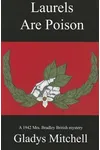
- Laurels Are Poison (1942): If you want to jump straight into the era featuring Mrs. Bradley's most famous companion, this 14th novel is the perfect entry point, marking the introduction of student Laura Menzies.
The Eras of Mrs. Bradley
To help navigate this massive library of mysteries, the series can be split into two primary eras based on Mrs. Bradley's sidekicks and associates:
The Early Years (1929–1941)
In the first thirteen novels, Mrs. Bradley investigates crimes primarily on her own or with temporary assistants, alongside her loyal chauffeur. She establishes her reputation as a psychoanalyst and a consultant to the Home Office, frequently using her deep understanding of human psychology and folklore to solve complex puzzles. These early works are often characterized by their experimental nature, blending traditional detection with occult themes, folklore, and dark satire.
The Laura Menzies Era (1942–1984)
Beginning with Laurels Are Poison (1942), the series shifts with the introduction of Laura Menzies, a fierce and athletic young woman who quickly becomes Mrs. Bradley's secretary, companion, and investigative partner. Their dynamic remains the emotional anchor of the series for the next four decades. As the series progresses, Laura marries Scotland Yard Inspector Robert Gavin, bringing a official police liaison directly into Mrs. Bradley's inner circle. Mrs. Bradley herself is eventually damehooded, becoming Dame Beatrice Adela Lestrange Bradley.
Masterpieces and Fan Favorites
If you prefer to sample the absolute highlights of Gladys Mitchell's writing rather than tackling all 66 books, make sure to add these acclaimed titles to your reading list:
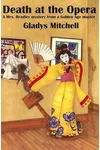
- Death at the Opera (1934): Published in the US under the title Death in the Wet, this school-based mystery features a series of drownings and one of the most wonderfully bizarre motives in detective fiction.
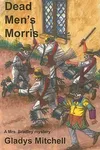
- Dead Men's Morris (1936): A atmospheric mystery steeped in rural customs, Morris dancing, and Gloucestershire folklore, recently reprinted under the seasonal title Death Comes at Christmas.
- The Rising of the Moon (1945): Frequently cited by critics and fans as Gladys Mitchell's masterpiece. The story is told through the perspective of two young brothers living in Brentford who witness a series of murders under the full moon, with Mrs. Bradley acting as a protective, guiding force.
- Groaning Spinney (1950): A classic winter-themed whodunit featuring a snowbound country estate, ghosts, and local superstition, frequently reprinted as Murder in the Snow.
Decoding Title Variations
When searching for Mrs. Bradley books, readers often encounter confusing title changes. Several publishers have re-released Mitchell's novels under different names to highlight holiday themes or coordinate with US releases. Key alternate titles include:
- Death at the Opera (1934) was also published as Death in the Wet.
- Dead Men's Morris (1936) has been reprinted as Death Comes at Christmas.
- Groaning Spinney (1950) is widely sold under the title Murder in the Snow.
Meet the Key Supporting Cast
While Mrs. Bradley's sharp intellect is always at the center of the mystery, she relies on a small, loyal group of recurring characters to assist her:
- George Cuddleup: Introduced in the third novel, The Longer Bodies (1930), George is Mrs. Bradley's highly capable, tough, and resourceful chauffeur. He frequently serves as her bodyguard and driver, remaining a constant presence throughout the entire 54-year run of the series.
- Laura Menzies (later Laura Gavin): Mrs. Bradley's energetic and fiercely loyal secretary. She grows from an athletic college student in Laurels Are Poison to Mrs. Bradley's closest confidante and assistant.
- Inspector Robert Gavin: A Scotland Yard detective who marries Laura, frequently providing Mrs. Bradley with inside access to official police investigations.
What to Know Before You Start
Gladys Mitchell was a contemporary of Agatha Christie and Dorothy L. Sayers, and a member of the famous Detection Club, but her style is much more eccentric, psychological, and satirical. Mrs. Bradley is not your typical cozy sleuth; she is described as elderly, physically unattractive, with a yellow complexion, a cackling laugh, and a crocodile-like grin. She is also a trained psychoanalyst who is not afraid to bend the law (or ignore it entirely) to see justice served.
Readers who know the character from the 1999 BBC television adaptation starring Diana Rigg should be prepared: the TV series significantly softened Mrs. Bradley's appearance and toned down the bizarre, Freudian, and occult elements that define Mitchell's original novels.
Gladys Mitchell's Other Writings
In addition to the Mrs. Bradley series, Gladys Mitchell wrote under two primary pen names:
- Malcolm Torrie: Under this pseudonym, she wrote a six-book detective series featuring Timothy Herring, an architect-sleuth.
- Stephen Hockaby: Under this name, she published several historical adventure novels.