

The Recommended Reading Order
The Mystery of Alexander the Great series, also known as the Alexander the Great Mysteries, is a five-book historical fiction series written by British historian and author Paul Doherty. Because the narrative timeline strictly follows Alexander the Great's rise to power and subsequent campaigns, the publication order matches the internal chronology perfectly. Readers should start at the beginning of the conspiratorial storm and follow Alexander's conquest eastward.
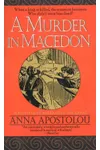
- A Murder in Macedon (1997) — Originally published under the pseudonym Anna Apostolou. Set in 336 BC, the story begins with the shocking assassination of King Philip II of Macedon. With suspicion falling on the young Alexander, his close Hebrew companions Miriam and Simeon must navigate royal intrigue to find the true conspirators.
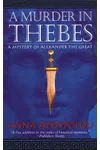
- A Murder in Thebes (1998) — Originally published under the pseudonym Anna Apostolou. Set in 335 BC, the plot centers on the chaotic destruction of Thebes as Alexander establishes his rule. Miriam and Simeon are once again tasked with solving a dangerous mystery amidst the ashes of the rebel city.
- The House of Death (2001) — Published under Paul Doherty's own name. The setting shifts to 334 BC during the Persian campaign. This novel introduces Telamon, Alexander's childhood friend and physician, who steps in as the primary investigator to solve a series of murders linked to a shadowy assassin.
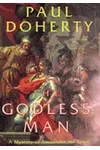
- The Godless Man (2002) — Published under Paul Doherty's own name. Set in Ephesus, Telamon faces locked-room killings, mysterious disappearances, and deep-seated political espionage as Alexander's army prepares to move further into enemy territory.
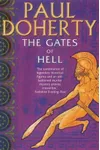
- The Gates of Hell (2003) — Published under Paul Doherty's own name. The series reaches its climax during the brutal Siege of Halicarnassus in late 334 and 333 BC. Telamon must unmask a deadly traitor within the Macedonian camp before the siege is compromised.
Understanding the Dual Perspectives: Pseudonyms and Investigators
Although the five books form a cohesive chronological timeline, the series is divided into two distinct arcs characterized by different protagonists and author names. Recognizing this structural shift helps set expectations before diving into the series.
The Anna Apostolou Duology (Books 1 & 2)
The first two books, A Murder in Macedon and A Murder in Thebes, were published under the female pseudonym Anna Apostolou. In these novels, the sleuthing is carried out by Miriam and Simeon Bartimaeus, Jewish twins who are close friends of Alexander. Doherty uses this perspective to highlight the diverse and multi-ethnic nature of the Macedonian court and the immediate chaos following the death of King Philip II. Miriam, in particular, frequently takes the lead in active, hands-on detective work, providing a refreshing dynamic for historical mysteries of this era.
The Telamon Trilogy (Books 3 — 5)
Starting with The House of Death, Doherty dropped the pseudonym, publishing under his own name. He also introduced a new protagonist: Telamon, a fictional physician and physician-in-ordinary to Alexander. According to the series lore, Telamon and Alexander were educated together at the Grove of Mieza under the tutelage of the great philosopher Aristotle. Telamon uses the logical deduction and observation skills honed under Aristotle to solve complex, locked-room mysteries and spy conspiracies. While the twins Miriam and Simeon do not return as lead characters, Telamon seamlessly continues the exploration of Alexander’s inner circle and the rising paranoia of his campaign.
Publication Order vs. Chronological Order
Because the books follow the real-world historical timeline of Alexander the Great's early career, there is no divergence between publication order and chronological order. The events flow directly from one year to the next:
- 336 BC: The assassination of Philip II of Macedon (A Murder in Macedon).
- 335 BC: The rebellion and destruction of Thebes (A Murder in Thebes).
- 334 BC: The crossing of the Hellespont and early Persian campaign (The House of Death).
- 334 BC (Winter): The occupation of Ephesus (The Godless Man).
- 333 BC: The Siege of Halicarnassus (The Gates of Hell).
For the best experience, readers should read the books in the order they were published. Skipping the first two books is possible if you only want to read the Telamon mysteries, but you will miss the foundation of Alexander's rise and the initial conspiracies that shape his character throughout the later trilogy.
What to Know Before You Start
Paul Doherty is an accomplished historian with a doctorate from Oxford University. His academic expertise in the classical world shines through in the rich, sensory details of the Macedonian military camps, the politics of the Greek city-states, and the opulence of Persian-influenced cities. Expect detailed descriptions of ancient battle tactics, medical practices of the era, and the pervasive role of superstition and omens in daily life. Doherty frequently blends real historical figures—such as Parmenio, Hephaestion, and Olympias—with his fictional sleuths to craft satisfying, atmosphere-heavy locked-room mysteries.