




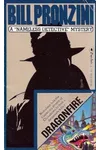

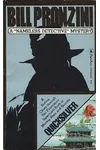


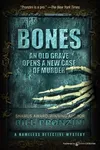


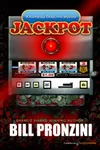





The Recommended Reading Order
For readers diving into the fog-drenched streets of San Francisco with the Nameless Detective, the most rewarding path is the Publication Order. Unlike many fictional detectives who remain frozen in time, Nameless ages in real-time, carries physical and psychological scars from case to case, and experiences a shifting personal life. Reading the books as they were released allows you to witness his realistic journey from a solitary, cynical ex-cop in his late 30s to a semi-retired mentor in his late 70s.
The Evolution of the Nameless Detective (Subseries and Eras)
Spanning nearly five decades, the series is naturally divided into distinct eras that reflect both the detective's personal circumstances and author Bill Pronzini's evolving style.
The Lone Wolf Era (1971–2001)
This long opening stretch establishes Nameless as a classic hardboiled private eye operating a solo practice. He is a down-to-earth Italian-American ex-cop, a passionate collector of old pulp magazines, and a man who relies on dogged legwork rather than flashy gadgets. Key developments during this era include:
- The Snatch (1971): The debut novel that introduces Nameless and his gritty San Francisco territory during a high-stakes kidnapping case.
- Shackles (1989): A dark, claustrophobic turning point where the detective is kidnapped and chained in a mountain cabin, leaving him with deep psychological trauma that affects subsequent novels.
- Hardcase (1995): A milestone book where Nameless finally marries his long-time, on-again-off-again partner, Kerry Wade.
The Agency Era (2002–2017)
Beginning with Spook (2002), the series transitions from a one-man show to an ensemble-cast agency procedural. As Nameless struggles with physical aging and health scares (including a battle with lung cancer), he brings in partners to handle the field work. The narrative structure changes to follow multiple, parallel investigations that eventually intersect:
- Tamara Corbin: A sharp, tech-savvy investigator who joins the agency, adding a modern dynamic to the office.
- Jake Runyon: Introduced in Spook (2002), Runyon is a former Seattle police officer carrying his own heavy grief. He becomes the agency's primary physical operative.
- Endgame (2017): The final novel in the series, featuring twisty cases that wrap up the long career of the detective and his agency partners.
Crossover Collaborations & Guest Sleuths
Pronzini co-authored two notable crossover novels in the main series line, uniting Nameless with other famous fictional investigators of the era:
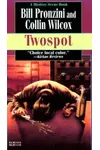
- Twospot (1978): Co-authored with Collin Wilcox, this book features a crossover with Wilcox's series character, San Francisco police Lieutenant Frank Hastings, as they investigate a murder in the Napa Valley.
- Double (1984): Co-authored with Marcia Muller (Pronzini's wife), this crossover teams Nameless with Muller's famous private investigator Sharon McCone during a P.I. convention in San Diego.
Short Story Collections and Standalone Novellas
In addition to the main novels, the Nameless Detective appears in numerous shorter works. To get the full experience, these should be read alongside the novels of their respective eras:
The Short Story Collections
- Casefile (1983): The first collection, gathering early short stories (including his very first appearance in the 1968 short story 'It’s a Lousy World').
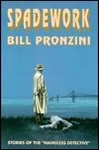
- Spadework (1994): Collects fifteen stories, including the Shamus Award-winning short story 'Cat's Paw'.
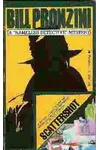
- Scenarios (2003): A comprehensive casebook collecting fourteen stories spanning different points in the detective's career.
The Standalone Novellas
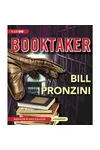
- Booktaker (2011): A rare-book theft mystery where the detective goes undercover.
- Kinsmen (2012): A dark investigation into a disappearance in rural California.
- Femme (2012): A classic noir tale featuring a femme fatale, which was later expanded into the full-length novel Vixen (2015).
Practical Reader Advice
Can the books be read as standalones? Yes, the individual mystery puzzles in each book are self-contained and resolved by the final page. However, because of the heavy focus on the characters' personal growth, ongoing relationships (especially with Kerry Wade), and the physical toll of aging, reading them out of order will spoil major character developments.
Best Starting Point: Start at the very beginning with The Snatch (1971) to experience the series' roots. If you prefer modern, team-based agency procedurals, you can jump in at Spook (2002), but be aware that you will skip thirty years of character history and major personal milestones.
What to Know Before You Start
The Nameless Detective series is highly respected for its realism. Nameless is not a superhero; he gets tired, suffers from injuries, and experiences life-altering health issues like cancer. He is also unique for having no official name. While some characters occasionally refer to him by nicknames or associate names like 'Bill' in later books, Pronzini deliberately kept him unnamed to create a relatable, everyman figure. The series masterfully bridges the gap between mid-century hardboiled noir and modern team-oriented crime procedurals.