



The Recommended Reading Order for the Napoleonic Wars Series
For readers diving into Adrian Goldsworthy’s Napoleonic Wars saga, the path forward is straightforward. The series follows a linear, chronological progression that matches its publication order. To truly experience the growth of the characters and the mounting stakes of the Peninsular War, you should start at the beginning and follow the 106th Regiment of Foot step-by-step through their campaigns.
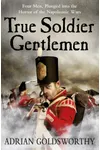
1. True Soldier Gentlemen (2008)
Setting: 1808 | Portugal (Battle of Roliça and Battle of Vimeiro)
This is where it all begins. The novel introduces us to the fictional 106th Regiment of Foot as they deploy to Portugal. We meet the core cast: Hamish Williams, a "gentleman volunteer" serving in the ranks in the hopes of earning a commission; William Hanley, an artistic young officer who has a more detached view of military glory; and Billy Pringle, a fashionable officer who quickly learns the harsh realities of active service. The story culminates in the battles of Roliça and Vimeiro, serving as a brutal baptism of fire for the regiment.
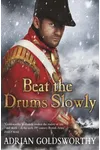
2. Beat the Drums Slowly (2011)
Setting: late 1808–early 1809 | Spain (The Corunna Campaign)
Following their initial victories, the British army is pushed into a desperate retreat across the frozen, rugged mountains of Spain toward the port of Corunna. The 106th faces grueling marches, starvation, and the breakdown of discipline. Williams, Hanley, and Pringle must fight not only the French but also the elements and their own despair. Goldsworthy brilliantly captures the misery and heroism of Sir John Moore's historic retreat.
3. Send Me Safely Back Again (2012)
Setting: 1809 | Spain & Portugal (The Talavera Campaign)
Sir Arthur Wellesley (later the Duke of Wellington) returns to lead the British forces, launching a fresh offensive. The 106th Regiment is thrust back into action, marching into Spain to confront the French army. This installment introduces complex elements of espionage and intelligence-gathering, alongside the massive, bloody clash at the Battle of Talavera. The interpersonal dynamics among the officers deepen, particularly Williams's quest to prove himself worthy of promotion and love.
4. All in Scarlet Uniform (2013)
Setting: 1810 | Portugal (The River Côa and Battle of Busaco)
As Napoleon pours massive reinforcements into Spain, the British and Portuguese forces are forced onto the defensive. The 106th Regiment is stationed along the border, engaging in skirmishes and rearguard actions near the River Côa. The story highlights the construction of the defensive Lines of Torres Vedras and culminates in the dramatic Battle of Busaco, where the allied forces make a defiant stand against Marshal Masséna’s invasion force.
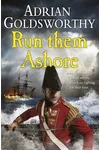
5. Run Them Ashore (2014)
Setting: 1810–1811 | Spain (Andalusia, Cadiz, and Battle of Barrosa)
The narrative shifts to the besieged city of Cadiz. A detachment of the 106th is sent to support the Anglo-Spanish defense of this crucial port. This book offers a fresh look at the naval-coastal cooperation of the era, culminating in the Battle of Barrosa. The political friction between British and Spanish commanders serves as a major backdrop, and Williams and Hanley find their survival hanging on both tactical brilliance and sheer luck.
6. Whose Business is to Die (2015)
Setting: 1811 | Spain & Portugal (Battle of Albuera)
In the spring of 1811, the allied forces go on the offensive. The 106th Foot is marched to the front lines once again, finding themselves at the center of the Battle of Albuera. Known historically as one of the bloodiest and most desperate actions of the entire Peninsular War, the battle tests the regiment to its absolute limits. Hamish Williams, now a lieutenant, must lead his men through a nightmarish clash where survival is a matter of inches.
The Waterloo Misconception and Series Status
There is a common misconception among readers regarding the scope of the series. Some marketing summaries and database entries suggest that the series culminates at the Battle of Waterloo. However, the published novels only follow the 106th Regiment up to the Battle of Albuera in 1811. While Adrian Goldsworthy has expressed a long-term goal of writing the characters all the way to Waterloo (1815), no new books have been published in this series since 2015. As it stands, the series remains on an indefinite hiatus, leaving the journey of Hamish Williams and the 106th Foot incomplete but highly rewarding.
What to Know Before You Start
Adrian Goldsworthy is a highly respected military historian specializing in Roman history, but his deep knowledge of the British Army of the Napoleonic era shines through on every page. Unlike many historical novelists who focus strictly on action, Goldsworthy pays careful attention to the complex social structures of the time.
A key concept to understand is the role of the "gentleman volunteer." In the 19th-century British Army, commissions were usually purchased. Men of good social standing who could not afford to buy a commission could join the ranks as volunteers. They fought alongside regular soldiers but were treated as social equals by the officers, dining with them and hoping to earn a commission without purchase through acts of bravery on the battlefield. This dynamic drives much of Hamish Williams's character arc throughout the books.
How It Compares: Sharpe vs. The 106th Foot
For fans of Bernard Cornwell’s legendary Sharpe series, Goldsworthy’s work is a natural next step, but with a few notable differences:
- Historical Accuracy: While Cornwell is a master of action and adventure, Goldsworthy’s training as a historian ensures that the military tactics, supply issues, and camp life are depicted with exceptional, realistic detail.
- Ensemble Focus: Sharpe is very much the story of a single, larger-than-life hero. Goldsworthy’s series is more of an ensemble drama, showing the war through the eyes of various officers, gentleman volunteers, and the women who follow the drum.
- Tone: The tone is slightly more grounded and reflective, emphasizing the psychological toll of combat and the deep bonds of camaraderie that develop under fire.