






The Best Reading Order for Nathan Hale’s Hazardous Tales
Nathan Hale’s Hazardous Tales is a remarkably flexible graphic novel series. Because each book tackles a separate, self-contained historical event—ranging from the Revolutionary War to the Korean War—you do not need to read them in strict chronological or publication order to understand the history. However, there is a catch: the series features an ongoing frame narrative set in 1776, where the historical spy Nathan Hale delays his execution by sharing stories of America's future with a British Provost and a giant Hangman.
For this reason, we highly recommend reading the books in publication order. Starting with the first book ensures you understand how the storytelling trio forms, how new permanent cast members like Bill Richmond join the gallows crew, and how the running jokes develop over time.
The Framing Narrative: Why Order Matters
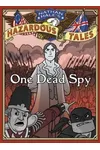
While the history lessons stand alone, the gallows frame story is a continuous comic strip that progresses with each volume. In Book 1, One Dead Spy, Nathan Hale is swallowed by a giant, magical history book just before his hanging, gaining knowledge of all future American history. To stall his execution, he begins narrating these events to his captors. In Book 9, Major Impossible, the cast expands when Bill Richmond—a real-life historical figure and the first famous Black international prize-fighter—joins the group, shifting the dynamics and bringing fresh banter. Reading out of order means missing these frame-story character introductions and running gags.
Nathan Hale’s Hazardous Tales in Publication Order
Following the publication timeline is the easiest way to collect and enjoy the series as the author intended. Here is the complete list of the main series books:
- One Dead Spy (2012) – The story that started it all, detailing the Revolutionary War spy mission of Nathan Hale himself, alongside historical figures like George Washington and Henry Knox.
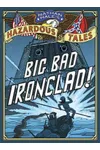
- Big Bad Ironclad! (2012) – A deep dive into the maritime battles of the American Civil War, focusing on the ironclad ships USS Monitor and CSS Virginia.
- Donner Dinner Party (2013) – A dark but carefully handled account of the ill-fated pioneer wagon train stranded in the Sierra Nevada mountains.
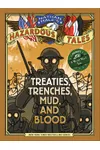
- Treaties, Trenches, Mud, and Blood (2014) – A comprehensive overview of World War I, creatively mapping out the complex alliances and combatants using different animal symbols.
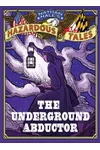
- The Underground Abductor (2015) – The inspiring biography of Harriet Tubman, detailing her escape from slavery and her heroic rescue operations.
- Alamo All-Stars (2016) – A thrilling look at the Texas Revolution and the famous, complicated battle of the Alamo.
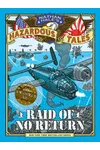
- Raid of No Return (2017) – The story of the Doolittle Raid during World War II, tracking the daring bombing mission over Japan following Pearl Harbor.
- Lafayette! (2018) – A return to the Revolutionary War, tracing the life of the young French aristocrat Marquis de Lafayette and his role in helping America win independence.
- Major Impossible (2019) – Follows John Wesley Powell's harrowing 1869 expedition to map the Grand Canyon. This book also introduces Bill Richmond to the frame narrative.
- Blades of Freedom (2020) – Examines the Haitian Revolution led by Toussaint Louverture, and how it directly influenced Napoleon Bonaparte to sell Louisiana to the United States.
- Cold War Correspondent (2021) – The story of journalist Reginald Thompson reporting from the front lines of the Korean War in 1950.
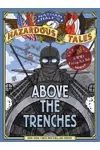
- Above the Trenches (2023) – A return to World War I, tracking the daring aerial combat of the fighter pilots of the Lafayette Escadrille.
- Bones and Berserkers (2025) – An anthology style volume featuring 13 creepy, weird, and ghostly true tales of terror from American history, told by the frame narrative crew as they wait out a rainstorm.
- The Web of War (Scheduled for November 2026) – A WWII installment focusing on the planning and execution of the D-Day invasion of Normandy, presenting a unique "pick your path" narrative.
Chronological Timeline Order
For history teachers, homeschoolers, or readers who want to experience American history in the order it actually happened, you can read the series chronologically. Note that this order scatters the frame narrative elements, but provides a fascinating chronological march through time:
- Lafayette! (Main focus on the 1770s, tracing Lafayette's early life and role in the American Revolution)
- One Dead Spy (Set in 1776, covering the early years of the Revolutionary War and Hale's spy mission)
- Blades of Freedom (Covers 1791 to 1804, focusing on the Haitian Revolution and the 1803 Louisiana Purchase)
- Alamo All-Stars (Set in 1836, covering the Texas Revolution)
- Donner Dinner Party (Set in 1846, covering the pioneer westward migration)
- The Underground Abductor (Focuses on the mid-1800s, chronicling Harriet Tubman's life and the Underground Railroad)
- Big Bad Ironclad! (Set during the Civil War, 1861–1865)
- Major Impossible (Set in 1869, covering John Wesley Powell's Grand Canyon exploration)
- Treaties, Trenches, Mud, and Blood (Covers World War I, 1914–1918)
- Above the Trenches (Focuses on WWI aerial combat, 1914–1918)
- Raid of No Return (Set in 1942, covering the early American response in World War II)
- The Web of War (Set in 1944, covering the D-Day invasion)
- Cold War Correspondent (Set in 1950, covering the Korean War)
Note: The anthology volume, Bones and Berserkers, contains stories spanning multiple eras—from colonial folklore to Civil War ghost tales—making it impossible to place in a single chronological slot.
Spin-offs, Companion Books, and Box Sets
Aside from the main history comics, Nathan Hale has released additional material to keep young historians engaged. The primary companion is Let's Make History! (2018), an interactive activity book. Rather than a narrative story, it features 71 drawing, writing, and research prompts guided by characters from the series to help kids learn how to research and draw their own historical comic strips.
For readers looking to collect the books, the publisher has released several multi-book box sets, including the Nathan Hale's Hazardous Tales 3-Book Box Set (often containing books 1 through 3) and expanded collections containing the first three, four, or more books in slipcase formats.
Practical Reader Advice
Are the books suitable for all kids? The series is officially recommended for grades 3 to 7 (ages 8 to 12). However, history is full of grim realities, and Nathan Hale does not censor the tough details. Books like Donner Dinner Party deal with cannibalism, and The Underground Abductor directly addresses the brutality of slavery. Hale handles these topics with immense care, utilizing humorous warnings and meta-commentary from the Hangman to lighten the mood. If you have a sensitive reader, starting with One Dead Spy or Lafayette! is a safer bet before diving into the darker topics.