
The Recommended Reading Path: Where to Start
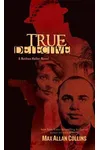
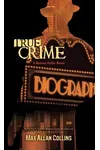
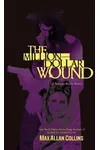
For readers looking to dive into the cases of Nathan Heller, the best place to start is the beginning of the author's journey. Max Allan Collins has explicitly recommended starting with the initial trilogy, often referred to as the Capone or Chicago trilogy: True Detective (1983), True Crime (1984), and The Million-Dollar Wound (1986). Starting here allows you to experience Collins' development as a writer and follow Heller's early transition from a corrupt Chicago police officer to a private investigator operating on the fringes of the mob.
While the novels are written as standalone investigations that can technically be enjoyed in any order, reading in publication order is highly recommended for the smoothest character arc and progression of the narrative style.
Publication Order vs. Chronological Order
For decades, fans have debated the best way to read the Nathan Heller books. While publication order is the standard path, a chronological approach offers a fascinating historical journey. However, constructing a linear chronology of Heller's life is notoriously difficult. Collins himself has warned that reading the series chronologically is more of a "deterrent than a suggestion" due to the non-linear structure of the books, which frequently feature extensive flashback sequences, multiple timelines, and split narratives.
For example, Do No Harm splits its narrative between 1957 and 1966, Flying Blind jumps between 1935, 1937, and 1940, and The Million-Dollar Wound spans 1939, 1942, and 1943. In 2019, Collins published "A Better Nate Heller Chronology," compiled by dedicated reader Bill Slankard with minor corrections by the author, to help fans navigate this complex timeline.
Nathan Heller Books Chronological Settings
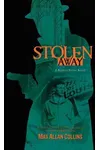
- Stolen Away (Set in 1932 / 1936) – Focuses on the Lindbergh baby kidnapping.
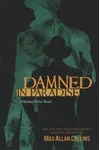
- Damned in Paradise (Set in 1932) – Follows Heller's work with Clarence Darrow on the Massie trial in Hawaii.
- True Detective (Set in 1932) – Heller deals with the Anton Cermak assassination plot and Al Capone.
- True Crime (Set in 1934) – Centers on the pursuit of John Dillinger and Baby Face Nelson.
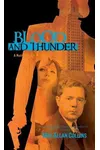
- Blood and Thunder (Set in 1935 / 1936) – Features the assassination of Louisiana Senator Huey Long.
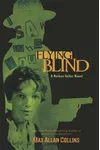
- Flying Blind (Set in 1935 / 1937 / 1940) – Explores the disappearance of Amelia Earhart.
- The Million-Dollar Wound (Set in 1939 / 1942 / 1943) – Focuses on the Chicago Outfit and Al Capone's post-prison life.
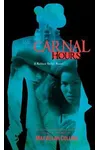
- Carnal Hours (Set in 1943) – Centers on the murder of Sir Harry Oakes in the Bahamas.
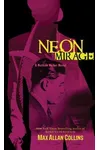
- Neon Mirage (Set in 1946 / 1947) – Covers the rise and fall of Bugsy Siegel and the birth of modern Las Vegas.
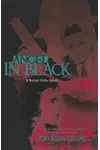
- Angel in Black (Set in 1947) – Explores the notorious Black Dahlia murder in Los Angeles.
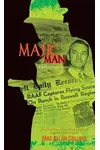
- Majic Man (Set in 1949) – Looks into the Roswell incident and the death of Defense Secretary James Forrestal.
- Chicago Confidential (Set in 1950) – Deals with the Senate Kefauver Committee mob hearings.
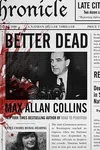
- Better Dead (Set in 1953) – Covers the Red Scare, Joseph McCarthy, the Rosenbergs' trial, and the Frank Olson CIA case.
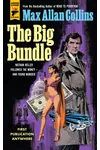
- The Big Bundle (Set in 1953) – Investigates the Bobby Greenlease kidnapping.
- Do No Harm (Set in 1957 / 1966) – Follows the Sam Sheppard murder trials.
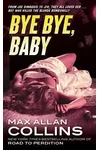
- Bye Bye, Baby (Set in 1962) – Deals with the death of Marilyn Monroe.
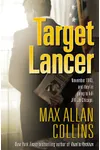
- Target Lancer (Set in 1963) – Explores the aborted Chicago assassination plot against JFK.
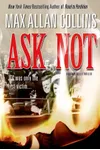
- Ask Not (Set in 1964) – Focuses on the aftermath of the JFK assassination.
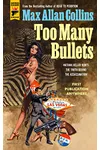
- Too Many Bullets (Set in 1968) – Centers on the assassination of Robert F. Kennedy.
Key Subseries and Story Arcs
If you prefer not to commit to the entire 19-novel saga at once, the series can easily be broken down into thematic and historical clusters:
- The Chicago Mob Era: Composed of the first four novels (True Detective through Neon Mirage), these stories track Heller's encounters with Al Capone, Nitti, and the transition of the Chicago Outfit.
- The World War II and Post-War Mysteries: Running from Carnal Hours through Chicago Confidential, these books show an older Heller dealing with international intrigue, alien conspiracies, and political corruption.
- The Kennedy Assassination Arc: A cohesive late-series trilogy consisting of Target Lancer, Ask Not, and Too Many Bullets that follows the conspiracy theories surrounding the Kennedy family in the 1963–1968 era.
Short Stories and Collections
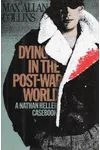
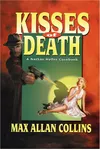
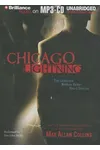
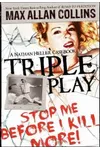
In addition to the novels, Collins has penned numerous novellas and short stories featuring Heller. These were originally collected in Dying in the Post-War World (1991) and Kisses of Death (2001). To make the backlist more accessible, these stories were later consolidated and re-released into two definitive volumes: Chicago Lightning: The Collected Nathan Heller Short Stories (2011) and Triple Play: A Nathan Heller Casebook (2012), the latter compiling three key novellas ("Dying in the Postwar World," "Kisses of Death," and "Strike Zone"). These collections can generally be read at any point, though they fit neatly into the timeline gaps of the 1930s and 1940s.
What to Know Before You Start
Nathan Heller represents the peak of "docu-fiction." Collins conducts exhaustive research for every entry, often uncovering real-life documents and speaking with historical experts. Each novel includes a detailed afterword where Collins separates historical fact from fictional speculation, making the books a treat for history buffs and mystery lovers alike. The series has earned multiple Shamus Awards from the Private Eye Writers of America, cementing Heller's legacy as one of the finest PIs in crime fiction.