
The Recommended Reading Order for the Ninja Cycle
If you are planning to step into the shadowy, intense world of Nicholas Linnear, the best way to experience his journey is in publication order. The narrative follows a direct chronological path, letting you experience Nicholas's personal growth, his martial arts mastery, and the escalating stakes of his international espionage adventures as Eric Van Lustbader originally wrote them.
Because the overarching story relies heavily on recurring characters, shifting alliances, and ongoing character developments, jumping in mid-series will leave you lost. Start at the very beginning with the book that launched the 1980s ninja craze.
The Nicholas Linnear / Ninja Cycle Reading Order
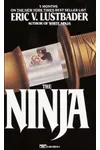
- The Ninja (1980) – The classic thriller that introduces Nicholas Linnear, his duel-world heritage, his training in the deadly arts of Ninjutsu, and a terrifying confrontation with his cousin Saigo in New York.
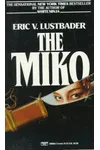
- The Miko (1984) – The direct sequel that introduces supernatural and psychological tension, forcing Nicholas to face a deadly female counterpart (a Miko) bent on revenge.
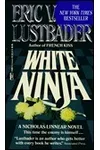
- White Ninja (1990) – A pivotal entry where Nicholas suffers a spiritual and physical crisis, losing his ninja powers (his "shiro ninja" state) just as a new, elusive threat emerges in Japan.
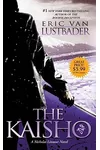
- The Kaisho (1993) – Nicholas is drawn into the dark world of the Yakuza and corporate warfare when he is asked to protect a powerful criminal boss, known as the Kaisho.
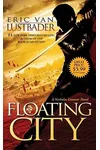
- Floating City (1994) – The action shifts to the rugged golden triangle of Southeast Asia, focusing on a mysterious and dangerous black-market empire known as the Floating City.
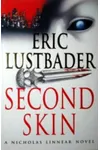
- Second Skin (1995) – The final full-length novel of the original run. Nicholas must protect his family and track down a legendary nemesis who strikes at his deepest vulnerabilities.
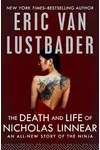
- The Death and Life of Nicholas Linnear (2014) – An ebook-exclusive novella that picks up years later, finding Nicholas trapped in a literal coffin, fighting to escape and save his empire.
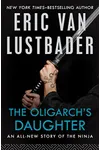
- The Oligarch's Daughter (2016) – Another ebook-exclusive novella where Nicholas is hired by a Russian oligarch in exchange for vital secrets about his own ancestry.
Understanding the Continuity and Format Caveats
While the publication order is straightforward, there are a few unique quirks to keep in mind before you start reading this series:
- Flashbacks and Time Jumps: The series progresses chronologically, but individual books—particularly The Ninja—rely heavily on flashbacks. You will frequently skip between the main modern-day plotlines and Nicholas's formative years in post-WWII Japan, where he learned the secrets of the shadow warrior.
- The Novella Transitions: The two digital releases from 2014 and 2016 (The Death and Life of Nicholas Linnear and The Oligarch's Daughter) are significantly shorter than the massive, sweeping novels of the original run. Eric Van Lustbader wrote these shorter installments as part of a digital experiment to revive the character, intending to eventually weave them into a larger mosaic novel. They should be read as epilogues or companion pieces to the main six books.
- Tone Shift: The first three books (often referred to by fans as the core trilogy) lean heavily into dark martial arts mysticism, romance, and gritty detective thriller elements. The later books (from The Kaisho onward) pivot more toward corporate espionage, global tech cartels, and high-stakes thriller action.
What to Know Before You Start
Eric Van Lustbader’s writing style is lush, descriptive, and highly atmospheric, but it is also products of its time. Here is what new readers should expect:
Mature Themes and Intensity: The Ninja Cycle is famous for its visceral violence, intense sensuality, and deep explorations of trauma and revenge. These are not light, breezy action stories; they are dense, psychological thrillers that delve into the dark sides of human nature.
A Bridge Between Cultures: As a half-English, half-Asian protagonist, Nicholas Linnear serves as a bridge between Western rationalism and Eastern mysticism. Lustbader spends significant time explaining Japanese cultural concepts, martial arts philosophies, and spiritual practices. If you enjoy rich world-building that blends philosophy with action, this series will resonate deeply.
Spin-Offs and Thematic Cousins
While Nicholas Linnear does not have any direct spin-off series, Eric Van Lustbader wrote several other thrillers during the same era that share a similar DNA. The most notable is the China Maroc series, which consists of two novels: Jian (1985) and Shan (1986).
Although Jake Maroc (the protagonist of Jian and Shan) does not cross paths with Nicholas Linnear, the books feature the same heavy mix of Asian settings, martial arts, espionage, and complex plots. If you finish the Ninja Cycle and are looking for something with the exact same tone and stylistic flair, the China Maroc books are your best next step.