
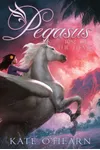

The Complete Pegasus & Titans Reading Order
To fully appreciate the character growth of Emily, Pegasus, and their mythological allies, you should read Kate O’Hearn’s books in chronological order, which matches the order of publication. Because the narrative functions as a continuous, sweeping epic, skipping books or reading them out of sequence will leave you lost amidst the complex web of Roman mythology, time-travel, and modern government conspiracies.
The universe is split into two primary arcs: the original six-book Pegasus series and the three-book follow-up series, Titans. Below is the recommended sequence to experience the entire saga:
The Original Pegasus Series
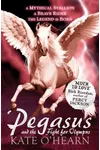
- Book 1: The Flame of Olympus (also published as Pegasus and the Flame) (2011)
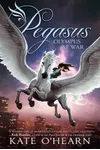
- Book 2: Olympus at War (also published as Pegasus and the Fight for Olympus) (2011)
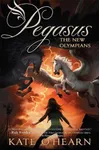
- Book 3: The New Olympians (also published as Pegasus and the New Olympians) (2012)
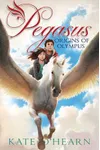
- Book 4: The Origins of Olympus (also published as Pegasus and the Origins of Olympus) (2012)
- Book 5: Rise of the Titans (also published as Pegasus and the Rise of the Titans) (2015)
- Book 6: The End of Olympus (also published as Pegasus and the End of Olympus) (2016)
The Sequel Series: Titans
- Book 7: Titans (2019)
- Book 8: The Missing (2020)
- Book 9: The Fallen Queen (2021)
Deciphering the Naming Confusion: US vs. UK Titles
One of the biggest hurdles for new readers trying to collect this series is the regional title variations. Kate O'Hearn's books were released under different titles in the United States and the United Kingdom, leading many fans to mistakenly believe there are more books in the series than actually exist.
In the United Kingdom, the books were generally published by Hodder Children's Books with direct, mythological titles like The Flame of Olympus and Olympus at War. In the United States, Aladdin Books opted to prefix every title with the main character's name, resulting in titles like Pegasus and the Flame or Pegasus and the Fight for Olympus. While the covers and names differ, the internal text remains identical. If you are ordering these books online, double-check the publication dates and regional versions so you do not accidentally purchase duplicate copies of the same story under different titles.
A Deep Dive Into the Original Pegasus Saga
The journey begins with The Flame of Olympus (2011), where we meet thirteen-year-old Emily Jacobs on a stormy Manhattan rooftop. Her life changes forever when Pegasus, the legendary winged stallion of Roman myth, crashes down during a battle. Pegasus has been injured, and the mythological realm of Olympus is under siege by the Nirads—monstrous four-armed stone warriors. Emily must team up with a thief named Paelen and a classmate named Joel to save the horse, heal the gods, and discover her own connection to the mystical Flame of Olympus.
In Olympus at War (2011), the stakes rise as Emily is forced to leave New York behind for the heights of Olympus. While trying to master her new powers, she must rescue her father from the clutches of the CRU (Central Research Unit), a sinister government agency dedicated to capturing and researching mythological entities. This entry deepens the found-family dynamic and shows the gritty reality of a war spanning two worlds.
The New Olympians (2012) shifts the battlefront. With Olympus rebuilt, the gods decide to establish a presence on Earth, but human fear and curiosity pose a major threat. Emily and her friends uncover a dangerous cloning conspiracy led by the CRU, forcing them to confront the darker side of humanity's obsession with control. This book introduces new mythological figures and tests the loyalty of the main cast.
In The Origins of Olympus (2012), O'Hearn introduces time-travel to the mythological structure. Emily must travel back to the ancient Titan-Olympian war to correct a timeline error and prevent the destruction of the modern world. This entry provides fascinating lore regarding the origins of the gods and the history of Pegasus himself.
Following a three-year gap, Rise of the Titans (2015) picks up the threads of the ancient conflict. The Titans have escaped their prison and are seeking revenge against the Olympian gods. Emily and Pegasus must travel to the Hawaiian islands to seek allies and prevent an apocalyptic war on Earth.
The original saga concludes with The End of Olympus (2016). Emily and her companions face the ultimate battle as the Nirads, Titans, and human agencies converge. Emily is forced to make incredible sacrifices to protect both Earth and Olympus, bringing a satisfying end to her initial story arc.
Extending the Adventure: The Titans Sequel Series
Although The End of Olympus wrapped up Emily's primary narrative, Kate O'Hearn returned to the universe in 2019 with a sequel series simply titled Titans. This trilogy functions as a direct continuation of the Pegasus world, introducing new protagonists while keeping the original characters active in the plot.
The first book, Titans (2019), shifts focus slightly to a new protagonist, Astraea, a young Titan who has grown up in the shadow of the Olympian-Titan war. She is sent to live on Olympus as part of a peace treaty, where she crosses paths with Emily and Pegasus. Together, they must work to bridge the gap between their historically hostile peoples while dealing with a new emerging threat.
The Missing (2020) and The Fallen Queen (2021) complete this second trilogy. The plot thickens as Astraea, Emily, and their allies must track down missing mythological beasts and stop a renegade faction from destroying the fragile peace. The Titans series is a mandatory read for fans who want to know what happens to Emily, Joel, and Paelen after the events of the original six books.
What to Know Before You Start: Reader Advice
While Kate O'Hearn is a New York native, she draws heavily from Roman mythology rather than Greek mythology for this series. While you will encounter familiar figures like Jupiter, Diana, and Mercury, the terminology and relationships are distinctly Roman. This sets the series apart from Rick Riordan's Percy Jackson books, which heavily favor Greek naming conventions.
Can you read these books as standalones? While some online listings suggest they can be read individually, we highly recommend starting from the beginning. The emotional weight of the character development, the evolution of the CRU threat, and the resolution of the Titan conflict rely on details established in earlier volumes. If you jump straight into the middle, you will miss the context behind Emily's powers and the complex alliances she has forged.
Additionally, note that Kate O'Hearn's other fantasy series, such as the Valkyrie trilogy (which focuses on Norse mythology) and the Atlantis series, are completely separate. Despite fan theories suggesting crossovers due to similar urban fantasy settings, they do not take place in the same universe as Pegasus and Titans.