


The Recommended Reading Order for Ray Crawley
If you want to experience the full descent of Ray 'Creepy' Crawley—from a compromised agent inside Australia’s intelligence machine to a cynical lone operative dealing with the ghosts of his past—you should read the series in order of publication. Because the characters age, the political landscape of Australia shifts, and Crawley's career reaches a definitive conclusion in the final novel, a linear read is by far the best approach.
Here is the recommended reading path for the series:
- Pokerface (1985)
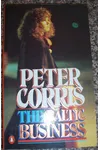
- The Baltic Business (1988)
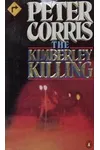
- The Kimberley Killing (1989)
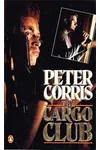
- The Cargo Club (1990)
- The Azanian Action (1991)
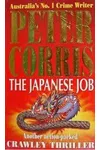
- The Japanese Job (1992)
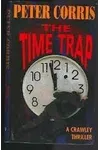
- The Time Trap (1994)
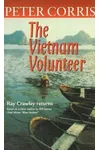
- The Vietnam Volunteer (2000)
Who is Ray 'Creepy' Crawley?
Unlike the polished, high-tech spies of international blockbusters, Ray Crawley is a rough-edged, bourbon-reliant, and deeply cynical protagonist. A Vietnam War veteran, Crawley begins the series as an operative for the fictional Federal Security Agency (FSA), based out of Sydney and Melbourne. He is nicknamed 'Creepy' for his unsettling ability to navigate the murky, underhanded intersections of government intelligence and local crime.
Crawley is rarely alone in his misadventures. He is frequently paired with Graeme Huck, his trouble-seeking partner and FSA colleague. Together, Crawley and Huck form a chaotic, dysfunctional, yet highly effective partnership that manages to survive bureaucratic backstabbing, local syndicates, and international agents alike.
The TV Origins of Pokerface
The series has a fascinating origin story. Peter Corris, already famous in the mid-1980s as the godfather of Australian crime fiction through his Cliff Hardy detective novels, teamed up with writer and collaborator Bill Garner. Together, they wrote the script for a three-part ABC television drama series called Pokerface, which aired in 1986 and starred Bruno Lawrence as the cynical agent Ray Crawley.
Although the television show did not spawn a long-running series on screen, Corris novelized the script in 1985, publishing it with Penguin. Recognizing the potential of Crawley and the untapped potential of local espionage fiction, Corris continued the character's journey on the page, using Garner's story outlines and ideas to build an eight-book legacy.
Ray Crawley: A Book-by-Book Breakdown
1. Pokerface (1985)
The novel that started it all introduces readers to Ray Crawley just as his career is falling apart. Sacked from the Federal Security Agency, Crawley finds himself entangled with radical political factions in the dark underbelly of Melbourne. It sets the tone for the series: cynical, fast-paced, and highly critical of the institutions meant to protect the public.
2. The Baltic Business (1988)
In this second installment, Crawley gets drawn into the complex world of Eastern European emigrants in Melbourne. The plot centers on a fiercely anti-communist organization called "Nations in Chains," led by a Latvian refugee named Franz Gulbus. Crawley is tasked with investigating their suspected training of terrorists to run operations in Latvia. To get close, Crawley must infiltrate the group by building a relationship with Gulbus's daughter, Irina.
3. The Kimberley Killing (1989)
Taking Crawley away from the urban environments of Melbourne and Sydney, this story moves the action to the remote Kimberley region in Western Australia. Dealing with local conspiracies and regional tensions, Crawley and Huck find themselves trying to resolve a case that is as physically taxing as it is politically sensitive. Note: While databases sometimes list this title as "The Kimberly Killing" or date it to 1990, its Australian release and geographical spelling use "Kimberley".
4. The Cargo Club (1990)
In The Cargo Club, Crawley has relocated to Canberra, where his wife, Mandy, is pursuing a sociology PhD. However, peace is short-lived. He is sent on an assignment to the South Pacific island group of Vitatavu (a fictional condominium situated between Fiji and Samoa). Crawley finds himself caught in a postcolonial power play involving mineral wealth, local instability, and Soviet geopolitical meddling.
5. The Azanian Action (1991)
This novel brings the geopolitical conflicts of the late-apartheid era directly to Australian soil. Agents from BOSS (South Africa’s Bureau for State Security) arrive in Australia to hunt down and assassinate African National Congress (ANC) supporters who have taken refuge there. Crawley and Huck must protect the refugees and counter the foreign hitmen, with the story featuring local political landmarks, including a safe house in Tasmania.
6. The Japanese Job (1992)
Set in Brisbane during a period of intense post-Fitzgerald Inquiry reforms, Crawley is sent to investigate the brutal murder of a Japanese businessman. The investigation leads Crawley and Huck into a web of Yakuza activities, corporate corruption, and a right-wing Australian militia group known as the "Diggers."
7. The Time Trap (1994)
Often cited as one of the fastest-moving books in the series, The Time Trap throws Crawley into a complicated web of historical betrayal, espionage, and cold-war fallout. As the dynamics of the FSA change, Crawley has to rely on his wits and his survival instincts to avoid becoming a scapegoat for institutional failures.
8. The Vietnam Volunteer (2000)
Published six years after the previous book, the series finale sees an older Ray Crawley in Canberra. The narrative comes full circle, forcing Crawley to face a deadly revenge plot deeply tied to his military service during the Vietnam War. It serves as a fittingly dark and elegiac conclusion to Crawley's career.
Publication vs. Chronological Order: Are There Caveats?
Fortunately, there is no need to shuffle the books out of order. The chronological sequence matches the publication order exactly. The only major caveat for readers is the time jump between The Time Trap (1994) and The Vietnam Volunteer (2000). The final book takes place further along in Crawley's life, reflecting both the real-world passage of time and the aging of the character.
Practical Reading Guidance: Where Should You Start?
You should absolutely start with the first book, Pokerface. Because the series relies heavily on understanding Crawley's fall from grace, his shifting relationship with the Federal Security Agency, and his long-running partnership with Graeme Huck, reading them out of order can make the characters' development feel disjointed. Furthermore, the books can be difficult to track down today; they have largely gone out of print, making them prized finds in second-hand bookshops across Australia.
What to Know Before You Start
Before diving into the Ray Crawley series, readers should be prepared for a very different tone than Peter Corris’s Cliff Hardy novels. While Cliff Hardy is a classic private investigator working the streets, Crawley operates in the shadow of institutional corruption. The books are cynical, reflecting the political anxieties of Australia during the 1980s and 1990s. The prose is lean and direct, capturing the laconic, irreverent, and often dark humor that characterizes the best of classic Australian crime writing.