
The Recommended Reading Order
The Return of Aladdin series is a tightly plotted, chronological fantasy trilogy. Because the overarching narrative builds directly upon the events of the preceding books, there is only one logical way to read this series: in order of publication. The storyline begins with Aladdin living under an alias, moves through an alliance with another legendary figure of the sea, and concludes with a high-stakes mythological showdown. Starting with the first book is essential to understand Aladdin's personal journey of grief, recovery, and rediscovery.
Publication Order of Return of Aladdin Books
Here is the chronological publication list of the Return of Aladdin books, which also serves as the recommended reading path:
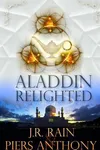
- Aladdin Relighted (2011) – The trilogy begins here, introducing us to an older Aladdin who has abandoned his throne and taken up the name Niddala. He is hired by a mysterious noblewoman named Jewel to retrieve her kidnapped son from a dark wizard, sending him into the magical and perilous Djinnland.
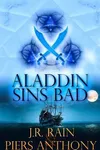
- Aladdin Sins Bad (2011) – In the second installment, Aladdin finds himself crossing paths with another icon of Middle Eastern folklore: Sinbad the Sailor. Together, the two must rescue Sinbad's kidnapped wife and thwart a treacherous plot threatening Agrabah.
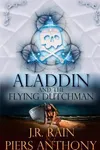
- Aladdin and the Flying Dutchman (2012) – The final book expands the series' mythological scope by introducing Greek mythology and pirate lore. Aladdin travels to the underworld to confront Hades himself in order to recover the stolen Key to Hades, bringing the trilogy to a dramatic conclusion.
The Core Premise: A Wiser, Grieving Hero
If you are expecting a simple retelling of the Disney film or a lighthearted adaptation of the traditional folklore, the Return of Aladdin series will surprise you. The authors present an Aladdin who has experienced deep personal tragedy. Having lost both his beloved wife and his son to foul play, a heartbroken Aladdin steps down from his throne in Agrabah. Seeking to escape his painful past, he adopts the pseudonym Niddala (his own name spelled backward) and establishes a new life as an anonymous relic hunter.
This premise sets a slightly darker, more mature tone than classic adaptations, focusing heavily on themes of redemption, survival, and coping with grief. However, the dark undertones are balanced by a healthy dose of adventure, magical environments, and the whimsical style the authors are known for.
Collaborative Styles: Piers Anthony and J.R. Rain
The trilogy is a unique collaborative effort between two distinct voices in the fantasy genre:
- Piers Anthony: Best known for his massive, pun-heavy Xanth series, Anthony brings his signature whimsical world-building, love for mythological mashups, and playful language to the table.
- J.R. Rain: Celebrated for his action-heavy urban fantasy series like Vampire for Hire, Rain infuses the trilogy with fast pacing, hard-boiled mystery elements, and clean, direct prose.
The result is a fast-reading crossover. Fans of Piers Anthony will recognize his creative creature designs (such as dragons, ogres, and nymphs) and lighthearted humor, while readers of J.R. Rain will appreciate the mystery-solving structure and rapid-fire adventure sequences.
What to Know Before You Start
Before diving into the Return of Aladdin trilogy, keep these helpful reading tips in mind:
- Can the books be read as standalones? While each book features a distinct primary quest (a rescue mission, a ransom, and a mythological heist), they should not be read out of order. The emotional progression of Aladdin and the references to his past adventures make reading them sequentially highly recommended.
- Mythological Mashups: Be prepared for a blend of different mythologies. While the setting begins with an Arabian Nights theme, the authors quickly pull in elements from Norse, Greek, and maritime legends, culminating in encounters with the Flying Dutchman and Hades. Keep an open mind as the setting transitions from desert sands to magical realms.
- Where to go next: Since the trilogy is complete and no further books are planned, fans of this collaborative style can explore Piers Anthony's extensive catalog of shared-world and co-authored fantasy novels, or J.R. Rain's vast collection of supernatural thrillers.