
The Recommended Reading Order for Simon Scarrow’s Revolution Series
If you are ready to plunge into the epic military rivalry of the Napoleonic era, you are in luck. Unlike some massive fantasy or historical fiction sagas that weave through dozens of prequels, short stories, and spin-offs, Simon Scarrow’s Revolution series—also widely known as the Wellington and Napoleon Quartet—follows a perfectly straight line. There are no side stories, companion guides, or alternate timelines to worry about. The story begins in their youth and marches step-by-step toward the Battle of Waterloo.
To get the complete experience of this dual biography, you should read the four novels in their exact chronological and publication order:
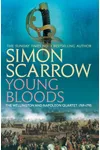
- Young Bloods (2006)
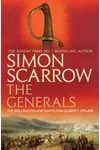
- The Generals (2007)
- Fire and Sword (2009)
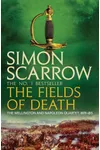
- The Fields of Death (2010)
Publication Order of the Revolution Quartet
Simon Scarrow published these books over a four-year period. Reading them in this order lets you experience the story exactly as Scarrow structured the evolving tension between his two legendary protagonists. Here is the chronological sequence of releases:
- Young Bloods (Published: 2006) – Covers the years 1769 to 1795. We meet Arthur Wesley (later Wellington) and Napoleon Bonaparte as young boys and trace their early military assignments in France, Corsica, and Flanders.
- The Generals (Published: 2007) – Covers the years 1796 to 1804. Follows Napoleon's meteoric rise through the Italian and Egyptian campaigns, while Wesley establishes his reputation as a brilliant commander in India.
- Fire and Sword (Published: 2009) – Covers the years 1804 to 1809. Napoleon crowns himself Emperor and dominates continental Europe, while Wesley is deployed to the Iberian Peninsula to check the French advance.
- The Fields of Death (Published: 2010) – Covers the years 1809 to 1815. The final, climactic showdown as the Peninsular War reaches its peak and culminates in the muddy fields of Waterloo.
A Deep Dive into the Books
1. Young Bloods (2006)
The quartet kicks off by establishing the contrasting backgrounds of the two men. Arthur Wesley is born into the Anglo-Irish aristocracy but is initially deemed a disappointment by his family, eventually finding his footing in the British Army. Meanwhile, Napoleon Bonaparte grows up in Corsica, harboring deep resentment against French rule before securing a scholarship to a French military academy. Scarrow details their struggles to earn respect in systems that value birthright and connections over raw talent. As the French Revolution erupts, both men find themselves in the crucible of active combat—Napoleon at the Siege of Toulon and Wesley in the disastrous Flanders campaign.
2. The Generals (2007)
In the second volume, the scale of conflict expands. Napoleon capitalizes on the political instability of Revolutionary France, showcasing his tactical genius in Italy and launching a daring expedition to Egypt. At the same time, Arthur Wesley is sent to India. In the harsh terrains of the subcontinent, Wesley refines his logistics-first approach to warfare, winning legendary victories like the Battle of Assaye. By the end of this book, both men have risen from obscure officers to national heroes, setting the stage for their eventual collision.
3. Fire and Sword (2009)
As the conflict turns global, the narrative highlights the heavy personal and political tolls of command. Napoleon consolidates absolute power, crowning himself Emperor of the French, but finds himself constantly fighting coalitions funded by Britain. Arthur Wesley, now returning to Europe, faces political skepticism at home before being dispatched to Portugal and Spain. The book masterfully contrasts Napoleon's grand strategic maneuvers across Europe with Wesley’s gritty, defensive campaigns in the Peninsular War, showing how the Spanish 'ulcer' began to drain the French Empire.
4. The Fields of Death (2010)
The final chapter is a masterclass in tension. Scarrow traces Napoleon's disastrous invasion of Russia and his subsequent exile to Elba, followed by his dramatic return during the Hundred Days. Arthur Wesley, now the Duke of Wellington, must assemble a fragile coalition force to face the Emperor one last time. The narrative builds to the iconic Battle of Waterloo in June 1815. Scarrow delivers a detailed, hour-by-hour account of the battle, highlighting the tactical decisions, the brutal combat, and the sheer exhaustion of the men who decided the fate of Europe.
Chronological vs. Publication Order: What You Need to Know
Some historical fiction series benefit from jumping around, but the Revolution Quartet is built as a single, continuous narrative arc. The publication order matches the chronological order of history. Trying to read these books out of order will ruin the character development. Scarrow intentionally structures the chapters to alternate between Napoleon's perspective and Wellington's perspective. Seeing how they react to the same European political shifts at the exact same time is the core appeal of the series. Therefore, stick strictly to the 1-to-4 sequence.
Practical Reader Advice: Standalones and Starting Points
Can these books be read as standalones? Technically, yes, because they cover well-documented historical events. However, doing so is highly discouraged. The emotional payoff of The Fields of Death relies heavily on having watched both men grow, fail, marry, and fight over the previous three novels. Always start with Young Bloods.
If you are a fan of Bernard Cornwell’s Sharpe series or C.S. Forester's Horatio Hornblower, you will find Scarrow's style highly engaging. However, while those series focus on fictional characters living through real history, Scarrow takes the bold step of making the real historical giants his viewpoint characters. He handles this by sticking closely to historical records while using creative license to fill in the gaps of their private conversations and internal thoughts.
What to Know Before You Start
Before diving in, keep in mind that this is as much a political drama as it is a military one. While there are plenty of muskets, cavalry charges, and cannon smoke, a significant portion of the series focuses on parliament debates in London, political scheming in Paris, and the complicated love lives of both commanders. Understanding the political landscape of the French Revolution and the shifting coalitions of the European powers will help you appreciate the strategic chess match Scarrow is depicting.
Beyond Revolution: Where to Go Next
Once you finish the final pages of The Fields of Death, you might find yourself wanting more of Scarrow's writing. While he has not written any direct spin-offs or sequels to the Revolution Quartet, he is incredibly famous for his Eagles of the Empire series, which follows the Roman legionaries Cato and Macro. If you want to stick with the Napoleonic era, you can transition smoothly into Bernard Cornwell's classic Sharpe series, which offers a ground-level soldier's view of the very same campaigns Wellington fights in the Revolution Quartet.