

The Recommended Reading Path for Rhymes with Love
For readers diving into Elizabeth Boyle's beloved historical romance series, the recommended path is to follow the publication order. While each novel is written to function as a standalone love story, the recurring cast of characters, escalating town gossip, and evolving subplots make chronological reading by release date the most satisfying way to experience the saga. Spanning six main novels and one key companion novella, the series centers on the spirited, ordinary women of Kempton who defy a local legend to secure their happily-ever-afters.
The Rhymes with Love Book-by-Book Breakdown
Below is the complete reading order for the series, featuring plot summaries, key characters, and the classic nursery rhymes that inspired their playful titles.
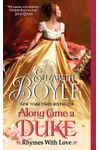
- 1. Along Came a Duke (2012)
The series begins with the story of Tabitha Timmons, a penniless young woman who suddenly inherits a massive fortune. However, there is a catch: to claim it, she must marry a man chosen by her greedy relatives. Determined to secure her independence, Tabitha travels to London to arrange a practical marriage, only to have her plans thoroughly upended by Preston, the arrogant and rakish Duke of Hardcastle. Inspired by the nursery rhyme "Little Miss Muffet" ("Along came a spider..."), the book features a playful nod to a tuffet on its original cover and sets up the central premise of the series.
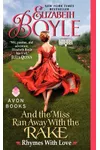
- 2. And the Miss Ran Away with the Rake (2013)
Daphne Dale is determined to find a sensible, boring husband to avoid her family's historic feud with the Seldon family. However, an anonymous "wife-wanted" advertisement placed as a joke in the previous book sparks a massive scandal, trapping Daphne in close proximity with her sworn enemy, the notorious rake Lord Henry Seldon. Playing on the line "and the dish ran away with the spoon" from "Hey Diddle Diddle," this enemies-to-lovers romance showcases Boyle's signature witty banter and high-stakes Regency social drama.
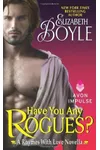
- 3. Have You Any Rogues? (2013)
This essential companion novella (frequently numbered as Book 2.5) shifts the spotlight to Daphne's brother, Crispin, Viscount Dale, and Lord Henry's sister, Lady Henrietta Seldon. Having harbored a secret, contentious passion for one another for years, the two are forced to confront their feelings when they are unexpectedly trapped together in a wine cellar. Taking its title from "Baa, Baa, Black Sheep" ("Have you any wool?"), this novella resolves the lingering tension between the Dale and Seldon families, bridging the events of the second and third full-length novels.
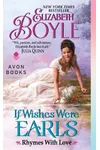
- 4. If Wishes Were Earls (2013)
Harriet "Harry" Hathaway, the only girl in a boisterous family of five boys, has been hopelessly in love with the Earl of Roxley since childhood. After a passionate encounter, Harriet expects a proposal, but Roxley suddenly finds himself plagued by a series of mysterious financial misfortunes. Believing himself ruined and dangerous to her future, Roxley tries to push Harriet away. Harriet refuses to back down, embarking on a determined quest to uncover who is sabotaging his estate. The title is a play on the traditional rhyme "If wishes were horses, beggars would ride."
- 5. The Viscount Who Lived Down the Lane (2014)
In this Beauty and the Beast-style retelling, Viscount Pierson Wakefield is a wounded Napoleonic War veteran who has withdrawn into bitter isolation. His quiet life is disrupted when his new neighbor, the cheerful and meddlesome Louisa Tempest—along with her mischievous, one-eyed cat named Hannibal—decides it is her personal mission to drag him back into society. The title is inspired by the closing line of "Baa, Baa, Black Sheep" ("And one for the little boy who lives down the lane").
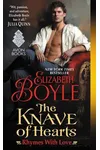
- 6. The Knave of Hearts (2016)
Lavinia Tempest’s debut London season is threatened with ruin due to a scandal from her mother's past. Enter Alaster "Tuck" Rowland, a charming rogue who makes a daring wager that he can salvage Lavinia's reputation and make her the most desirable debutante in London. Naturally, Tuck's plan backfires when he finds himself falling genuinely in love with her. The title is drawn from the nursery rhyme "The Knave of Hearts" ("The Knave of Hearts, he stole some tarts...").
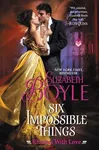
- 7. Six Impossible Things (2017)
Serving as the grand finale of the series, this book moves into the realm of espionage and intrigue. Roselie Stratton secretly works as a clever agent for the Home Office. When a compromising kiss forces her into a marriage of convenience with her childhood friend, Brody (Bradwell Garrick, Baron Rimswell), the two must navigate their new relationship while Roselie continues her dangerous pursuit of political traitors. The title is a nod to Lewis Carroll's *Alice in Wonderland* ("Sometimes I've believed as many as six impossible things before breakfast"), maintaining the whimsical, fairy-tale tone of the collection.
What to Know Before You Start: The Kempton Curse
The primary setting for the series is Kempton, a cozy English village home to a legendary marriage curse: any local woman who marries will bring ruin and misfortune upon her husband. While the characters often dismiss the curse as silly superstition, the narrative uses it as a clever device to test the commitment and bravery of the suitors. It serves as a lighthearted binding thread across the novels, emphasizing themes of female friendship, independence, and the strength of community. As the characters travel to London or nearby estates, the shadow of Kempton's legend follows, adding a unique layer of humor and suspense to their courtships.
Reading Advice: Standalones vs. Continuity
Can you read these books out of order? Yes. Each book wraps up its central romance completely, meaning you will not be left with frustrating cliffhangers. However, reading them in order is highly recommended because the heroines are close friends who support one another across the books, and secondary characters frequently appear in earlier chapters before getting their own dedicated stories. In particular, the novella Have You Any Rogues? should not be skipped, as it provides crucial closure to the Dale-Seldon family feud that sets up the emotional backdrop for the surrounding novels.