









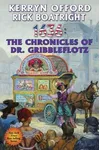
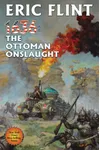
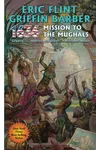
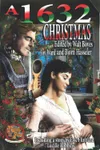



















The Recommended Reading Path: Where to Start
Because the Ring of Fire (or 1632) series contains dozens of novels, anthologies, and side stories, starting can feel intimidating. Fortunately, creator Eric Flint and the active fan community agree on a foundational core. To understand the political alliances, military technology, and main characters of the universe, you should always start with the central four works in this specific order:
- 1632 (2000): The novel that started it all. A cosmic event called the "Ring of Fire" teleports the coal-mining town of Grantville, West Virginia, into the middle of Germany during the Thirty Years' War in 1631.
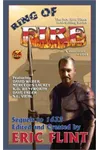
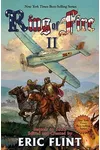
- Ring of Fire I (2004): An essential anthology of short stories. It introduces key characters, such as the down-time artists, musicians, and local nobles, who become central figures in the sequels.
- 1633 (2002): The direct sequel to 1632, co-authored by Eric Flint and David Weber. It raises the political stakes as the new "United States of Europe" forms alliances and clashes with established empires.
- 1634: The Baltic War (2007): The climax of the opening arc, also co-authored by Weber. It wraps up the initial naval and military conflicts of the Northern European theater.
Once you finish these four works, the universe branches into several independent regional "threads." You can choose to follow these threads based on your geographic or thematic interests, or you can stick to a strictly publication-based order.
The Major Storyline Threads
After the events of 1634: The Baltic War, the narrative splits into distinct geographic lines. The major threads include:
The Central European / Main Line Thread
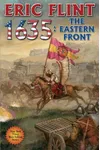
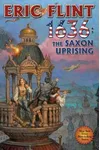
This is the main trunk of the storyline. It follows the political development of the United States of Europe, the fate of Gustavus Adolphus, and the consolidation of the new democratic republic. Key books include 1635: The Eastern Front, 1636: The Saxon Uprising, and the recent 1638: The Sovereign States.
The Southern European / Italian Thread
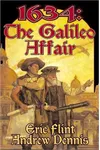
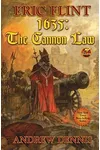
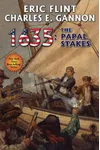
This thread focuses on diplomatic intrigue, religious reform, and the actions of the Catholic Church. It starts with the co-authored novel 1634: The Galileo Affair and continues through 1635: The Cannon Law, 1635: Papal Stakes, and 1636: The Vatican Sanction. It is heavily driven by espionage, art, and intellectual clashes in Rome and Venice.
The Eastern European Thread
This thread explores how the arrival of modern technology alters the balance of power in Poland, Russia, and the Ottoman Empire. Key novels include 1636: The Kremlin Games, 1637: The Volga Rules, and 1637: The Polish Maelstrom.
The Naval, Atlantic, and Global Threads
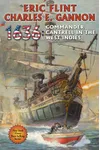
Because the "up-timers" bring knowledge of the entire globe, global exploration and colonial conflicts accelerate. The Atlantic and colonial threads are explored in novels like 1636: Commander Cantrell in the West Indies, 1636: The Atlantic Encounter, and 1637: No Peace Beyond the Line, while Far East storylines unfold in 1636: The China Venture and 1637: The Peacock Throne.
Understanding the Collaborative Universe
What makes the Ring of Fire series unique is its open-source, collaborative nature. Eric Flint actively invited other professional writers and fans to contribute to the canon. This is organized through three distinct publication lines:
- The Mainline Novels: Written by Eric Flint, often in collaboration with prominent authors like David Weber, Jody Lynn Nye, and Andrew Dennis. These drive the primary historical and political shifts of the world.
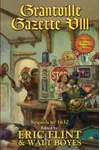
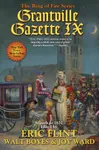
- The Grantville Gazettes: Originally started as a fan-driven e-magazine and later published as anthologies by Baen Books, these volumes contain hundreds of stories. They focus on the minutiae of the time transition—how modern medicine is recreated, how local industries adapt, and how everyday "down-timers" react to the Americans.
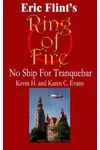
- Ring of Fire Press: A publishing imprint created to print longer, niche fan-written stories that were approved as official canon by Flint. Although the press closed following Flint's passing in 2022, these books remain popular entry points for deep-dives into specific towns and minor characters.
Chronological Caveats and Reading Advice
Because multiple books take place concurrently in different parts of the world, a strict chronological reading order is not recommended for first-time readers. For example, 1634: The Galileo Affair takes place at the same time as 1633, but focusing on the Italian peninsula rather than Germany. Trying to read strictly chronologically will cause you to jump back and forth between unrelated characters and storylines, ruining the narrative flow.
Instead, follow a "thread-by-thread" approach. Pick a region (like Italy or Eastern Europe) and read its books sequentially. The only exception is the transition between major years (e.g., moving from 1635 to 1636), where major continental events in the mainline thread might be referenced in the side threads.
The Assiti Shards Spin-offs
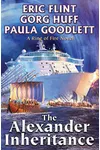
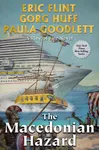
The cosmic event that transported Grantville is caused by "Assiti Shards"—alien art objects that swap chunks of different historical eras. While the main series deals with the 1632 West Virginia transition, there are spin-off books dealing with other transitions. These include Time Spike (which hurls a modern prison into the Cretaceous period) and The Alexander Inheritance (which drops a modern cruise ship into the Hellenistic era). These spin-offs are standalone and can be read independently of the main European storyline.
What to Know Before You Start
The tone of the series is optimistic, populist, and highly detailed. It celebrates the ingenuity of ordinary people—coal miners, high school teachers, and mechanics—rather than focusing solely on kings and generals. However, readers should be prepared for a massive cast of characters. Keep a character list handy, and do not worry if you cannot keep track of every single name. Focus on the big picture, enjoy the clash of cultures, and choose the storylines that interest you the most.