

The Recommended Ringworld Reading Path
If you want to experience the awe of the Ringworld the way science fiction readers originally did, the best path is to start with the core tetralogy before diving into the co-authored prequel and sequel novels. While the broader Known Space universe spans dozens of stories, you do not need to read all of them to enjoy the main Ringworld story. However, understanding how the subseries interconnect will save you from major spoilers and confusion.
We recommend starting with the original 1970 novel, progressing through the core sequels, and then tackling the Fleet of Worlds sequence co-authored with Edward M. Lerner. This path preserves the mystery of the Ringworld itself and allows you to appreciate the intricate lore as it was developed.
1. The Core Ringworld Quartet
This is the essential storyline focusing on the 200-year-old Louis Wu, the feline Kzinti warrior Speaker-to-Animals, the cowardly Puppeteer Nessus, and the genetically lucky Teela Brown. Read these in order of publication:
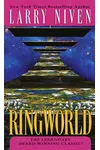
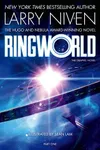
- Ringworld (1970) – The award-winning classic that introduces the 90-million-mile-wide artificial ring.
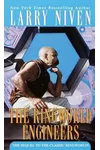
- The Ringworld Engineers (1979) – Louis Wu returns to the Ringworld to save it from orbital decay, revealing how the megastructure is controlled.
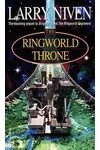
- The Ringworld Throne (1996) – Focuses heavily on the diverse hominid species living on the ring and the ongoing threats from the Puppeteers and the Kzinti.
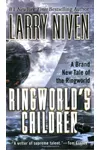
- Ringworld's Children (2004) – Resolves many of the looming conflicts as interstellar factions clash over control of the Ringworld.
2. The Fleet of Worlds Prequels and the Final Convergence
Co-authored by Larry Niven and Edward M. Lerner, this series serves as a prequel to the original Ringworld, following the Puppeteers' Fleet of Worlds as it flees the core explosion. However, the final book acts as the ultimate finale to both the Fleet series and the main Ringworld saga. Because of this, you should read these after the original four books, keeping the final book for last:
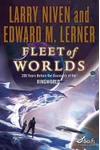
- Fleet of Worlds (2007)
- Juggler of Worlds (2008)
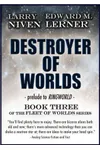
- Destroyer of Worlds (2009)
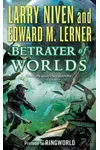
- Betrayer of Worlds (2010)
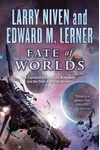
- Fate of Worlds (2012) – This book must be read after both Ringworld's Children and Betrayer of Worlds, as it ties up all loose threads from both series.
The Broad Known Space Connections
The Ringworld is actually a late-stage destination in Larry Niven's massive Known Space future history. While you can read the core Ringworld books without any outside knowledge, reading certain Known Space novels first will dramatically enrich your experience. In particular, the co-authored Fleet of Worlds books draw heavily from characters and concepts introduced in the classic Known Space novels.
Key Known Space Background Novels
If you want the absolute richest experience, consider reading these books before starting the Fleet of Worlds series, or even before reading the main Ringworld novels:
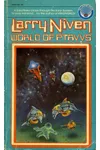
- World of Ptavvs (1966) – The first published Known Space novel, introducing the telepathic Slavers (Thrintun).
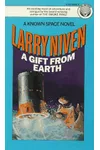
- A Gift from Earth (1968) – Explores colony politics, genetics, and organ-transplant technology.
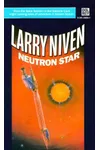
- Neutron Star (1968) – A short story collection featuring Beowulf Shaeffer, introducing the Puppeteers and the hyper-dense neutron stars.
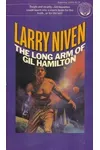
- The Long Arm of Gil Hamilton (1969) – A collection of detective stories focusing on Gil "The Arm" Hamilton.
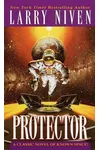
- Protector (1973) – Essential Reading. This book explains the origins of Pak Protectors, a species whose biology and motivations drive the plot of the later Ringworld and Fleet of Worlds books.
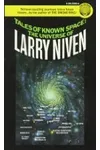
- Tales of Known Space (1975) – A definitive anthology containing stories spanning the entire timeline.
- The Patchwork Girl (1980) – A Gil Hamilton detective novel.
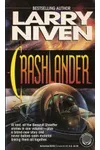
- Crashlander (1994) – A collection compiling Beowulf Shaeffer's stories, including the transition to the Puppeteer exodus.
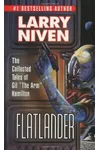
- Flatlander (1995) – Collects all Gil Hamilton stories in one place.
Ringworld Graphic Novels
For readers who prefer a visual medium, the original novel was adapted into a two-part graphic novel written by Robert Mandell with artwork by Sean Lam:
- Ringworld: The Graphic Novel, Part One (2014)
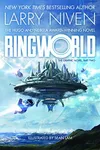
- Ringworld: The Graphic Novel, Part Two (2015)
These graphic novels are faithful to the original book's events and characters, offering a visual representation of Niven's complex megastructure.
Publication Order vs. Chronological Order Caveats
Although the Fleet of Worlds books (excluding Fate of Worlds) take place chronologically before the events of the original 1970 Ringworld novel, we strongly advise against reading them first. The prequels were written with the assumption that readers are already familiar with the Puppeteers, the Kzinti, and the existence of the Ringworld itself. Reading the prequels first spoils many of the key mysteries and revelations of the original book.
Furthermore, the Pak Protectors, introduced in the standalone novel Protector (1973), play a massive role in the later Ringworld sequels and the Fleet of Worlds series. Reading Protector before The Ringworld Throne or the Fleet of Worlds series will make the motivations of the characters much easier to comprehend.
Practical Reader Advice
Where is the best starting point?
The absolute best starting point is the original 1970 novel, Ringworld. It is designed as an introduction to this universe and functions beautifully as a standalone science fiction adventure. If you only ever read one book in this universe, make it this one.
Can the books be read standalone?
The first Ringworld novel can easily be read as a standalone. However, the sequels (The Ringworld Engineers, The Ringworld Throne, and Ringworld's Children) are highly serial and rely on details from the preceding books. The Fleet of Worlds series is also highly sequential and should not be read out of order.
What should you know before starting?
Larry Niven's writing is a prime example of "hard science fiction." This means he pays close attention to physics, engineering, and evolutionary biology. When the original Ringworld was released, fans calculated that the ring was unstable and would drift into its sun. Niven took this feedback seriously and wrote The Ringworld Engineers specifically to address the physics of stabilizing the megastructure. Be prepared for detailed explanations of orbital mechanics, gravity, and biology alongside the space-opera adventure.