
How to Read the Robert Langdon Books in Order
The adventures of Harvard symbologist Robert Langdon are best read in their original publication order. While each book functions as a self-contained mystery with its own historical backdrop, reading them sequentially allows you to appreciate the evolution of Dan Brown’s writing style, the technological progression of the real world, and the subtle character growth of the professor himself.
Here is the recommended reading list by publication order:
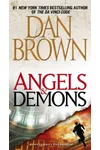
- Angels & Demons (2000): Langdon is summoned to the CERN research facility in Geneva, Switzerland, to inspect a mysterious symbol branded onto a murdered physicist. This initial mystery quickly escalates into a race against time in Vatican City during a papal conclave. Armed with ancient symbology, Langdon must locate a stolen container of highly destructive antimatter and rescue four kidnapped cardinals before a secret society known as the Illuminati destroys the city.
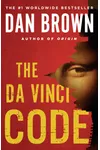
- The Da Vinci Code (2003): The international blockbuster that propelled the series to global fame. While in Paris for a lecture, Langdon is called to the Louvre Museum after the curator is found murdered, covered in cryptic symbols. Joined by French cryptologist Sophie Neveu, Langdon follows a trail of clues hidden within the works of Leonardo da Vinci. Their search leads them to a centuries-old clash between the Priory of Sion and Opus Dei over a secret that could shake the foundations of Christianity.
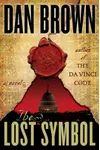
- The Lost Symbol (2009): Moving the action to Washington, D.C., Langdon is invited to deliver a lecture at the U.S. Capitol, only to discover his mentor, Smithsonian secretary Peter Solomon, has been kidnapped by a heavily tattooed zealot named Mal'akh. To save his friend, Langdon must navigate the hidden passages, history, and secrets of the Freemasons. This book introduces Peter's sister, Katherine Solomon, a brilliant scientist researching noetic science.
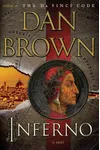
- Inferno (2013): Langdon wakes up in a hospital in Florence, Italy, suffering from temporary amnesia and a gunshot wound. Guided by Dr. Sienna Brooks, he discovers a bio-hazardous cylinder hidden in his jacket. To piece together his missing memories and stop a global pandemic, Langdon must follow a trail of clues left by a brilliant, radical geneticist who was obsessed with Dante Alighieri’s epic 14th-century poem, Inferno.
- Origin (2017): Set against the backdrop of Spain—specifically Bilbao, Madrid, Barcelona, and Seville—Langdon arrives at the ultra-modern Guggenheim Museum Bilbao to attend a presentation by his former student, billionaire futurist Edmond Kirsch. Kirsch promises to unveil a scientific discovery that answers the twin questions of human existence: "Where do we come from?" and "Where are we going?" When the event is violently disrupted, Langdon must work with museum director Ambra Vidal to unlock Kirsch’s findings.
- The Secret of Secrets (2025): In this Prague-centered mystery, Langdon accompanies his romantic partner, Katherine Solomon, to a high-profile lecture. When Katherine mysteriously vanishes from their hotel room and her groundbreaking manuscript detailing discoveries about human consciousness is stolen, Langdon is thrust into a desperate search. His quest leads him through Prague’s folklore-steeped streets to London and New York as he tries to retrieve the manuscript and rescue Katherine.
Publication Order vs. Chronological Order
For the novels, the publication order and chronological order are identical. Robert Langdon ages naturally, references previous adventures, and uses increasingly modern technology as the series progresses. For example, the events of The Da Vinci Code take place after the events of Angels & Demons, and the latter is briefly referenced in the sequel. The latest installment, The Secret of Secrets, features the return of Katherine Solomon, building directly on the connection established in The Lost Symbol.
However, the release of the 2021 television series adaptation, The Lost Symbol, introduced a chronological twist. While the TV series is based on the third book, it serves as a prequel to the Tom Hanks film trilogy, featuring a younger Robert Langdon at the start of his career. If you want to track the multimedia universe chronologically, the TV series is your starting point, even though the book it adapts takes place later in the literary timeline.
Where to Start: The Da Vinci Code or Angels & Demons?
One of the most common debates among new readers is whether to start with The Da Vinci Code or Angels & Demons. While Angels & Demons is the chronological starting point and the first book published, The Da Vinci Code is the book that took the world by storm and defined the modern conspiracy thriller.
If you prefer to see Robert Langdon's literary introduction and read the books exactly as Dan Brown wrote them, start with Angels & Demons. It establishes his character well and showcases the classic template of the series. If you want to dive straight into the cultural phenomenon that contains the most famous puzzles, starting with The Da Vinci Code is perfectly fine. Because each novel is written as a standalone adventure, you won't miss any critical plot points by reading the second book first.
What to Know Before You Start
Before diving into Robert Langdon's world, it helps to understand Dan Brown’s writing style and the formula that makes these books page-turners. The stories generally take place over a frantic 24-to-48-hour period, featuring short chapters that frequently end in cliffhangers. This creates a relentless pace that keeps readers hooked.
It is also worth noting that Brown heavily blends real-world art history, architecture, and scientific theories with creative fiction. While the museums, cathedrals, and historical documents mentioned are real, the secret conspiracies and theological conclusions are fictionalized. Separating the fact from the fiction is half the fun of reading the series, and it has inspired millions of readers to research art history, gnosticism, and symbolism on their own.
Adapting the Art: Films and Television
The screen adaptations of Robert Langdon's adventures reshuffled the ordering significantly. Directed by Ron Howard and starring Tom Hanks, the movie adaptations chose to start with the most popular book first:
- The Da Vinci Code (2006): The first film released, adapting the second book.
- Angels & Demons (2009): The second film released, adapting the first book as a sequel.
- Inferno (2016): The third film released, adapting the fourth book (skipping The Lost Symbol).
Because the films flipped the order of the first two stories, the narrative timeline was altered slightly for the screen. In the movies, the events of Angels & Demons are treated as a sequel to The Da Vinci Code, whereas in the novels, it is the other way around. The Lost Symbol was eventually adapted for television in 2021 as a single-season series on Peacock, reimagining the story with a younger cast.
Young Adult Adaptations and Illustrated Editions
For younger readers, or those who appreciate visual aids, there are alternative versions of the books worth noting. In 2016, an abridged Young Adult (YA) adaptation of The Da Vinci Code was released. This version maintains the central puzzle-solving plot but condenses the narrative pacing and includes over twenty color photographs of landmarks and artwork to help younger audiences visualize the historical references.
Additionally, Dan Brown has released Special Illustrated Editions of Angels & Demons, The Da Vinci Code, and The Lost Symbol. These hardcover editions feature hundreds of high-quality photos and illustrations of the actual paintings, cathedrals, symbols, and artifacts mentioned in the text, providing a highly immersive reading experience.
Unrelated Standalones by Dan Brown
When searching for Dan Brown’s books, readers often stumble upon Digital Fortress (1998) and Deception Point (2001). It is important to know that these are standalone techno-thrillers that do not feature Robert Langdon. Digital Fortress focuses on cryptography and the National Security Agency (NSA), while Deception Point deals with scientific discovery and political intrigue in the Arctic. They do not share a continuity with the Robert Langdon books and can be read independently at any time.