

Where to Start Reading Rockabye County
For readers looking to dive into the high-octane world of Rockabye County, there are two primary entry points depending on what you want from your reading experience:
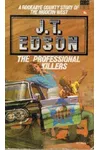
- The Publication Path (Recommended): Start with The Professional Killers (1968). This is the safest and most natural starting point. Reading the series in publication order allows you to experience the evolution of the Gusher City Sheriff's Department from its late-1960s inception through to the late-1990s final entry. It establishes the team dynamic, the setting of Rockabye County, and the recurring cast of characters right from the beginning.
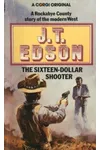
- The Action-First Path: Start with The Sixteen-Dollar Shooter (1974). If you want a book that perfectly encapsulates the unique blend of modern policing and classic Western lineage, this is the one. It strongly emphasizes Deputy Brad Counter's ancestry as the great-grandson of legendary gunfighter Mark Counter, making it the ideal bridge between Edson's traditional Westerns and his modern procedural work.
Rockabye County Books in Publication Order
J.T. Edson wrote 11 books in the Rockabye County series between 1968 and 1997. Because the timeline is relatively straightforward compared to the author's massive, non-linear Western series, reading in publication order is highly recommended. Below is the complete sequence:
- The Professional Killers (1968) – Introduces the modern Sheriff's Department and sets the tone for the gritty cases Jack Tragg and Brad Counter face in Gusher City.
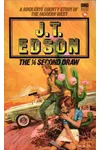
- The 1/4 Second Draw (1969; also published as The Quarter-Second Draw) – Focuses heavily on the mechanics of modern gunfighting and Brad's quick-draw prowess.
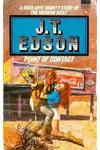
- Point of Contact (1970) – Deputy Brad Counter and the team tackle local crime rings utilizing tactical coordination.
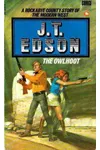
- The Owlhoot (1970) – Introduces a deadly masked bandit operating in the county, raising the stakes for the deputies.
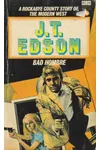
- Bad Hombre (1971) – The deputies hunt a dangerous fugitive across county lines.
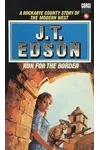
- Run For The Border (1971) – A high-stakes chase tracking suspects fleeing toward Mexico, blending classic Western border themes with modern police work.
- The Sixteen-Dollar Shooter (1974) – A key novel showcasing Brad Counter's legacy and his deadly speed with a revolver when targeted by professional hitmen.
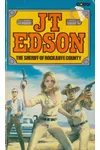
- Sheriff of Rockabye County (1981) – Puts Sheriff Jack Tragg center stage as he coordinates complex defense strategies against modern criminals.
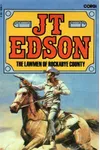
- The Lawmen of Rockabye County (1982) – Jack Tragg and his deputies are tested when political terrorists hold Gusher City hostage.
- The Deputies (1991) – A collection of connected procedural stories highlighting the cooperative teamwork of the deputies.
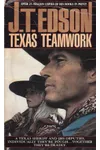
- Texas Teamwork (1997) – The final book in the series, featuring Brad Counter and Alice Fayde working together to foil a massive bank heist.
Chronological Caveats and the "Jet-Age" Western Timeline
One of the most fascinating aspects of J.T. Edson's Rockabye County is its setting. Edson described it as a "jet-aged" setting. The books are set during the late 20th century, specifically the late 1960s through the 1970s. However, the culture, attitude, and combat style of the characters are deeply rooted in the 19th-century American West. You will see deputies operating helicopters, driving patrol cars, and communicating via satellite radios, only to step out and engage in formal quick-draw standoffs using traditional revolvers.
While J.T. Edson's other major series, The Floating Outfit, hops around wild timelines (often writing prequels and sequels out of order), the Rockabye County books are best read in publication order. The narrative progression of the characters, their promotions, and their growing partnerships follow a linear chronological trajectory from 1968's The Professional Killers to 1997's Texas Teamwork. There are no confusing flashbacks or massive timeline jumps that require a special chronological reading list, making this one of Edson's most straightforward series to collect and read.
What to Know Before You Start: The Floating Outfit Connection
Before jumping in, it helps to understand how Rockabye County fits into the wider J.T. Edson literary universe. J.T. Edson is famous for his Floating Outfit series, which follows Mark Counter, Dusty Fog, and the Ysabel Kid in the post-Civil War American West. The Rockabye County series is a direct modern spin-off of those stories.
The protagonist of the Rockabye County books, Brad Counter, is explicitly the great-grandson of Mark Counter. Brad has inherited his ancestor's towering build, good looks, and most importantly, his legendary speed with a handgun. This lineage is referenced throughout the series, and it serves as a fun Easter egg for fans of Edson's classic Westerns. Additionally, J.T. Edson's universe is often linked by fans to Philip José Farmer's Wold Newton family tree, making Brad Counter part of a massive interconnected web of fictional pop-culture heroes.
Meet the Lawmen of Gusher City
The success of the Rockabye County series relies on its main cast of characters, who provide a great contrast of brains, brawn, and tactical skill:
- Brad Counter: A Deputy Sheriff with a legendary heritage. Brad is incredibly fast with a gun, capable of drawing and firing in a fraction of a second. Despite his physical prowess and combat skills, he is a dedicated, by-the-book modern officer.
- Jack Tragg: The Sheriff of Rockabye County. Tragg is a seasoned veteran who bridges the gap between old-school Texas lawmen and the technical demands of modern county policing. He is highly intelligent, strategic, and deeply protective of his deputies.
- Alice Fayde: Brad Counter's regular partner. Alice is intelligent, observant, and beautiful. In an era when female deputies were often relegated to desk duty in fiction, Edson wrote Alice as an active, gun-toting field deputy who frequently saves Brad's skin with her sharp analytical mind and quick reflexes.
Why This Modern-Western Hybrid Works
J.T. Edson was an English author who never actually lived in Texas, yet he captured an idealized version of the American West that readers love. His writing style is crisp, action-driven, and technical. Each novel features detailed descriptions of the firearms used, down to the caliber, holster type, and draw speed. If you enjoy B-movie action, detailed tactical breakdowns, and a setting where justice is absolute, Rockabye County offers a satisfyingly nostalgic escape that proves the spirit of the Old West didn't die with the frontier.