







Where to Begin Your Journey with Gordianus the Finder
Steven Saylor's Roma Sub Rosa series is one of the high-water marks of historical mystery fiction, blending rigorous classical scholarship with tense, human detective work. The series follows Gordianus, known as "the Finder," a plebeian investigator who operates in the shadow of the shifting political dynamics that brought down the Roman Republic.
Because Saylor wrote prequels and short story collections out of order, readers face a choice: do you read by publication date or follow Gordianus' life chronologically? For the best experience, we recommend starting with the first published novel, Roman Blood. Reading in publication order allows you to experience the characters and the world as Saylor originally constructed them, letting the emotional stakes build naturally. However, if you are a history purist who prefers a linear march from Gordianus' youthful travels to the fall of the Republic, the chronological route is a highly satisfying alternative.
Option 1: The Chronological Reading Order
Reading chronologically places the prequel trilogy (the Ancient World books) first. These stories follow an eighteen-year-old Gordianus as he travels the Mediterranean before establishing his reputation in Rome. While this provides a neat, linear progression of the character's life, some readers feel that starting here makes the transition to the mature, cynical Gordianus of the early novels feel slightly disjointed.
- The Seven Wonders (Prequel novel, published 2012) – Set in 92–90 BC. Follows a young Gordianus traveling the ancient world with his tutor, Antipater of Sidon.
- Raiders of the Nile (Prequel novel, published 2014) – Set in 88 BC. Gordianus is in Alexandria and must rescue his kidnapped slave (and future wife) Bethesda.
- Wrath of the Furies (Prequel novel, published 2015) – Set in 88 BC. Gordianus travels to Ephesus during the Mithridatic War.
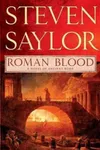
- Roman Blood (Novel, published 1991) – Set in 80 BC. The first written novel. Gordianus is hired by a young Cicero to investigate a patricide charge.
- The House of the Vestals (Short story collection, published 1997) – Features stories set between 90 BC and 72 BC, bridging the gaps between the early novels.
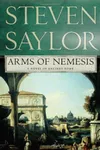
- Arms of Nemesis (Novel, published 1992) – Set in 72 BC. Gordianus investigates a murder in the shadow of Spartacus' slave rebellion.
- A Gladiator Dies Only Once (Short story collection, published 2005) – Short stories set between 77 BC and 73 BC, filling in further gaps.
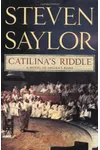
- Catilina's Riddle (Novel, published 1993) – Set in 63 BC. Gordianus is caught up in the famous conspiracy of Catiline.
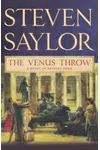
- The Venus Throw (Novel, published 1995) – Set in 56 BC. Gordianus investigates the murder of a philosopher from Alexandria amidst Roman high society.
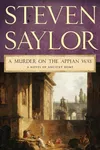
- A Murder on the Appian Way (Novel, published 1996) – Set in 52 BC. Details the real-life political crisis surrounding the murder of Clodius.
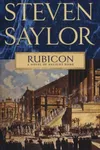
- Rubicon (Novel, published 1999) – Set in 49 BC. Civil war begins as Julius Caesar crosses the Rubicon, and Gordianus is caught in the middle.
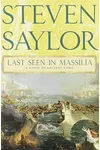
- Last Seen in Massilia (Novel, published 2000) – Set in 49 BC. Gordianus travels to the besieged city of Massilia (modern Marseille).
- A Mist of Prophecies (Novel, published 2002) – Set in 48 BC. Set back in Rome during the war, focusing on a mute seeress.
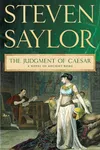
- The Judgment of Caesar (Novel, published 2004) – Set in 48 BC. Gordianus travels to Egypt, where Caesar meets Cleopatra.
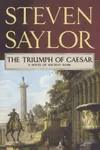
- The Triumph of Caesar (Novel, published 2008) – Set in 46 BC. Gordianus investigates a plot against Caesar on the eve of his triumphs.
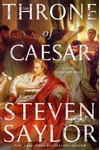
- The Throne of Caesar (Novel, published 2018) – Set in 44 BC. The final installment, taking place around the fateful Ides of March.
Option 2: The Publication Reading Order
If you prefer to watch the author's style mature and avoid retroactively inserted prequels that assume prior knowledge of the characters, the publication order is your best bet. This order lets you experience the series as it took the literary world by storm in the 1990s, leaving the prequels as enjoyable flashback trips after you've spent years with the older Finder.
- Roman Blood (1991)
- Arms of Nemesis (1992)
- Catilina's Riddle (1993)
- The Venus Throw (1995)
- A Murder on the Appian Way (1996)
- The House of the Vestals (1997) – Short stories
- Rubicon (1999)
- Last Seen in Massilia (2000)
- A Mist of Prophecies (2002)
- The Judgment of Caesar (2004)
- A Gladiator Dies Only Once (2005) – Short stories
- The Triumph of Caesar (2008)
- The Seven Wonders (2012) – Prequel
- Raiders of the Nile (2014) – Prequel
- Wrath of the Furies (2015) – Prequel
- The Throne of Caesar (2018)
Understanding the Prequels and Short Story Collections
A key source of confusion for new readers is where the prequels and short story collections fit. The Ancient World books (The Seven Wonders, Raiders of the Nile, and Wrath of the Furies) focus on Gordianus' youth. While they are full-length novels, their tone is slightly more adventurous and globe-trotting compared to the gritty, political noir style of the main Rome-based mysteries.
The two short story collections—The House of the Vestals and A Gladiator Dies Only Once—are highly recommended. They are not merely throwaway side stories; they develop the relationships between Gordianus, his wife Bethesda, and his adopted sons Eco and Meto. If you are reading chronologically, insert The House of the Vestals immediately after Roman Blood and A Gladiator Dies Only Once right after Arms of Nemesis for the smoothest narrative continuity.
The Rome Family Saga: A Connected Universe?
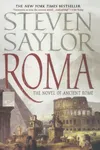
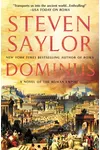
Steven Saylor has also written a monumental trilogy tracing the history of Rome across a thousand years through the eyes of a single family, the Pinarii. This trilogy consists of Roma (2007), Empire (2010), and Dominus (2021).
While these books are not part of the Roma Sub Rosa series, they are set in the same historically accurate universe. Because the family saga spans multiple generations, it occasionally crosses paths with the era of Gordianus, but it is completely independent. You do not need to read the Rome family saga to understand the mysteries of Gordianus, but it is highly recommended for fans who want a wider look at the city's sweeping history.
What to Know Before You Start
Saylor's series is highly praised for its historical accuracy. Unlike many detective series where the investigator exists in a vacuum, Gordianus' life is deeply impacted by actual historical timelines. Characters grow older, political regimes change, and the stakes elevate from simple neighborhood homicides to high-stakes political assassinations. Because of this structural evolution, reading the core novels in chronological order is highly beneficial, as the political backdrop of the Roman Civil War progresses linearly from book to book, culminative in the assassination of Caesar in The Throne of Caesar.