
How to Read the Empress of Rome Series: Two Paths
Kate Quinn’s Empress of Rome saga is a historical fiction masterpiece that spans the first and second centuries of the Roman Empire. Filled with political intrigue, gladiatorial combat, and resilient women fighting for survival, the series offers readers two distinct ways to experience the narrative: Publication Order and Chronological Order. While each book focuses on a different set of primary characters, they share a singular, beautifully detailed historical universe where actions in one era ripple directly into the next.
For most readers, starting with the first published book, Mistress of Rome, is highly recommended. It establishes the emotional core of the series and introduces characters whose legacies shape the subsequent installments. However, readers who prefer a strict chronological timeline will want to start with the prequel, Daughters of Rome, which is set during one of Rome's most chaotic political transitions.
The Empress of Rome Books in Detail
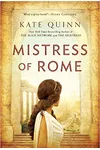
1. Mistress of Rome (2010)
Though set chronologically after the events of Daughters of Rome, this was the book that launched the series. The story begins during the reigns of Vespasian and Titus, but primarily unfolds during the tense, paranoid rule of Emperor Domitian. The narrative follows Thea, a Jewish slave girl gifted with a beautiful singing voice, who is purchased by the cruel and obsessive Domitian. She finds herself caught in a dangerous love triangle with the emperor and Arius, Rome's most celebrated gladiator. The book sets the tone for the series, contrasting the opulence of the imperial court with the brutal realities of the gladiatorial arena.
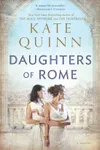
2. Daughters of Rome (2011)
Published second, this novel is a prequel set in A.D. 69, the infamous "Year of the Four Emperors." Following the death of Nero, Rome is thrown into a violent civil war as rival generals vie for the throne. The story follows four aristocratic cousins—Cornelia, Marcella, Lollia, and Diana—each trying to navigate the shifting political tides to survive and protect those they love. This book also serves to introduce a younger version of Domitia Longina, who plays a critical role as the Empress of Rome in Mistress of Rome.
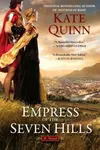
3. Empress of the Seven Hills (2012)
Set during the reign of Emperor Trajan, this book expands the scope of the saga beyond the city of Rome to the borders of the empire. The story shifts to the next generation, focusing on Vix, a brash legionary and the son of Thea and Arius from the first book, and Sabina, Trajan's independent ward. As Trajan leads his armies into Dacia and Parthia, Vix and Sabina navigate a turbulent, decade-long romance amid shifting alliances and the rising ambition of Trajan's eventual successor, Hadrian.
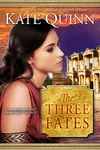
4. The Three Fates (2015)
This bridging novella (often labeled as Book 3.5) takes place in A.D. 117, immediately following the death of Emperor Trajan. It follows three characters at a critical turning point: Vix, now a Praetorian Guard dealing with a hostile new emperor; Titus, a reluctant heir whose life is threatened by imperial jealousy; and Sabina, who is about to become Hadrian's empress. This novella provides valuable context for the emotional and political stakes of the final novel.
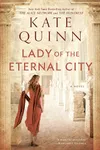
5. Lady of the Eternal City (2015)
The series culminates during the reign of Emperor Hadrian. Now serving as Empress, Sabina must navigate her cold and volatile marriage to Hadrian while secretly maintaining her deep connection to Vix, who has become Hadrian's primary military rival. As the emperor's behavior grows increasingly paranoid and ruthless, the characters must make ultimate sacrifices to protect the empire and their loved one, bringing the multi-generational saga to a dramatic conclusion.
Chronological Timeline vs. Publication Order
To help you decide how to approach the series, here is a side-by-side comparison of the two reading orders:
The Publication Order
- Mistress of Rome (2010)
- Daughters of Rome (2011)
- Empress of the Seven Hills (2012)
- The Three Fates (2015) (Novella)
- Lady of the Eternal City (2015)
The Chronological Order
- Daughters of Rome (Set in A.D. 69 during the Year of the Four Emperors)
- Mistress of Rome (Set circa A.D. 79–96 during the Flavian Dynasty)
- Empress of the Seven Hills (Set circa A.D. 98–117 during Trajan's reign)
- The Three Fates (Set in A.D. 117 during the transition from Trajan to Hadrian)
- Lady of the Eternal City (Set circa A.D. 117–138 during Hadrian's reign)
Practical Reader Advice: Where Should You Start?
While the chronological order has a neat, linear historical flow, Publication Order remains the most satisfying path for first-time readers. Reading Mistress of Rome first allows you to fully appreciate the origin of Vix's character arc, making his journey in Empress of the Seven Hills and Lady of the Eternal City far more impactful. Additionally, meeting the older, hardened version of Empress Domitia in Mistress of Rome makes discovering her younger, more innocent self in the prequel, Daughters of Rome, a highly rewarding experience.
If you prefer a linear historical timeline and want to watch the Flavian dynasty rise from its bloody inception before reading about its end, starting with Daughters of Rome is a perfectly viable alternative. Regardless of the order you choose, you should save the novella The Three Fates for the gap between Empress of the Seven Hills and Lady of the Eternal City, as it directly sets up the character dynamics for the final book.
What to Know Before You Start
Kate Quinn's depiction of Rome is famous for its historical accuracy, gritty realism, and lack of sugarcoating. While the books are filled with romance, they also explore dark themes, including the brutality of slavery, gladiatorial combat, and political executions. The series is heavily character-driven, and while many historical figures (such as Domitian, Trajan, and Hadrian) appear as central characters, the narrative is filtered through the experiences of fictively embellished or fictional women who wield influence behind the scenes. This focus on female agency in a patriarchal society is the unifying thread that ties the entire saga together.