
The Recommended Reading Order for Rose McQuinn
For the best reading experience, the Rose McQuinn series should be read in order of publication. Because the protagonist’s personal life, relationships, and professional reputation evolve sequentially, following the publication timeline ensures you capture every detail of her personal journey from a grieving widow to a respected lady detective.
While the core series consists of nine main novels, there is also a critical crossover novel co-starring her father, Inspector Jeremy Faro, which fits directly into the timeline. Below is the recommended reading path:
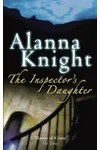
- The Inspector's Daughter (2000) – Set in 1895, this book introduces Rose as she returns to Edinburgh from the American Wild West.
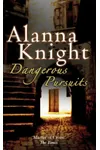
- Dangerous Pursuits (2002 / 2003) – Rose investigates a disappearing body spotted on Edinburgh's landmark, Arthur's Seat.
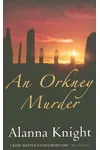
- An Orkney Murder (2003) – A trip to the Orkney Islands pulls Rose into a mystery involving local archaeology and family secrets.
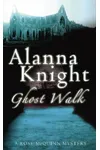
- Ghost Walk (2004) – Set in 1897, Rose prepares to marry Detective Inspector Jack Macmerry while dealing with a haunting case.
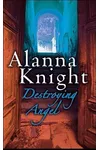
- Destroying Angel (2007 / 2009) – A mystery in the Scottish Borders involving poisonous fungi and historic family feuds.
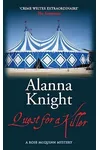
- Quest for a Killer (2010) – Rose unravels a murder linked to a relative of her deceased first husband.
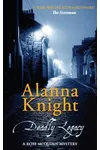
- Deadly Legacy (2012) – A gothic tale involving inheritance disputes and dark secrets in an old estate.
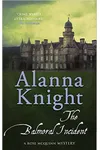
- The Balmoral Incident (2014) – Rose is drawn into royal intrigue and a suspicious death at the Balmoral Estate.
- The Darkness Within (2017) – (Crucial Crossover) Set in 1906, Rose and her father, retired Inspector Jeremy Faro, team up to solve a murder connected to the royal yacht in Orkney.
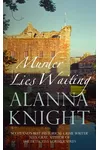
- Murder Lies Waiting (2018) – Rose travels to the Isle of Bute to help her housekeeper clear her name of a decades-old murder accusation.
Understanding the Faro Connection
Rose McQuinn is not Alanna Knight's only famous detective. She is the daughter of Detective Inspector Jeremy Faro, the protagonist of Knight’s long-running, 18-book Victorian mystery series. While the Rose McQuinn books are fully standalone and can be enjoyed without reading the Faro series, starting with Faro’s stories provides rich context. Reading Faro's series first reveals Rose’s childhood, her family's background, and the origin of her detective instincts. For readers who want to experience the complete family saga, exploring the Inspector Faro books before starting Rose's adventures is highly rewarding.
The two series officially collide in the 2017 novel The Darkness Within. In this installment, both detectives use their unique strengths—Faro’s traditional police methodology and Rose's intuitive private investigator skills—to solve a high-stakes mystery that threatens their own family.
Chronology and Publication Timing Caveats
The timeline of the Rose McQuinn series aligns directly with its publication order. The narrative begins in 1895 during the late Victorian era and progresses into the early Edwardian period, ending in 1906. While chronological and publication orders are identical, readers may notice minor discrepancies in publication years in online databases. This is due to the delay between UK first editions and US/international releases. For instance, Dangerous Pursuits is listed as 2002 in some catalogs and 2003 in others, while Destroying Angel appeared in 2007 in the UK but was widely distributed elsewhere in 2009. Rest assured, the narrative order of the books remains unchanged regardless of these printing differences.
What to Know Before You Start
Alanna Knight's mysteries are celebrated for their rich, gaslit atmosphere, historical accuracy, and detailed depictions of late 19th-century Scotland. Unlike modern gritty police procedurals, the Rose McQuinn series leans into the cozy historical mystery tradition. The novels focus on puzzle-solving, character dynamics, and local folklore rather than graphic violence or gore. Rose McQuinn stands out as a progressive, self-reliant Victorian woman who defies the era’s strict gender roles, bringing a subtle feminist perspective to her cases that makes the series feel refreshing yet historically authentic.